![]() |
| (Amazon UK link) |
3 Sept 2026
Strangers in company (by Jane Aiken Hodge)
3 Aug 2026
Anatomy of a scandal (by Sarah Vaughan)
![]() |
| (Amazon UK link) |
The chapters are mostly short, each one head by the name of the viewpoint character and the date in which the chapter is set. This is helpful, as the timeline switches to the past fairly often, as the story unfolds. It opens in the ‘present’ of the novel, 2nd December 2016. Kate is the viewpoint character here; she’s a barrister who has just lost a case.
We see her surroundings, feel her frustration. And she makes it clear that her wig and gown help her into the role that she plays in court. She tries only to prosecute when she’s pretty sure the defendant is guilty, but she knows that the system isn’t perfect: that what matters more than truth is the way it’s painted by the lawyers.
26 Jun 2026
The ice cream girls (by Dorothy Koomson)
![]() |
| (Amazon UK link) |
7 Feb 2026
Big sky (by Kate Atkinson)
![]() |
| (Amazon UK link) |
14 Apr 2025
The Paris apartment (by Lucy Foley)
![]() |
| (Amazon UK link) |
There’s a dramatic start to the book. Jess, a young woman travelling on her own, arrives at her brother’s apartment block in Paris. She hasn’t seen him in a while, but has nowhere else to go. She spoke to him earlier in the day, and he gave his address, and also explained how to get in. He wasn’t exactly enthusiastic about her coming to visit, but clearly was expecting her.
But he’s not there. He doesn’t answer his phone, and doesn’t respond when she presses the buzzer to his flat. She tries asking people she sees, but nobody helps at all - and her French is minimal, so she’s not sure anyone understands. Finally she is able to see the code someone else uses to get into the area, and when she gets to the third floor, she picks her brother’s lock.
And he’s not there.
I thought it a very well-written start to the book, quite tense and beginning with a situation that would have taxed almost anyone.
Jess discovers that Ben hasn’t taken his wallet, so he can’t have just popped out to shop. She's annoyed at first, thinking he must have forgotten about her. But as the days pass, she not just puzzled, but becomes worried that something may have happened to him. She tries every possible means of contacting him, with no result.
She tries to speak to different residents of the building, but finds them oddly unhelpful. And rather than being all written from Jess's viewpoint, it switches from chapter to chapter. It works well, seeing different people's viewpoints, although the voices are all very similar.
There’s Nick, a likeable young man, who was a friend of Ben’s, but he insists he knows nothing. There’s Mimi, a rather nervous young woman who seems friendly and yet withdraws at any hint of trying to push for answers. There’s an angry young man called Antoine on the ground floor, and in the penthouse is Sophie, a glamorous, perfectly made up woman, whose husband isn’t currently at home.
There’s also the concierge, who lives a spartan life in a small cottage separate from the main block of flats, and who observes everything that’s going on. Mostly she is ignored, so she isn’t entirely sure how to deal with someone like Jess who tries to befriend everyone.
I thought the book started well, throwing Jess into a stressful and unexpected situation. It shows her as a - basically - kind person, although she’s evidently running away from something she should not have done. However I felt the residents of the apartment block appeared rather too quickly and it wasn’t easy to remember who was whom. They’re distinct individuals but there isn’t much characterisation to any of them.
And there’s my problem with the book, really. I did hope things would work out for Jess eventually, but she never feels entirely three-dimensional, and everyone else in the book feels very flat. There are some tense situations, but it was hard for me to feel any kind of stress - and that’s unusual, as I’m easily spooked by fictional tension and thrillers. But after the dramatic opening, not much happens for quite a lengthy section of the book.
In the second half of the book the story gets going, after Jess seems to have come to a brick wall in her searches. There’s a local journalist after a story, a seedy night club, a shocking article on a computer, some surprising revelations about the residents of the flats, and more. Throughout I thought it was a well-written plot, but couldn’t care much about any of the people.
The ending should have been quite exciting, but although I kept reading - sometimes a bit compulsively - and the chapters are short, I only really felt relief when everything was resolved and the book ended. There’s a bit of a twist, when Jess thinks she’s found out something and we learn quite quickly that the ‘clues’ in the book actually lead to a rather different scenario. But by that stage I didn’t much care.
Since I find some thrillers very stressful to read (and generally avoid them) it’s perhaps a good thing that I didn’t find most of this book particularly tense. I quite liked the cultural references, and Jess’s rather poor attempts at speaking French. And I thought the plot was well constructed and the writing nicely paced. But since the characters did nothing for me emotionally, it’s not a book I’m likely to read again.
30 Aug 2024
The asylum (by Karen Coles)
![]() |
| (Amazon UK link) |
17 Jul 2024
Midnight Train (by Sally Quilford)
![]() |
| (Amazon UK link) |
1 Sept 2023
The Sudden Departure of the Frasers (by Louise Candlish)
![]() |
| (Amazon UK link) |
22 Aug 2023
The Truth about Melody Browne (by Lisa Jewell)
![]() |
| (Amazon UK link) |
23 Jul 2023
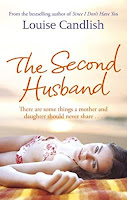
The Second Husband (by Louise Candlish)
![]() |
| (Amazon UK link) |
28 May 2023
The Island Hideaway (by Louise Candlish)
![]() |
| (Amazon UK link) |
3 Apr 2023
The Last Thing He Told Me (by Laura Dave)
I hadn’t heard of Laura Dave. I don’t think I’d even have picked up a book with such a dark blue cover, and blurb on the back talking about a twisty-turny thriller, no matter how cleverly crafted. But ‘The last thing he told me’ was allocated for this month’s local reading group so I acquired it second-hand, and started reading it on Friday. 
(Amazon UK link)
It’s quite a long novel (360 pages in paperback) and at first I wondered whether I’d get to the end in time, as we have visitors staying, so I’m not reading as much as normal. I thought perhaps I’d read a hundred pages or so, and then find a summary somewhere. In the event, it was compulsive reading - and not as heavy as I’d expected - and I finished it by the end of Sunday, after five minutes here and ten minutes there…
The story is narrated by a woman of about forty called Hannah. She’s been married for just over a year to Owen, and they live on a floating house in California. Owen has a sixteen-year-old daughter, Bailey, whom he adores - and who doesn’t much like the intrusion of a new love into his life. Hannah is doing all she can to befriend her stepdaughter, but Bailey is not responding well.
Other than that, life is pretty much idyllic for Hannah. She works making hand-crafted rustic furniture, and Owen makes sufficient money as a software coder that they live a comfortable life. And then, out of the blue, Owen vanishes. The company he works for is being investigated for fraud, but Hannah can’t believe he would be involved in that, or that - if he was - he wouldn’t be willing to stand trial along with his colleagues.
He leaves her a note with just two words on it. She and Hannah have to try to make sense of what’s happened, with no information initially - and then, as they start to ask questions and investigate, the story becomes more and more confusing. It seems that what they thought they knew wasn’t even right.
To say anything else would be a spoiler; suffice it to say I was hooked, as confused as Hannah and Bailey, perhaps; intrigued to know more. I don’t think I’d class it exactly as a thriller although there are some tense moments. But it’s certainly an exciting story, with quite a few unexpected revelations. It reminded me a bit of some of Louise Candlish’s novels; more a psychological thriller, perhaps, than a high-action one.
The writing is excellent, the pace exactly right, with a few flashbacks here and there to Hannah’s life with Owen before and during their marriage. I liked her very much, And I also liked the way that, although there’s a love story underlying the novel, it’s much more about Hannah and Bailey, and their growing relationship as they bond in their shared loss. Hannah is generous and wise; at times I felt she was almost too altruistic to be believable - but not quite. She has moments of being afraid, moments when she doesn’t know what to believe, and a great deal of anger.
There’s nothing explicit in this book, no on-page violence, and minimal bad/strong language. I thought the ending was well done, but left too much open. So I’m delighted to read, at the back, that the author has started working on a sequel.
Very highly recommended.
3 Jan 2023
The Other Passenger (by Louise Candlish)
![]() |
| (Amazon UK link) |
Jamie is the main protagonist of the novel, which is told from his perspective, in the third person. We meet him first at the end of December 2019 when he’s about to board the water ferry that takes him to his workplace, in London. He notes that his friend Kit is not there, He mentions Kit’s tendency to get drunk, to skip work or turn up late. He describes the way they, and two other commuter friends, have become a kind of group, hanging out and drinking beers together, although he doesn’t know a whole lot about the other two. He also hints at one or two things he’d rather forget….
Then, when the ferry reaches Kit’s destination he is met by two men who flash their police IDs, and tell Jamie they need to have a chat with him, since his friend Kit has not been seen since the evening of December 23rd. And, according to security cameras and other information, Jamie was the last person to see him…
The story then alternates with the present - moving forward, slowly - and the past year, as Jamie recounts how he and his partner Clare first met Kit and his wife Melia, and how their friendship progressed. To say anything much more about the plot would be to give spoilers - the story has so many unexpected revelations and (towards the end) twists, even U-turns, that I found it quite unputdownable.
It’s unusual for me to like a book where none of the main characters are particularly sympathetic, but somehow I did. Jamie’s accounts seem to be reasonably straightforward and honest - he recounts the story as if doing so to himself, or in a journal, although the assumption is that this is what he’s telling the police, off the record. But much of what he recounts doesn’t make pleasant reading. Jamie drinks too much, he’s suffered panic attacks, he sometimes accepts drugs, and he openly admits to a terrible betrayal of two people he cares about.
Kit and Melia are always complaining about having no money, despite their both being in good jobs. They have student debts and other loans to pay off, but they seem to spend all the money they earn on eating out, drinking and drugs. I didn’t like either of them much, either. Jamie and Clare live in a huge and gorgeous house, but we quickly learn that it’s owned by Clare, given to her by her parents. Clare has a high-powered job but Jamie had to give up his city job, and now works as a barista at a cafe. He likes his job but Clare wants him to get something else, and is a bit pushy about it.
So I didn’t much care about any of the significant people in the book - yet I kept reading, increasingly curious to know what had happened to Kit. It’s not clear whether he’s still alive, and if so whether he’s gone off with someone else, or been beaten up by his dealers for owing money, or whether he’s lying somewhere in a drunken stupor. By the time we discover Kit’s fate, there have been so many twists and turns to the story that I had almost lost sight of the fact that he has been missing.
It’s a powerful story which, essentially, is about strong women, whether they are basically benign or narcissistic. Kit and Jamie both come across as having entitlement mentalities, Kit feeling that the world owes him something, and Jamie that he can do whatever he wants, remaining dependent on Clare. They are both, in different ways, victims of circumstances, yet doing nothing to stand up to what is right.
If you want to read a hard-hitting, thought-provoking and fast-paced crime novel that’s expertly written, then I would recommend this.
Review copyright 2023 Sue's Book Reviews27 Apr 2022
The Swimming Pool (by Louise Candlish)
![]() |
| (Amazon UK link) |
Natalie is the narrator in this novel, and thus the main viewpoint character. We meet her first in a dramatic prologue where she is running naked to her home, after dark, her feet hurting after getting caught in stones. She makes it to her block of flats, only to find ‘him’ - we have no idea, at this stage, who this refers to - waiting for her. It’s cleverly done, opening the novel to a scene of extreme tension, with no idea what would happen.
The rest of the book is set in two broad time-frames: 2015, and some episodes in 1985 when Natalie was a somewhat wild teenager, led on by a local girl called Mel. We see scenes of their increasing bullying of the neighbourhood children, culminating in something involving a girl known only as ‘Nessie’; Natalie has evidently tried to forget this incident, but it keeps recurring and she is terrified still, even thirty years later, that there may be repercussions.
In 2015, Natalie and her husband Ed are both respectable middle class teachers who like to be organised and structured; their home is always tidy, and while they don’t have much romance left, they get along well enough, partly due to their shared love of their daughter, 13-year-old Molly. Molly, we soon learn, is terrified of water, probably due to a nasty incident when she was a toddler. So when a new Lido is opened nearby, Molly has no interest in going there.
Natalie, on the other hand, loves swimming. So, as the long summer holiday break starts, she arranges to swim with her friend Gayle. And she meets the glamorous Lara, a wealthy socialite who has been campaigning to re-open the Lido for a couple of years. Lara seems to take an interest in Natalie, inviting her into her circle of friends… and Natalie, as when she was a teenager, is easily led.
But interspersed with the progression of the summer holiday is a scene at the end of August, which gradually progresses, in which it’s clear that something terrible has happened at the Lido, involving Molly and her friend Georgia, who is Lara’s daughter…
The writing, as I expect with Louise Candlish, is excellent. The pace is good - while it might seem that not much is happening, the tension gradually builds. By the time I was half-way through I could barely put the book down. I wanted to know what exactly happened in 1985, and what was going to be the outcome of the potential tragedy at the end. I also wanted to know where the prologue fit into the book, and what Lara’s motivation for befriending Natalie is - it’s clear that it’s not simply altruistic.
I have to admit I didn’t much like Natalie as a person; she seems quite weak, prone to peer pressure and wanting other people to think well of her, and far too protective of her daughter. But it’s a testament to the writing that I found the book gripping anyway and was hoping things would work out for her. I liked her husband and Molly, but none of the glamorous folk was particularly likeable - and yet I kept reading, putting the book down only when the tension became too much, or I had to do other things (like sleep). It’s not a short novel - about 450 pages in paperback - but I finished it in just three days.
I hadn’t guessed what eventually transpired, and the epilogue was yet another surprise… all in all, a very well-written book that explores the unusual condition of aquaphobia and the tensions that can easily arise in family life. It also - quite subtly - covers some of the dangers of teenage water games and challenges, and the lifetime shame that can result from childhood bullying.
Definitely recommended if you like this kind of book. I’m not usually interested in thrillers, but am glad I read this one.
Review copyright 2022 Sue's Book Reviews13 Jan 2022
Sea Witch comes home (by Malcolm Saville)
![]() |
| (Amazon UK link) |
‘Sea Witch Comes Home’, 13th in the series, was possibly my least favourite. The reason is that it doesn’t include many of the Lone Piners - just David Morton and his twin siblings Dickie and Mary. And Mackie the dog, of course. It’s not in a familiar setting, either, and the family they go to stay with - Paul and Rose - are rather quarrelsome; they want help as their father has gone missing, but they don’t want to reveal too many details - and can’t agree about what information to share anyway.
The last few times I re-read the series (which happens about once every decade now) I didn’t re-read this book. I missed out a few others, too, in my last read-through, around 2009-2010. But since then I have managed to acquire full editions of all the series, many of them in Girls Gone By form with interesting introductions and details about publication history. I’m very much appreciating reading the full text of some of the series which I only ever read in abridged form, but still wasn’t particularly looking forward to ‘Sea Witch’.
To my surprise, I thought it an extremely good read. It’s not a typical Lone Pine book; there’s not much discussion of the club, and most of the teens are not involved anyway. It’s more of a thriller-adventure story that just happens to involve the Morton family. It mostly revolves around the Channing family: Paul and Rose as mentioned above, and their father. Because Saville writes from multiple viewpoints, switching them with different chapters, we know what Mr Channing is doing, even though his children don’t.
And it’s quite an exciting plot involving cleverly stolen paintings by an artist whose work was not particularly admired during his lifetime. I assume John Jackson is a figment of Malcolm Saville’s imagination but the locations where most of the action happens are real, set on the East Coast of England. It’s even set in historical context, in 1953, when a natural disaster happened, described in much detail in the last chapters of the book.
The abridged versions of Saville’s stories still cover the plots, and some of the conversation, but anything considered extraneous was cut to fit the Armada format. And so this book, I imagine, was quite bleak: and yet, reading it now, the places and conversations between the characters are what brings it alive. I checked the hand-drawn maps at the start of the book rather more than I usually do; of course some of the buildings and the cast of people are fictional, but the author evidently knew the area and places everything and everyone in believable situations.
If you love the Lone Pine club and prefer to read books that explore their growing friendships and which are primarily from their viewpoints, then this one really doesn’t fit the pattern. Perhaps I wouldn’t even have liked this full edition much as a teen, when I was keen to read more about the low-key romances that start to blossom in later books in the series. I was also less interested in the behaviour and point of view of adults forty-plus years ago.
But reading it now, almost as if it were a standalone novel, I thought it excellent. I had totally forgotten the story - it must be thirty years or more since I read it - and at times I could hardly put it down. It could make a good introduction to the series for anyone - adult or older teenager - wanting a realistic, fast-paced adventure story with some tension; just don’t expect it to be a significant part of the Lone Pine series.
Unfortunately Girls Gone By Publication books go quickly out of print, and second-hand editions tend to be highly priced. But there are marketplaces and social media groups where they are sometimes found less expensively; it's well worth looking out for a GGBP edition if you want to read this book.
Review copyright 2022 Sue's Book Reviews
14 Dec 2021
Wildfire at Midnight (by Mary Stewart)
![]() |
| (Amazon UK link) |
I have enjoyed re-reading my Mary Stewart novels in recent years, and also acquiring some I had not previously read; most of her books have been re-published and are more easily available than before. I first discovered Mary Stewart’s writing in my school library as a teenager, and while some of her books were a bit too ‘thrilling’, I liked the genre of romantic suspense, and was pleased to discover several of my old favourites.
I had ‘Wildfire at Midnight’ on my wishlist for a while, and was given it for my birthday earlier this year. I’ve just finished reading it and am pretty sure it’s not one I have come across in the past, although the title feels somewhat familiar.
The protagonist of the novel is a young woman called Gianetta, a name given to her in memory of a rather shocking great-grandmother whom she never met. I’m not entirely sure what the point was of this foray into family history in the first chapter, as it’s not at all relevant to the rest of the novel. However it introduces Gianetta nicely; she works as a model, but is tired and is persuaded by her parents to take a break. We learn early in the book that she was briefly married to Nicholas, and now divorced although her mother doesn’t quite believe that they are no longer together.
So Gianetta travels to the Scottish island of Skye, hoping to get away from people, from her memories, from her work… and also from the stress of the upcoming Coronation, which sets the book firmly in historical context: the early Summer of 1953.
After arriving at the hotel which her parents recommend, Gianetta immediately recognises an actress and they become acquainted. There are other visitors too, one of whom she knows already - it seems a bit of a coincidence, but not really a problem. However I couldn’t distinguish the other visitors - married couples, two single women, and a few others. Mary Stewart’s characterisation is usually good, but I simply couldn’t keep my mind on the different guests. And it was important to do so, because this book turns out to be a murder mystery.
However it’s not in the Agatha Christie style; although the first tragedy took place off-stage, before the start of the book, it’s described rather ghoulishly. Nor is it the only one… and unsurprisingly Gianetta herself goes through some very tense moments. I had half guessed who the perpetrator was by some of the action - and when revealed, it was clear that there had been some clues, although I don’t think I would have picked them up.
I have to admit that by the time I was about three-quarters of the way through the book I was finding it so tense that I had to skip to the end to discover if my hunch was correct, and to find out what happened. I assumed that Gianetta survived, since she is the narrator of the whole book, telling the story in the past tense. But I wasn’t going to keep reading if the rest of the guests didn’t...
I found the ending quite satisfactory, if a tad surprising in one respect, and then went back to read the intervening chapters, which were less stressful when I knew the outcome. Mary Stewart was excellent at writing suspenseful prose, and as a thriller it works very well if you like this kind of tension. The romantic thread, such as it is, is quite low-key in this book.
I liked Gianetta, even if the other characters felt a bit flat, and thought it a good story. It's one which I will probably re-read in another decade or so. Not my favourite by this author, but if you like nicely tense books from the middle of the 20th century, this is a good one to try. It's now considered a modern classic, and is available in ebook form as well as paperback. Mary Stewart's novels are also often found second-hand.
Review copyright 2021 Sue's Book Reviews10 Feb 2021
Rose Cottage (by Mary Stewart)
![]() |
| (Amazon UK link) |
I did in fact have it as part of an omnibus edition with three of Stewart’s novels, but it was quite an unwieldy tome, which I read in 2011. Since I also had one of the books in this omnibus separately, and was given one of the others, I added ‘Rose Cottage’ to my wishlist in a new edition, and was delighted to be given it for Christmas.
I had entirely forgotten the story; although set in 1947, it wasn’t published until 1997 when the author was in her early eighties. I gather it was her last published novel, but her skill in writing and characterisation shines through, as in her earlier books. And it’s a very enjoyable story. Some of Stewart’s novels have a bit too much violence for my tastes; there’s none in this, other than brief mention of a tragic road accident which affected the main characters significantly - but it all happens off-stage, so to speak.
Kathy is the main protagonist of this story, a young woman in her mid-twenties. We learn in the first chapter that she’s been staying with her grandmother in Scotland, after her grandmother has been ill. Kathy’s had a difficult life: her mother abandoned her when she was small, and she never knew a father. Her grandparents brought her up, and she’s very fond of her grandmother. Then Kathy married an airman, although the marriage was very short as he died in the war. He’s left her reasonably well-off but she’s still grieving.
Kathy’s grandmother asks her to travel to their former home, Rose Cottage. There’s still some of their furniture there, and a hidden safe with some important documents, and a few nostalgic mementoes of their life. Kathy has quite mixed memories of Rose Cottage, which she and her grandmother shared with her great-aunt, who was very puritanical and quite harsh.
So she travels down, and embarks on quite a nostalgic journey, meeting people she hasn’t seen for several years, exploring places she recalls from her childhood. Inevitably she can’t find everything her grandmother wanted her to send to Scotland… and she hears rumours in the village of prowlers a few days earlier. The tension is very mild; Kathy is puzzled more than frightened.
The people feel real, even the slightly caricatured three old biddies (who are probably not all that old): the sweet, unworldly one who loves to garden; her more practical sister, and their neighbour who has dreams and visions. There’s a gentle low-key humour in their twitterings, but their care and concern shines through.
Perhaps the plot is a tad far-fetched - but it’s a good story, well-told, with descriptive passages that weren’t tedious, and conversations that felt entirely natural. I liked Kathy very much; I’m not quite sure why it was necessary for her to have been married and widowed for the story, except that it enables her to be reasonably self-sufficient. She does have a job, but can easily take leave.
There’s only the faintest hint of a possible romance - even less than in most of Mary Stewart’s ‘romantic thrillers’, but perhaps it was realistic, leaving the way open for developments in the future.
All in all, I enjoyed this book very much and would recommend it to anyone who likes mid-20th-century character-based stories with a touch of intrigue. It’s not a long book - less than 250 pages in my paperback edition - and I finished it in just a few days.
Definitely recommended.
Review copyright 2021 Sue's Book Reviews6 Jan 2021
My Brother Michael (by Mary Stewart)
![]() |
| (Amazon UK link) |
In recent years, many of her lesser-known novels have been published. When I like an author, I like to collect all their works, so I’ve added some which I didn’t have to my wishlist. I was given ‘My Brother Michael’ for my birthday almost nine months ago, and have just finished reading it.
As with all of Mary Stewart’s books, the writing is excellent. She paints her scenery realistically; this one is set in Greece, and I felt that the places and people were all authentic. There’s perhaps a tad more description than I like, in places but it’s easy to skim. Her conversations are believable, and her main characters quite well-rounded.
Camilla is the narrator of this book. She’s in her mid-twenties, and has recently broken off an engagement to a man whom she acknowledges was quite controlling. She’s on her own in Athens, writing to a friend complaining that nothing much ever happens to her.
Camilla’s funds are running low and she’s wondering how she might be able to get to Delphi. At that moment, a man comes into the cafe where she’s writing, and approaches her table. He says that a car is ready for her, with the deposit paid already. His English isn’t brilliant and her Greek is limited to about half a dozen phrases, and she is not able to persuade him that he has the wrong person. He insists that ‘Mr Simon’ needs the car, and that it’s a matter of life or death…
While she has plenty of qualms, Camilla eventually picks up the key that was left behind, and decides that she will drive to Delphi. It’s at this point we learn that she hasn’t driven for a long time, never on the other side of the road. The book is set in the 1950s, when licenses were easier to get - or not required - and she has a few false starts before she gets going - and some near run-ins en route to Delphi.
Naturally she finds Simon, and equally unsurprisingly he has no clue about the car - but the two seem to click, and she learns that he is in Delphi to get some closure on his brother Michael’s death in the war, twelve years earlier. She accompanies him as he meets the family who took Michael in when he was injured, and she also gets to know one or two other people locally.
The story doesn’t really get tense until about half-way through, and the extreme ‘thriller’ part is in the final chapters. It’s a complex and very well-thought-out plot, all too believable, and the bad guys are really extremely unpleasant. There’s more violence than I’m comfortable with; I’d forgotten that Mary Stewart sometimes almost casually kills off some of her minor characters, and thinks nothing of a few good fights with serious injuries.
Having a first-person narrator ensures that I wasn’t worried about whether Camilla would survive, and I was pretty sure that Simon would too, but it was touch-and-go at times. I had to put the book down a few times as I came towards the end, as it was more ‘thrilling’ than I like. There isn’t much of a romance, either; while there are hints, nothing is said or followed through.
I’ve liked other of Mary Stewart’s novels better, but this was still a good read. I’d recommend it to anyone who likes this genre: for older teenagers or adults.
Review copyright 2021 Sue's Book Reviews15 Sept 2020
The House where Nobody Lived (by Sue Jones)
![]() |
| (Amazon UK link) |
This book is very different in style from Sue Jones’ first book. The main character is a man called Jack, recently divorced and extremely likeable. He moves into a house and hears a voice in the next-door back garden. It’s a small child, who says she is called ‘Nobody’. And it’s clear, by the end of the chapter, that this little girl is treated very badly by the adults who she lives with.
Jack slowly tries to unpack boxes and meets some of his neighbours, but when he mentions this unfortunate small child, he is warned off. The occupants of that house are vengeful, he is told, and if he reports them he might find himself in huge trouble. So he’s unsure what to do, his conscience pricked by the pitiful voice, but also not wanting to be the target of attack.
Chapter Two then switches to an entirely different storyline. We meet Esther, a young woman who has been arrested at an airport, caught by sniffer dogs. It’s clear that her passport is fake, and that she’s doing something for a criminal, against her better judgement. We don’t know why until a bit later in the book, but she’s very concerned that she’ll be in serious danger if she tells the truth.
It’s an exciting book, albeit not at all the kind of novel I would usually read. The characterisation of the significant people is good, although some of the ‘bad’ guys were so awful I couldn’t entirely believe in them. There are some scenes of violence sufficiently unpleasant that I wouldn’t suggest a teenager read the book, and some quite shocking events that I wasn’t expecting. A lot of issues are covered, and I found myself a tad confused about details a few times - but that didn’t matter.
As with the author’s first book, the writing is excellent, and the pace such that it was quite difficult to stop reading, in places. Maybe some of the conversation is a tad too extended for my tastes, not really adding to the story or the characterisation. But I’ve noticed that this style is becoming increasingly common in modern novels.
All in all, I would recommend this if you like this genre of book: it would perhaps fall into the ‘romantic thriller’ genre. Available inexpensively in Kindle form as well as paperback.
Review copyright 2020 Sue's Book Reviews