![]() |
| (Amazon UK link) |
1 Sept 2023
The Sudden Departure of the Frasers (by Louise Candlish)
23 Jul 2023
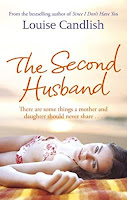
The Second Husband (by Louise Candlish)
![]() |
| (Amazon UK link) |
28 May 2023
The Island Hideaway (by Louise Candlish)
![]() |
| (Amazon UK link) |
27 Mar 2023
The Disappearance of Emily Marr (by Louise Candlish)
I’m glad I decided to re-read the novels I’ve acquired by Louise Candlish. She’s an excellent writer, with good characterisation and plots that can be quite tense in places. I’ve found some of her more recent books a tad too stressful, but her earlier ones were less so. The one I’ve just finished rereading is ‘The Disappearance of Emily Marr’, which I last read in 2015. 
(Amazon UK link)
I’d have thought, since it was only eight years ago, I might have remembered something about the story, but I didn’t. I had completely forgotten the two main characters, too. Tabby and Emily are two young women whose stories run alongside each other. The difference is that Tabby’s is told in the third person, while Emily’s, as we learn fairly quickly, is her attempt to write out her story so she doesn’t forget any details.
They meet when Tabby, after a broken relationship in France, down to her last few euros, is able to get access to a small house, tucked away in a side street of the island of Ré. She hopes the resident might have gone away, but is discovered by someone calling herself Emmie. She clearly has secrets and spends a lot of time on her laptop. She’s quite reclusive, and worried about being discovered. Tabby is sociable and friendly, and wants to talk about her broken heart, but Emmie is much more private.
Much of the story takes place on Ré, where Tabby is invited to stay if she pays some rent. Emmy is working as a cleaner for holiday homes, and gets Tabby a job too - and they mostly get along amicably. Tabby tries to ask questions and persuade Emmie to go out, but each time realises she needs to back off or risk alienating her new friend.
As Emily’s story unfolds, it becomes more tense… at times I wanted to keep reading it, rather than going back to Tabby’s story of what’s happening in Ré. But the alternating viewpoints work well, and I found myself liking both of the women despite them both having some moral failings which are explored in some depth (though, thankfully, not in any detail). At first I sympathised more with Emmie, irritated by Tabby’s attempts to probe. But gradually Emmie becomes more irrational…
I’m surprised that I had not remembered what happened after that, although there’s a hint on the back that something unexpected takes place. I was startled when the truth is revealed - just as startled as I must have been the first time I read it.
The book is very well-written, with some action and some more insightful passages. Some important modern issues are covered, from the power of social media through to the tragedy of dementia, and other mental illnesses. Adulterous relationships are not condemned, but possible - and believable - consequences are shown alongside the thoughtlessness, in some cases, of people involved in them.
My only disappointment in this book was that the ending is abrupt leaving open threads. But in Googling to find out if anyone had come up with anything, I discovered that the author has now written an epilogue. She wanted people to buy the updated version of the book that includes it; I wasn’t going to do that, but discovered the Kindle edition available for just 99p on Amazon UK. So I downloaded it, and went straight to the end. I didn’t particularly like the ending, but it does at least give closure, and some encouragement for the future.
Definitely recommended if you like thought-provoking women’s fiction with a bit of a punch.
11 Feb 2023
Other People's Secrets (by Louise Candlish)
I’m glad I decided to re-read the novels I’ve acquired by Louise Candlish. Her writing is excellent, and while some of her more recent books are very tense, the older ones are a bit gentler. The plotting is still extremely well crafted, and the characters well-drawn, and once I get into any of her books they become quite difficult to put down.
(Amazon UK link)
I’ve just finished reading ‘Other People’s Secrets’, which I previously read nearly nine years ago. I had totally forgotten the storyline, and all the people. And it’s an interesting cast. There are two main families, and the ones I liked the most were Adam and Ginny, a young couple who - as we learn very quickly - have recently had a terrible tragedy in their lives. They have come to stay in a boathouse by a beautiful Italian lake. Adam, who is a very caring person, hopes it might begin the healing process. Ginny doesn’t really want to be healed…
In strong contrast is the wealthy Sale family. They are staying at a large, somewhat pretentious villa on the same site as the boathouse. Marty, the father, is an outgoing, friendly guy who has made his money with a huge clothing brand. Unfortunately (and, again, we learn this very early in the book) he has been persistently unfaithful to his wife Bea. She’s put up with a great deal, perhaps because there’s a lot about Marty that’s very appealing - he is generous, welcoming, and a good father. But she’s come to the end of her tether and, when this family holiday is over, she plans to divorce him.
Marty and Bea have three adult offspring. Dom, the oldest, is irritable and grouchy throughout the book, and evidently has a secret which only his mother knows about. Second is Esther, who’s quite close to her mother but perhaps the least three-dimensional character. The youngest, just 18 and a recent school-leaver, is Pippi. Pippi is keen on fashion, she’s as outgoing as her father, and she’s also quite naive.
Given their proximity, it’s not long before Adam and Ginny meet the Sale family, and are gradually drawn into their circle. Bea and Ginny exchange a few secrets, but there are other secrets permeating the book, including one that’s mentioned in the prologue but which isn’t revealed until close to the end of the story.
There’s another important character in the book, a young man called Zach, who is staying in the nearby town. Pippi is attracted to him, and invites him to spend time with her family. He’s quite willing to do so even though nobody knows anything about him. And he’s not a very forthcoming person…
These eight people are the cast of the story, along with some minor characters who are fairly shadowy. I think I would have liked Esther, but we don’t really get to know her. I realise I liked Bea very much the first time I read the book; this time I found her a bit too accommodating, unwilling to form her own opinions. And she does something rather shocking - though perhaps I remembered it subconsciously from my first reading of the book - that meant I found her increasingly difficult to relate to.
It was Ginny, this time, whom I found the most sympathetic character. I’m thankful I haven’t suffered what she did, but I could still feel some empathy with her, in her grief, and the way she becomes irritable, or snappish at times, and at others feels unable to move even a limb. Her husband Adam is very likeable, even if he’s a bit abrupt with Zach whom he doesn’t much like. I could sympathise with Adam, too, trying to rationalise his feelings, talking about stages of grief, dealing with Ginny’s outbursts as if they were natural steps. The problem is that he keeps telling her what he thinks is going on, which obviously does not help at all.
It’s a cleverly written story, the secrets coming out at just the right time, keeping me turning pages long past the time I was intending to sleep, or get on with chores. I had not remembered any of the secrets that are revealed towards the end, although I had partly guessed at Zach’s (with some of the details wrong). My only gripe with the book, really, is the casual assumption that everyone - particularly teenagers and students - is regularly promiscuous as a matter of course. Perhaps it’s the case in some circles that I have never been part of, but the way everyone expected it left a bit of a sour taste.
There’s rather too much smoking, too; something I expect in older books but it seemed unnecessary in this one. And Bea’s casual attitude to one of the secrets, and to an important issue it brought up, felt jarring.
But other than those, which are minor details (and bugged me in part because the characters got under my skin, so I didn’t want them doing the things that felt out of character!) I thought the book was excellent. Very highly recommended to anyone who enjoys women’s fiction with a clever, unpredictable plot and a few significant issues.
3 Jan 2023
The Other Passenger (by Louise Candlish)
![]() |
| (Amazon UK link) |
Jamie is the main protagonist of the novel, which is told from his perspective, in the third person. We meet him first at the end of December 2019 when he’s about to board the water ferry that takes him to his workplace, in London. He notes that his friend Kit is not there, He mentions Kit’s tendency to get drunk, to skip work or turn up late. He describes the way they, and two other commuter friends, have become a kind of group, hanging out and drinking beers together, although he doesn’t know a whole lot about the other two. He also hints at one or two things he’d rather forget….
Then, when the ferry reaches Kit’s destination he is met by two men who flash their police IDs, and tell Jamie they need to have a chat with him, since his friend Kit has not been seen since the evening of December 23rd. And, according to security cameras and other information, Jamie was the last person to see him…
The story then alternates with the present - moving forward, slowly - and the past year, as Jamie recounts how he and his partner Clare first met Kit and his wife Melia, and how their friendship progressed. To say anything much more about the plot would be to give spoilers - the story has so many unexpected revelations and (towards the end) twists, even U-turns, that I found it quite unputdownable.
It’s unusual for me to like a book where none of the main characters are particularly sympathetic, but somehow I did. Jamie’s accounts seem to be reasonably straightforward and honest - he recounts the story as if doing so to himself, or in a journal, although the assumption is that this is what he’s telling the police, off the record. But much of what he recounts doesn’t make pleasant reading. Jamie drinks too much, he’s suffered panic attacks, he sometimes accepts drugs, and he openly admits to a terrible betrayal of two people he cares about.
Kit and Melia are always complaining about having no money, despite their both being in good jobs. They have student debts and other loans to pay off, but they seem to spend all the money they earn on eating out, drinking and drugs. I didn’t like either of them much, either. Jamie and Clare live in a huge and gorgeous house, but we quickly learn that it’s owned by Clare, given to her by her parents. Clare has a high-powered job but Jamie had to give up his city job, and now works as a barista at a cafe. He likes his job but Clare wants him to get something else, and is a bit pushy about it.
So I didn’t much care about any of the significant people in the book - yet I kept reading, increasingly curious to know what had happened to Kit. It’s not clear whether he’s still alive, and if so whether he’s gone off with someone else, or been beaten up by his dealers for owing money, or whether he’s lying somewhere in a drunken stupor. By the time we discover Kit’s fate, there have been so many twists and turns to the story that I had almost lost sight of the fact that he has been missing.
It’s a powerful story which, essentially, is about strong women, whether they are basically benign or narcissistic. Kit and Jamie both come across as having entitlement mentalities, Kit feeling that the world owes him something, and Jamie that he can do whatever he wants, remaining dependent on Clare. They are both, in different ways, victims of circumstances, yet doing nothing to stand up to what is right.
If you want to read a hard-hitting, thought-provoking and fast-paced crime novel that’s expertly written, then I would recommend this.
Review copyright 2023 Sue's Book Reviews27 Apr 2022
The Swimming Pool (by Louise Candlish)
![]() |
| (Amazon UK link) |
Natalie is the narrator in this novel, and thus the main viewpoint character. We meet her first in a dramatic prologue where she is running naked to her home, after dark, her feet hurting after getting caught in stones. She makes it to her block of flats, only to find ‘him’ - we have no idea, at this stage, who this refers to - waiting for her. It’s cleverly done, opening the novel to a scene of extreme tension, with no idea what would happen.
The rest of the book is set in two broad time-frames: 2015, and some episodes in 1985 when Natalie was a somewhat wild teenager, led on by a local girl called Mel. We see scenes of their increasing bullying of the neighbourhood children, culminating in something involving a girl known only as ‘Nessie’; Natalie has evidently tried to forget this incident, but it keeps recurring and she is terrified still, even thirty years later, that there may be repercussions.
In 2015, Natalie and her husband Ed are both respectable middle class teachers who like to be organised and structured; their home is always tidy, and while they don’t have much romance left, they get along well enough, partly due to their shared love of their daughter, 13-year-old Molly. Molly, we soon learn, is terrified of water, probably due to a nasty incident when she was a toddler. So when a new Lido is opened nearby, Molly has no interest in going there.
Natalie, on the other hand, loves swimming. So, as the long summer holiday break starts, she arranges to swim with her friend Gayle. And she meets the glamorous Lara, a wealthy socialite who has been campaigning to re-open the Lido for a couple of years. Lara seems to take an interest in Natalie, inviting her into her circle of friends… and Natalie, as when she was a teenager, is easily led.
But interspersed with the progression of the summer holiday is a scene at the end of August, which gradually progresses, in which it’s clear that something terrible has happened at the Lido, involving Molly and her friend Georgia, who is Lara’s daughter…
The writing, as I expect with Louise Candlish, is excellent. The pace is good - while it might seem that not much is happening, the tension gradually builds. By the time I was half-way through I could barely put the book down. I wanted to know what exactly happened in 1985, and what was going to be the outcome of the potential tragedy at the end. I also wanted to know where the prologue fit into the book, and what Lara’s motivation for befriending Natalie is - it’s clear that it’s not simply altruistic.
I have to admit I didn’t much like Natalie as a person; she seems quite weak, prone to peer pressure and wanting other people to think well of her, and far too protective of her daughter. But it’s a testament to the writing that I found the book gripping anyway and was hoping things would work out for her. I liked her husband and Molly, but none of the glamorous folk was particularly likeable - and yet I kept reading, putting the book down only when the tension became too much, or I had to do other things (like sleep). It’s not a short novel - about 450 pages in paperback - but I finished it in just three days.
I hadn’t guessed what eventually transpired, and the epilogue was yet another surprise… all in all, a very well-written book that explores the unusual condition of aquaphobia and the tensions that can easily arise in family life. It also - quite subtly - covers some of the dangers of teenage water games and challenges, and the lifetime shame that can result from childhood bullying.
Definitely recommended if you like this kind of book. I’m not usually interested in thrillers, but am glad I read this one.
Review copyright 2022 Sue's Book Reviews6 Feb 2022
The Day You Saved My Life (by Louise Candlish)
![]() |
| (Amazon UK link) |
I first read ‘The day you saved my life’ in 2012, and while I vaguely recalled the first chapter - the tension surrounding a boat trip in Paris, a terrible incident which happens at the end of the chapter - I couldn’t even recall the outcome of the disaster. The author leaves it uncertain for a chapter or two, which is an excellent device for getting the reader hooked.
Joanna is the main character of this book, the lynchpin around which the rest of the story revolves. She’s in her early forties and is already a grandmother. She had her daughter Holly at quite a young age, due to rather sordid circumstances which we learn about gradually through the book. But, although her family disowned her, she was determined to be a good mother, and clearly has succeeded as far as is possible.
Holly also had a baby at quite a young age, with a young man called Sean. Sadly she suffered from serious postnatal depression, and when we first meet her, on the boat in Paris, she is uninterested in anything. Joanna treated them to a weekend in France, hoping something might jolt her daughter out of the depression, as none of the medication is helping. But she seems to be worse rather than better.
James and Alexa are a couple celebrating their fifth wedding anniversary in Paris. At least, that was Alexa’s plan. She’s a highly organised, efficient person but feels the marriage has lost some of its sparkle. They are quite wealthy, so no expense is spared as she books a luxurious hotel, and a series of outings as part of a detailed itinerary. James goes along with her, but he still seems a bit distant… until the event in the first chapter, where his life becomes entwined with those of Joanna and Holly.
It’s hard to say anything much without giving spoilers. It’s a story of healing, and of brokenness. It’s a novel about family relationships, about nurture, and about falling in love. There are no villains as such, other than the terrible depression that haunted Holly early in the book, and perhaps some unsavoury people from the past. Oh, and Joanna’s sister, who was always demanding and clearly the favourite of their parents. But they haven’t spoken in over twenty years.
The novel alternates viewpoints between Joanna, Alexa and Holly, and their different characters come through clearly. Joanna is the oldest and has given up a lot for her daughter; she’s quite strong and independent, but even she has to acknowledge difficulties now and again. Alexa is the one I felt most sorry for; she’s very materialistic and quite manipulative, but what happens to her is a terrible shock, and she starts to re-evaluate her priorities. Holly is likeable too, despite events that suggest otherwise.
I thought I recalled an unexpected development towards the end of the book, but I must have been thinking about a different book as it didn’t happen. Instead there’s a final unexpected twist which has to be explored… and on the whole the end is encouraging for several reasons. I did find myself wondering what would happen to all these different people - but Louise Candlish doesn’t seem to write sequels, so it’s left to the reader.
If you like thought-provoking family-based women’s fiction with unexpected storylines, I would recommend this very highly.
Review copyright 2022 Sue's Book Reviews24 Dec 2021
I'll be there for you (by Louise Candlish)
![]() |
| (Amazon UK link) |
The novel revolves around the sisters Hannah and Juliet, who are four years apart and very different from each other. They have a younger sister Laura who appears a few times, but she doesn’t add much to the storyline. Hannah is married to Michael and expecting their first baby. However she’s a bit nervous about letting him know as he’s expressed that he doesn’t want to start a family just yet. Hannah is gentle and motherly; she appreciates the comforts of life, and since Michael is very well-off, she can spend anything she likes, not having to worry about finances at all.
Juliet is a hard-drinking heavy-smoking businesswoman who’s pretty cynical about life and men. We learn early in the book that she lost her boyfriend Luke a year earlier, and that she’s still grieving. It’s not until the end of the book that we discover exactly what happened, or why she’s cynical as well as sad, but hints are dropped and the picture gradually builds up. I thought that storyline was very well done.
Juliet and Hannah used to be close but have drifted apart, mainly because Juliet doesn’t much like or trust Michael. She thinks he’s over-charming and manipulative, and probably a womaniser, and she thinks her sister married him because of his money. However she would like to be closer to her again. She’s living in a flat-share with quite a selfish friend, and while she has plenty of other friends, she’s losing interest in her job, and she’s a bit concerned that she’s started blanking out now and again…
I liked Hannah very much, although she’s a bit blinkered, I was surprised to find that I liked Juliet too despite her lifestyle being so foreign to anything I’ve ever experienced. It was hard to relate to her at first, but she’s quite introspective, and some of her thoughts resonated (though not a huge decision she makes about half-way through the book, which somewhat shocked me).
Hannah and Juliet have a lot of friends, some of them mutual, but I had a very hard time distinguishing who was whom. Their characters weren’t particularly well-developed, other than Siobhan, a single mother who befriends Hannah when she’s going through a tricky patch in her relationship. But most of the other friends were just names, and I lost track of who was whom - it didn’t matter much, and I didn’t really care what happened to any of them, or who was involved with whom.
The book has a good pace and is very readable, even if there’s more bad language than I’m comfortable with, and an apparent acceptance of one-night stands and general promiscuity, so long as none of the participants is married or seriously involved with anyone else. I’m not sure I entirely believed in Juliet’s lifestyle, or her gradual emerging from it into a caring and well-respected professional - but it makes a good story.
Recommended if you like women’s fiction with a good number of subplots and don’t mind a confusing number of rather two-dimensional secondary characters.
Review copyright 2021 Sue's Book Reviews21 Oct 2021
Since I don't have you (by Louise Candlish)
![]() |
| (Amazon UK link) |
Rachel is the main protagonist, and the book is written in the first person. We meet her first at her daughter Emma’s sixth birthday party, where her husband Ollie hasn’t managed to get away from work. However her best friends Mariel and Jenny are there, with their daughters Cat and Daisy, who are Emma’s closest friends. The adults have made a pact that if any of the children is orphaned, for whatever reason, the others will step into the fray. Rachel is Cat’s godmother and Daisy’s legal named guardian, although of course they all hope that nothing will occur to trigger their promises.
It wasn’t until a few chapters later that I had an inkling of what was going to happen - and it was the only part I recalled even vaguely from the first time I read this. A terrible tragedy rips everyone’s lives apart, and while they are all grieving in their different ways, Rachel can’t take any more: so she flies to Santorini. This small Greek island is where her mother was born, and lived for her first decade or so, until an earthquake destroyed many homes, and killed her sister. So she won’t go back, and won’t even talk about it. But Rachel has often wondered what it might be like, and now she goes alone, to be away from everyone.
After the first few terrible weeks, Rachel begins to get to know some of the locals, keeping herself and her background quite private. There’s a lot of information about Santorini, some of which was interesting but I did skim quite a few of the descriptive passages. I’m sure they’re authentic, as are the Greek words and phrases thrown in here and there, but they didn’t add much to the story.
The first time I read this book I found it immensely moving and poignant. This time, not so much. Not because I couldn’t feel something for those left behind from the tragedy, but because I didn’t find Rachel all that sympathetic a person. She realises much later in the book that she’s been quite self-centred; not surprisingly, given her circumstances, but it doesn’t make her a particularly likeable character. Nor did I much like Palmer, a private investigator she employs and becomes quite close to; their relationship never felt authentic, for some reason.
However the writing is very good, and some of the other characters feel quite realistic. I liked the friendly local Eleni, and the Australian Ingrid who treats life pretty casually, despite a very difficult childhood. I liked Ollie too, although he has many faults; he’s an extremely generous person, and I felt he had something of a raw deal, although he ends up happy enough. Mariel, too, is a kind, peace-loving and affirming person - it’s a bit surprising that her daughter Cat becomes something of a rebel in her teens.
I did like re-reading this book and am glad I did, but didn’t feel so drawn into it as I did eleven years ago. Maybe it’s because I’m older and further removed from having young children; maybe I’ve become more cynical. I’d still recommend it, with the warning that there are strong triggers in it for anyone who has suffered from an unexpected and shocking bereavement; to say more would be to give spoilers, although the awful event happens fairly early in the book and is sensitively described.
Review copyright 2021 Sue's Book Reviews10 Aug 2021
Before We Say Goodbye (by Louise Candlish)
![]() |
| (Amazon UK link) |
Sometimes when I re-read a book after a gap of a decade or so, parts of it come back to me and I remember how it ended. That wasn’t the case with this book, so I had the very pleasant feeling of reading a book that felt new, but which I knew I would like. And by the time I was about half way through, I could barely put it down.
The novel is told mostly in the first person by Olivia, who is married to Russell. They have two sons, aged 12 and 14, but we first meet Olivia going to see her frail, dying mother Maggie. Maggie clearly wants to say something to her - they’ve had a stressful relationship - and Olivia doesn’t want to hear it. Instead she wants to ask a question that has been bothering her for over twenty years - but there’s no response.
Maggie’s funeral is the catalyst for what appears, at first, to be soul-searching for Olivia, who’s clearly very stressed, unsure what her role in life is, and feeling rather unnecessary to her family. And when she receives a note, apparently from her mother, she decides to take a break - to go away and try to explore issues from her past. Russell is very understanding - he’s a good husband, if undemonstrative, and turns out to be a good father, although he hadn’t previously taken a lot of interest in his household or his sons’ various chauffeuring needs.
For Olivia’s short break - a weekend, she says, and then a week - turns into a much longer time away. She meets someone she was very close to as a teenager, and she needs to talk, to relive some of their former closeness, to be away from responsibilities and reminders of her everyday life. She’s feeling numb, torn apart, and it’s quickly evident that it’s not just grief for the loss of her mother; it’s grief for a loss many years earlier, for unresolved tensions, and the need to find answers to some of her questions.
There’s a lot of heart-searching but it’s done so well that I didn’t find it tedious or overdone at all. There are some forays into the past, to Olivia’s mid-teens, and we learn the pain she and her brother felt when Maggie left home temporarily or, on one occasion, for more than a year. The irony of Olivia having left her family is clear to the reader, not so much to Olivia herself until near the end of her lengthy break.
And it’s not clear what’s going to happen. She’s torn between two families, feeling split between two lives: as a busy mother in London, and as a more relaxed person in Dorset, in an idyllic setting that feels as if it could last forever. I hadn’t remember the outcome, though I hoped it would be positive - yet unsure how that could happen.
The characters are very well-drawn in this book; there’s a good supporting cast of relatives and friends, and a delightful five-year-old girl called Wren. I had no problem recalling who was whom, at least most of the time, and I could empathise with a lot of Olivia’s feelings (or lack of them at times), though my own experience of life is far removed from hers.
A few chapters are told from other points of view - mostly Russell’s, as he becomes increasingly frustrated at not knowing where his wife is, or how long she’s likely to stay away. He feels quite believable, annoyed but also realising how unappreciative he has been, and just how much she does to keep the family going. The one part I didn’t like was a rather sordid scene with a babysitter, but it doesn’t go into many details, and was probably necessary to give balance to the story and to enable the conclusion to lead to hope for the future.
Very highly recommended if you enjoy women’s fiction with lots of inward looking discussion, and gradual resolution of issues - some of which emerge later in the book - from the past.
Review copyright 2021 Sue's Book Reviews13 Jul 2021
The Double Life of Anna Day (by Louise Candlish)
![]() |
| (Amazon UK link) |
It’s narrated in the first person by Anna, a young woman in her early thirties. She’s quite a career-minded person, who works in advertising sales for a newspaper. She’s a team leader, and gets involved in office banter and squabbles… I found the scenes set in the office so alien to me that I mostly skimmed them, and never really figured out who was whom.
The main story, however, involves Anna’s boyfriend Charlie. They have been together for a year, but she hasn’t been introduced to his mother, Meredith. In fact, Meredith doesn’t even know that Anna exists. Charlie has been making excuses: his father died not so long ago, and Meredith is grieving. She’s likely to be angry - she managed to break up his previous relationship, and he doesn’t want that to happen with Anna. And Anna has gone along with the excuses, happy in their relationship even if they only see each other twice a week… but her patience is wearing thin.
She had set a deadline for him to make the introduction, but he’s about to go away for three months, on a college assignment in the United States, and asks her to wait until he gets back. She agrees, promising not to write letters to Meredith, or make phone calls… but she’s not happy about it.
Then her friend Viv, who has become some kind of life coach, suggests a somewhat preposterous idea… and Anna decides to take her up on it.
The second half of the story involves Anna developing a somewhat different identity, dressing differently, taking up pursuits that would not normally occur to her, and essentially leading the ‘double life’ of the title. To say more would give spoilers, but the story is well done, and Anna’s personality comes across as quite three dimensional, though I did wonder why she went to so much effort pretending to be someone she really wasn’t… although the new personality does gradually start to appeal to her.
It’s a cleverly done story, and the writing style is light; nothing to make me laugh out loud, but I smiled once or twice at turns of phrase, or conversations. Most of the minor characters seem rather caricatured - probably intentionally to make them more memorable, but I quite liked the ‘Dulwich’ crowd, who seemed more realistic, and I appreciated the gentle barbs poked at their customs and habits through Anna’s eyes.
There are some interesting discussions and insights into what makes people who they are - how parent-child relationships work, whether one can ever recover from a bereavement of someone close. I thought the portrayal of the office men was a bit sad; they all seemed very similar, and sexist in the extreme. But the different values and ideals of the important women in the story made some thoughtful reading in places.
However it's basically light women’s fiction, with too much bad language and innuendoes to be suitable for younger teenagers (or the prudish). But overall I enjoyed it, and might even re-read it again in another decade or so.
Recommended if you like this kind of book; it would make good holiday reading.
Review copyright 2021 Sue's Book Reviews20 Dec 2020
A Fresh Start (Short Stories)
![]() |
| (Amazon UK link) |
The stories are by different authors, half of whom I’d heard of. I particularly like the novels by Louise Candlish, JoJo Moyes and Sophie Kinsella, so was looking forward to reading their contributions. I don’t think I’d read anything by Ian Rankin or Adele Parks, but I knew the names. I didn’t recognise any of the others, although they are all listed as 'bestselling authors'.
They are quite a mixed bunch of stories, as would be expected of ten different writers, but the overall theme of each relates, as the book title suggests, to some kind of fresh start. One, for instance, involves a married couple making a new commitment to each other. One involves a father and daughter becoming closer, one involves an unexpected inheritance. Two of them involve women determined to get their lives back after a stressful marriage, or discovery of infidelity; the methods used, however, are entirely different.
There’s no particular genre in which these stories fall, so there’s something for everyone. One of them is about a new police officer, for instance, the ’fresh start’ relating to her new career. They are mostly somewhat light-hearted, but there’s poignancy too. And they’re all very well-written, with believable characters even if some of the situations or plots are a tad unlikely.
There isn’t much (if any) bad language in these short stories, nor anything explicit, although there are some implications and innuendoes in some of them. They would be appropriate for anyone of about fifteen and upwards to read, as well as for adults looking for a short book to pass an hour or so. There are only about 110 pages in all - so it really was extremely quick.
The book says on the back that it was sold for a pound and I see that Amazon is still selling it for that small amount, so it’s the kind of thing that could easily be added to a book order (perhaps to bring the total cost up to the level needed for free postage). Indeed, I’m delighted to find this series of ‘quick reads’ in case I need to do that at some point in the future. No doubt books like this can also be found at charity shops, too.
Ideal for holiday reading, or in a busy period to allow brief escapism. More likely to appeal to women than men, but could be read by anyone.
Review copyright 2020 Sue's Book Reviews5 Apr 2019
Our House (by Louise Candlish)
![]() |
| (Amazon UK link) |
‘Our House’ has over 400 pages but I have finished it in just a few days. It opens with a scenario that feels at first like a bad dream… Fiona (Fi) is walking down her road, on her way back from a short holiday, when she sees removal men delivering furniture to her house. She then discovers another woman in her kitchen, and is told that the house has been sold, with completion that morning.
Fi is convinced there must have been a serious misunderstanding, but she can’t reach her estranged husband Bram on the phone - the number says it has been disconnected. She becomes more and more worried: Where are her two young sons? Who are these people who have moved into her home? How could it possibly happen? And where is all the furniture and other possessions which were in the house when she last saw it, only a few days earlier?
The last page of the first chapter takes us to Geneva, where Bram is lying on a hotel bed, wondering if Fi has yet discovered what has happened. He is very nervous, and worried that someone might recognise him…
The majority of the book is told in alternating viewpoints. Fi is talking on a popular show about victims, a couple of months later, telling her story. Bram is typing his story - we don’t know who for until the end - in a Word document on his laptop. Most chapters have a section where Fi explains her perspective, and the same time period is covered by Bram shortly afterwards, with his differing view of events. That sounds rather awkward, but it works extremely well and gradually builds up a picture of what has happened since the event that triggered their separation.
Every so often the action returns to the present day, just half an hour or so forward each time. Fi and Bram’s parents are contacted, and the new alleged owners of the house manage to get in touch with their solicitors. But it’s not until the last few chapters that the two accounts of past events catch up to the present.
Both stories start with the event which caused the marriage to break up; Bram is not entirely sure how or why he was so stupid, but he’s hidden some things from his wife, and gradually has to hide more, or tell more lies, in order to cover up his initial deception. The entire theme of the book is about the depths to which someone can fall when they get involved in a web of lies.
I didn’t much like Bram as a person. He’s an exuberant, wild, fast-living person who likes to drink a bit too much, and enjoys driving fast. He’s a risk-taker and also trusts rather too much in luck. But he’s a good father; his sons mean a lot to him, and he genuinely doesn’t intend to do the increasing number of things he has to hide. He acts on the spur of the moment, not thinking about consequences, and not appreciating what he has until much later.
I could believe more easily in Fi, who comes across as a likeable, friendly person who manages to balance her work and family life pretty well. Even when she and Bram split up, she proposes an arrangement that seems to suit them all. Her friends think she is too forgiving; but she generally comes across as a competent and warm-hearted.
This book is not a family saga, nor a character-based book as such; indeed, Bram’s character becomes progressively worse, over the course of the book, as he falls further and further into deception. Instead, it is a thriller. It could be termed a domestic thriller, since it focuses on a household rather than international espionage or politics, but still this is a tense, page-turning story. There are so many twists and turns that I had to put the book down every so often, to breathe more easily and distract myself with something else. It was not a good book to read at bedtime because it was difficult to put down, and my mind would keep churning. The initial problem - the new owners of Fi’s house - runs throughout the book, but is relatively minor compared with everything else that transpires.
I hope that the general plot is not possible, although apparently the author based the initial premise on an article she read about. But the downhill spiralling that leads to the initial shock, albeit both rapid and extreme, feels all too believable.
The last few chapters provide yet more shocks, more evidence that even the best of people can do terrible things under stress. The ending is not entirely conclusive; I could see the final twist in the outcome from a chapter or two earlier, and hoped I was wrong. The future is not spelled out; instead the book finishes quite abruptly. Yet it was the right place to finish. I need to read something much calmer next, and stop thinking about ways in which things could have turned out differently, in particular related to the last chapters.
Highly recommended if you enjoy tense drama, or if you appreciate extremely clever plotting. I expect I will read this again in another eight or nine years though I can’t imagine I will forget this most unusual story.
Review by Sue F copyright 2019 Sue's Book Reviews
1 Aug 2016
The Sudden Departure of the Frasers (by Louise Candlish)
![]() |
| (Amazon UK link) |
But I decided I would begin ‘The Sudden Departure of the Frasers’ on Saturday evening… and finished it less than two days later. I hardly got anything else done on the Sunday, as I could barely put the book down!
There are two different - but related - storylines which alternate in this novel, as the author skillfully builds up the picture of the two women concerned, Christy and Amber. We meet Christie first, in April 2013. She and her husband Joe have just bought a house in Lime Park Road, an up-and-coming street in London. They can’t quite believe their luck; the price was excellent for a sale without a chain, and they had already sold their previous house.
However they quickly realise that something is wrong. The neighbours won’t speak to them, the downstairs flat next door is also being sold, and there’s a hermit-like man living upstairs, who is abrupt and rude. Moreover, it becomes increasingly obvious that the previous owners, Amber and Jeremy Fraser, spent a vast amount on turning the house into a luxury showhome and then left in a hurry, with no explanation. Nobody seems to know where they have gone, and when Christy tries to find an address for forwarding mail, she doesn’t succeed.
Then we meet Amber, a year earlier, when she and Jeremy have just bought the house and are planning extensive renovations. Jeremy is fifteen years older than she is, and quite wealthy. So she’s taking time off work to supervise the builders and to get to know the neighbours. Her experience is very different from Christy’s, as the others in the street, mostly parents with young families, welcome her with enthusiasm.
Amber’s story is told in the first person which makes it feel more personal, and that’s quite a good device since Amber is not, as it turns out, a particularly nice person. She’s generous, and likes to help people make the best of their appearances, but she thinks nothing of deceiving those she loves. She makes it clear that she had a very wild past, in her late teens and early twenties, but thought she had settled down with Jeremy… until something happens which she believes inevitable.
It’s very cleverly written, I thought. Christy is likeable, if a bit obsessed with the people in the street, and her husband Joe is hard-working and caring. Jeremy is perhaps a bit distant, seeing Amber as something of a trophy wife, but he trusts and loves her and begrudges her nothing. Amber is so dissolute that I never entirely believed in her or her storyline, but somehow that doesn’t matter. The women in the street are somewhat two-dimensional, stereotypical ‘yummy mummies’, and I never really distinguished who was whom; I’d have liked a bit more of Felicity, the elderly woman living next door, who is a much more interesting character than Caroline or Joanna or Liz.
The blurb on the back hints about dark and shocking secrets, and suggests that this is something of a thriller; I think that’s a mistake since it’s essentially a relationship-driven story about uncovering a secret. But by the time the revelation comes, and Christy begins to understand what went on, it’s fairly obviously how the plot is going, and there are really no surprises. Still, I was glad that the final chapters were included to bring closure.
There’s slightly more bad language than I’m comfortable with, and the plot itself is decidedly ‘adult’; yet the author wisely skips almost all the detail in the scenes of intimacy. The writing is excellent, the dialogue believable, on the whole, and the storyline so well crafted that I read long past the time I should have been asleep yesterday, and instead of doing more important things this morning.
Definitely recommended.
Review copyright 2016 Sue's Book Reviews
19 May 2016
The Second Husband (by Louise Candlish)
![]() |
| (Amazon UK link) |
‘The Second Husband’ is told in the first person by Kate, a divorced woman in her late thirties who has a teenage daughter, Roxy, and a younger son Matthew. Her former husband Alistair has a new wife, and they are expecting a baby. Kate’s job pays almost nothing, and Alistair may have to reduce his support to his first family. So he suggests that Kate take in a lodger to help make ends meet.
This is the back story which we learn in the first few chapters. We meet Kate as she’s considering which of the applicants to accept as a lodger, while also becoming rather frustrated at Roxy, whose best friend Marianne seems to be encouraging her to sunbathe while wearing very little…
The overall theme of the book is about the strength of parental relationships. Kate is far from perfect and gets into power struggles with both Alistair and Roxy which seem unnecessary and frustrating. She loses her temper easily and isn't at all good at relating to teenagers. She adores both her children and would do anything to see them happy. She’s not, however, at all intuitive and I found her quite annoying at times since she misses obvious signs that are evident to the reader, and gets herself into an unimaginably appalling situation, apparently with no idea that it was coming.
It’s hard not to give any spoilers, since the strapline on the front of the book essentially gives away the basic plot. I did wonder if it really meant what it implies, but that alerted me to many clues as to where the plot was going in the first part of the book. Perhaps it was meant to; it’s hard to know whether it was a publisher error, or whether in fact the author was employing the ‘unreliable narrator’ technique so that readers are well aware of what is going on despite her ignorance. Either way, the characterisation is excellent; I was rooting for Kate, and cared what happened to her, while still finding her naive and annoying. She got right under my skin!
I haven’t even mentioned the person who becomes a second husband in this novel. Even if the strapline wasn’t intentional, the title must have been. So we know that Kate is going to get married to someone, and it’s clear from the start who that will be. I did find myself a little confused at first; he seems to be an appealing person, almost too good to be true. Gradually that turns into sliminess, and in the second half of the book it delves into something approaching sordidity, although the writing is good enough, with a great deal going on behind closed doors, that it never entirely reaches those depths.
At the midway point when Kate finally realises what has been happening, I wasn’t much liking the book. I wished I had been wrong; the plot is unpleasant, and - I hope - not very realistic. But I kept reading, and felt that Kate’s character develops as she has to give up her own dreams despite being treated appallingly by two of the people she cares about most in the world. Her priorities become clearer, and despite everything her loyalty and love as a mother trump everything.
The ending is a bit abrupt after a lengthy climax where nothing is resolved. Perhaps it’s inevitable that everything comes full circle; yet Kate has moved on, finding out that Alistair is not as bad as she had felt, her sister Tash is much nicer and more reliable than she had thought, and Roxy is an adult who has to make her own decisions.
Really quite thought-provoking, and I shall probably remember the main plot for some time.
Review copyright 2016 Sue's Book Reviews
24 Sept 2015
The Island Hideaway (by Louise Candlish)
![]() |
| (Amazon UK link) |
‘The Island Hideaway’ was apparently the author’s first novel, originally published in 2004 under the name ‘Prickly Heat’. Ten years later, she decided to revise it, in particular to make the technology more up to date, and gave it the new title. It’s appropriate since the story takes place in the idyllic small Italian island of Panarea, which is apparently off the coast of Sicily.
Eleanor is the main character of the book, and we see events, both present and past, through her eyes. We meet her travelling on the hydrofoil to Panarea, feeling a lurch of panic at what she’s planning to do. We quickly learn that she is essentially stalking her former fiancé Will, who is holidaying on the same island with his new girlfriend. Eleanor has only the vaguest idea of what she plans to do if she sees him, and it’s clear that she’s quite overwrought, not thinking clearly, and has spent more money than she can afford on this trip.
She meets a pleasant young man called Lewis who’s an archaeologist, and staying in the same hotel as she is. She also gets to know a British couple on a second honeymoon, and an older German couple who have a young teenage daughter. The story features them all, in cameo scenes, alongside Eleanor’s increasingly desperate attempts to find out what Will is doing, and her decreasing hope of ever getting him back.
It’s an interesting storyline, well-written and very readable. My biggest problem is that Eleanor isn’t a very likeable person. She drinks and smokes extensively, as do all the people around her. At the end of the novel there’s a note stating that the author had considered removing some of the smoking in her revised version, now that it’s mostly banned in public places around Europe, but decided to leave it in. I think this was a mistake, as smoking is so unappealing, and the number of cigarettes mentioned is way beyond anything I’ve ever seen, even 20 years ago.
The amount of alcohol consumed also seems remarkably irresponsible; it makes the characters concerned look rather feeble and immature, as well as apparently rolling in money. Add to that that they seem to have almost no moral code or ethics, and I found it hard to believe in any of them; nor, indeed, in Eleanor's strange obsession with following Will.
It’s a testament to Louise Candlish’s writing that I kept reading, eager to find out what happened, wondering if Eleanor would end up with either Will or Lewis. I almost gave up when she decides to do something which seems entirely out of character, in a drunken state, that left a sick feeling in my stomach. But by that stage I’d realised I wasn’t going to like any of the characters much; yet I was even more intrigued to see how it would end.
The climax of the book, when it happens, seems unrealistic and - from the perspective of the people concerned - involves a badly thought-out expedition. But it leads to a reasonably neat and tidy ending, and a positive outlook for the future.
Overall, I thought this a bit disappointing after reading the author’s other books. Nonetheless, I finished it in just three days. I’m always interested to read debut novels, albeit edited and reworked, so am glad to have it in my collection. I wouldn’t particularly recommend it as an introduction to Louise Candlish, but those who enjoy her work might like to see how far her writing has developed over the years.
'The Island Hideaway' is available in Kindle form, but the paperback edition is no longer in print in the US.
Review copyright 2015 Sue's Book Reviews