![]() |
| (Amazon UK link) |
18 Aug 2026
To kill a mockingbird (by Harper Lee)
22 Jun 2026
Anne of Avonlea (by Lucy Maud Montgomery)
![]() |
| (Amazon UK link) |
29 May 2026
Anne of Green Gables (by Lucy Maud Montgomery)
![]() |
| (Amazon UK link) |
22 May 2025
The lion, the witch and the wardrobe (by CS Lewis)
![]() |
| (Amazon UK link) |
2 Aug 2024
Northanger Abbey (by Jane Austen)
![]() |
| (Amazon UK link) |
28 Jun 2024
A Little Princess (by Frances Hodgson Burnett)
![]() |
| (Amazon UK link) |
19 Apr 2024
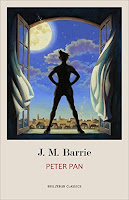
Peter Pan (by JM Barrie)
![]() |
| (Amazon UK link) |
13 Sept 2022
Persuasion (by Jane Austen)
![]() |
| (Amazon UK link) |
I knew the story, more-or-less, helped by having seen a BBC film production of it in 2019. But as ever, I’d forgotten most of the detail. And, with Jane Austen, there’s a lot of detail! Indeed, I wondered what I had let myself in for as I read the first chapter; it’s long-winded, and really says very little other than that the heroine - Anne Elliot - lost her mother some years ago, has an older sister called Elizabeth and a younger one called Mary, who is married. She also has an extremely snobbish father.
The writer in me is impressed by the way Austen ‘shows’ rather than ‘telling’. It’s typical of her era (she wrote the book in 1815-1816) that her descriptions give not just a vague idea of what a character looks like, but shows them in a typical attitude. In this case. Anne’s father is perusing his favourite book, one that lists all the aristocracy, of which he is (in his mind, anyway) a significant member.
On the other hand, it’s very wordy… coming to the book after such a long period (and after having seen the films more recently) I did wonder just what I was getting into and whether I would manage to wade through in time for the meeting. However, I gradually became caught up in the story, so that the wordiness was no longer distracting.
Anne is a likeable heroine; she’s kind, unassuming, and - which gives the book its title - very persuadable. We soon learn that she broke an engagement eight years earlier to a young naval officer, Frederick Wentworth. Her father and sister didn’t approve, and her close friend Lady Russell also felt the match was unsuitable. Anne hasn’t forgotten him, and has not found anyone she likes nearly as much. So it’s a bit of a shock when she learns that he’s to be in the neighbourhood…
Much of the book is set in Bath, where Anne’s father and sister have gone for a while, to aid their dwindling finances. Anne herself stays with her sister Mary for a couple of months; Mary is married to a nice young man and has two children whom she finds very difficult; but Mary is both garrulous and a complainer, though essentially good-hearted. We see Anne in her role as aunt, as confidante, as someone whom everyone likes but who is often unnoticed.
There’s a large cast of characters, which I found a tad confusing at times. It’s not helped that three of the young men who feature are called Charles. But it didn’t matter too much; I followed Anne’s story, I felt for her confusion, embarrassment and growing rekindling of love, and I appreciated the gentle satire of many of the other characters.
Not my favourite Austen, but I was very glad to have the motivation to re-read ‘Persuasion’; recommended if you like this style of writing. It's widely available in paperback form, and for the Kindle. I downloaded the version I read free from Project Gutenberg.
Review copyright 2022 Sue's Book Reviews26 Jul 2018
Sense and Sensibility (by Jane Austen)
![]() |
| (Amazon UK link) |
I last read 'Sense and Sensibility' in 2003, so decided it would be a good book to read while travelling, and staying with our family on a ship. I keep my Kindle in my bag, and it's ideal to pull out to read for odd moments when I'm not doing anything else. I knew the overview of the story. I remembered that there weren't too many characters, and it would be easy to pick up or put away at a moment's notice.
Sense and Sensibility features the Dashwood sisters Elinor and Marianne. The have a younger sister too, but her part in the book is so minimal that I'm not sure why she's there. Their widowed mother cares for them all deeply and is a likable, sensible woman, entirely unlike the better-known Mrs Bennett of Pride and Prejudice.
As the book opens, the family is staying with the girls' half-brother John. He likes them all well enough, but he has a selfish and manipulative wife called Fanny. There's some satirical - and rather sad - humour early in the book, typical of Jane Austen, as John debates what exactly his father meant when, on his deathbed, he asks his only son to look after his sisters. The conversation is almost reminiscent of that between God and Abraham towards the end of Genesis 18, in an entirely different context.
After some months, the Dashwood women are offered a cottage by a distant relative, and decide to move there. But before that happens, Elinor, the 'sensible' sister, has formed a deep friendship with Fanny's brother Edward, and has started to fall in love with him. Elinor is prudent and wise; she's artistically inclined, and also self-controlled in her outlook. Austen cleverly shows these traits in her actions and conversations, and I built up quite a nice image of a kind and responsible eldest daughter. While minor characters are caricatured, Elinor is, to me, very believable.
Marianne, by contrast, is full of what the author calls 'sensibility'. She's extremely emotional, and lets everyone know what she's feeling. She veers between wild delight and the depths of misery, and is inclined to take things personally. She, too, is a well-drawn character, if possibly a tad exaggerated. She is determined that a first love lasts forever, and that older people - by which she means anyone of about thirty and above - are incapable of any strong passions, or indeed of feeling anything much.
The characterisation is wonderful, in my view, and the conversations beautifully done. There's a lot of satire and irony, much that is obvious to the reader while not being spelled out, or understood by the characters. I love the way that Jane Austen managed to show how ridiculous some of her creations are, and what they're thinking, based on their behaviour and dialogue.
Inevitably, given the era, there's a lot of class consciousness, where breeding and elegance are considered (by some) to be more important than kindness and generosity. We also become aware of Elinor's inherent good manners which enable her to treat others with respect and friendliness even when they annoy her. Marianne's sensibility is mostly inward looking, or expressed to her family, but can make her take others in dislike and behave, if not deliberately rudely, with abruptness, or by avoiding them entirely.
As the book progresses, the two sisters' romantic lives follow remarkably similar patterns, so the contrast is clearly shown between their vastly different reactions. Towards the end, each learns a little of her sister's way of dealing with emotions and life in general, and becomes better-balanced as a result.
Definitely recommended to teenagers and adults who like this kind of slow-moving character-based women's fiction. The link above is to a print edition but as it's long out of copyright, it's easily available free in ebook form, or inexpensively from charity shops.
Review copyright 2018 Sue's Book Reviews
21 Jul 2018
Anne of Green Gables (by L M Montgomery)
![]() |
| (Amazon UK link) |
I last read ‘Anne of Green Gables’ in 2003. While I recalled the general outline of the novel, I had forgotten most of the detail. So I very much appreciated getting to know the crusty, house-proud Marilla and her shy brother Matthew again. When we meet them, they are hoping to adopt an orphan boy of about eleven to help Matthew in his farm work. Matthew is sixty and beginning to feel his age; he's had some trouble with his heart, and is not supposed to do any heavy work.
We also meet the warm-hearted but strongly opinionated Rachel Lynde, their nearest neighbour, who likes to keep an eye on everyone she sees. The opening sentence of the book, which takes up almost an entire page, is a delight in its gentle wry humour, explaining that even the rambling brook has to straighten out when it goes near Mrs Lynde.
Matthew sets out in his horse and buggy to the station, to meet the orphan boy, but when he arrives he finds a girl: the red-headed Anne. He can't leave her alone, so he collects her but doesn't dare mention that he wanted a boy. Anne chats to him the entire way home, artlessly and cheerfully, appreciating everything she sees around her, exercising her imagination in myriad ways, and expressing utter delight that she is to be adopted, and to live in such a beautiful place....
It's no spoiler to say that despite Marilla's reservations, they decide to keep Anne, and that she brings sunshine and happiness to their lives over the next few years. Anne makes some close friends and also a sworn enemy when one of the boys in her class insults her hair. Each chapter is an incident in itself, demonstrating Anne's imagination and often careless ways, as she gets distracted, or forgets what she was supposed to be doing. She has quite a knack of getting into trouble, mostly through no real fault of her own.
I had, of course, recalled the dramatic climax to the book in the penultimate chapter. But I had forgotten the very moving sections that follow. It’s a book with a lot of emotion; as we see Anne’s maturing, and her effect on so many other people in the neighbourhood. Her careless, accident-prone nature and tendency to hold grudges ensure that she is not a ‘too good to be true’ heroine, but a sensitive, imaginative flesh-and-blood girl.
I loved the book as much as I did when I first read it. It was intended for young teenagers, but could be enjoyed by fluent readers of about eight or nine and older, as well as adults looking for a bit of nostalgia. It makes a great read-aloud too for those wanting to introduce their children to some of the classics.
Highly recommended. Though long out of copyright (and thus available free in e-book form) 'Anne of Green Gables' remains constantly in print in paperback, in many different versions. It's often found second-hand too.
Review copyright 2018 Sue's Book Reviews
15 Jul 2018
Eight Cousins (by Louisa M Alcott)
5 Dec 2017
Little Lord Fauntleroy (by Frances Hodgson Burnett)
![]() |
| (Amazon UK link) |
The story is about a boy called Cedric, who lives with his mother in a fairly run-down New York neighbourhood in the late 1800s. His father, who was English, died some years earlier. Cedric is a lovable child, who has a knack of making friends with people of all ages: from the local grocer to a bootblack who struggles to make ends meet.
One day, a lawyer arrives from the UK, explaining that Cedric’s two uncles have also died, without any children, so he has inherited the title of Lord Fauntleroy; one day he will be an earl. The lawyer has been sent by Cedric’s grandfather, who disowned his youngest son when he married an American. He asks that Cedric and his mother move to England, so that Cedric can become accustomed to his title and duties. However, he refuses to see Cedric’s mother, and will install her in a house nearby.
The mother (we never learn her first name) is almost heartbroken, but she knows it’s the right thing to do. So without a word against the grandfather, they bid farewell to their many friends, and the only country Cedric has ever known, and embark on the long voyage to the UK.
The plot is probably well-known: the crusty old grandfather is pleasantly surprised by Cedric’s polite manners, and frank - but well-spoken - dialogue. He never liked his own sons much, but quickly becomes very fond of his young grandson. Much of the book describes their growing relationship, watched with astonishment by the Earl’s servants and the local Vicar.
Inevitably there’s a crisis - one which includes such an enormous coincidence that I found it a tad hard to swallow. But it’s a children’s book, initially serialised in a magazine, and extremely popular with its young readers. It paints a good picture of the contrast between aristocratic homes in England and the poorer parts of New York, but is not in any way anti-American despite the Earl’s sentiments. The author was clearly comfortable in both cultures, and shows well how different the two countries were, even 130 years ago.
Well worth reading for anyone - child or adult - who likes this era of fiction; it would make an excellent read-aloud too, with much to discuss and think about from a social history point of view.
Definitely recommended. I read it in about three hours, and it made an excellent distraction from an otherwise rather boring flight. Free versions are widely available from Amazon or Project Gutenberg, as well as paperback and other Kindle editions.
Review copyright 2017 Sue's Book Reviews
7 Oct 2017
Good Wives (by Louisa M Alcott)
![]() |
| (Amazon UK link) |
The book opens with quite a lengthy introduction, which I had completely forgotten about. Perhaps I read an abridged version last time, although as it’s sixteen years since I last read this book, my memory is vague. I had, of course, recalled the main points of the story but few of the details. The introduction takes us through a three-year period, telling us what has happened to each of the girls and some of the other important characters.
We are then taken directly into Meg’s wedding to John Brooke. This is evidently considered the first ‘interesting’ thing that happens since the announcement of their engagement at the end of ‘Little Women’. The wedding is simple, with family and close friends present. We then hear nothing more of Meg and John until a few chapters later, when we see the first tensions arising in their domestic bliss.
Meanwhile Amy, the youngest in the family, attempts to develop different artistic skills. She joins a class, where she finds it hard to make friends, and then decides to host a picnic lunch. This makes an amusing chapter, although I could also feel Amy’s stress and embarrassment when things go wrong. That chapter is followed by a look at Jo, the strongest character in the family, and - based on the author herself - a writer.
There’s not a great deal of plot, as these books are character-based. Each chapter gives an incident in the lives of one or more of the girls, with some humour, some stresses, and one very sad chapter towards the end. Inevitably there’s a fair amount of authorial aside, including some preaching and moralising - but the author evidently expects it to be taken with a large pinch of salt, and even comments, sometimes, on her commentary.
Inevitably a book first published in 1869 - nearly 150 years ago - is in places very dated. Feminists may decry the expectations put upon women of the era, and the idea of a husband being the head of the household. But the girls are surprisingly modern in their outlook, with distinct personalities. None of them, except perhaps Beth, is too good to be true. They all have their faults, and we see them mature and develop over the course of the book. Meg and Amy learn to be less envious of the good fortune of others, for instance, and Jo learns to be less outspoken.
‘Good Wives’ was originally written for teenage girls, but I suspect some modern teens today would find it too slow-moving. They might not have the maturity to appreciate the slow-moving but tender love stories that develop, or appreciate the morals and philosophies expounded.
However, I have always loved these books, and enjoy them just as much in my fifties as I did when I was in my teens. Highly recommended, but it’s best to read ‘Little Women’ first. Regularly re-printed, including some inexpensive and free editions for the Kindle as it is long out of copyright. Widely available second-hand. Make sure you get hold of un-abridged versions, as the shorter ones miss out rather a lot.
Review copyright 2017 Sue's Book Reviews
10 Sept 2016
Pride and Prejudice (by Jane Austen)
![]() |
| (Amazon UK link) |
I first discovered ‘Pride and Prejudice’, as so many do, at secondary school. I liked it then and have re-read it perhaps two or three times over the years; it was clearly due for a re-read. The opening sentence is one of those classics of irony, imputing the materialistic and shallow attitudes of Mrs Bennet to the author. Clearly not all young men possessed of a fortune are in want of a wife, but Mrs Bennet feels that they should be, and, moreover, that one of her girls would fit the bill nicely.
The general storyline is well-known due to the many filmed versions: Mr Bennet is well-meaning and intelligent, and has a sense of humour, but is basically lazy. His wife is materialistic and cares only what other people think; she has no original ideas of her own. They have produced five daughters, the youngest of whom - Lydia - is fifteen when the novel opens, turning sixteen during the course of the story. Jane, the eldest, is in her early twenties.
The five girls are all quite different in character. Jane is kind and beautiful, and cannot think ill of anyone. She’s quite close to Elizabeth, who is twenty at the start of the book, and is by far the most intelligent of the sisters. Lizzy has a sense of humour and a strong sense of honour. The middle daughter, Mary, is accomplished and hard-working, but tends to offer platitudes rather than producing any original thoughts of her own. Moreover, poor Mary lacks any true talent or ability to be charming.
Kitty, the fourth sister, is shallow and easily led; we don’t see much of her in the novel, and she seems somewhat extraneous to the plot, other than her closeness to Lydia, who is like her mother in many ways, but with few scruples and a great deal of envy and conceit.
Into the neighbourhood come Mr Bingley, owner of a large estate, and his friend Mr Darcy, who seems very stand-offish, even rude in his opinions of local society. Bingley is very taken with Jane, and Mrs Bennet is quite convinced that the two will make a match. We then meet Mr Collins, cousin to the Bennets and inheritor (by entail) of their home, since they have no male heirs. Mrs Bennet thinks he should marry Lizzy…
It’s a character-based novel, and the above is merely an initial idea of some of the main players. Austen had quite a gift of portraying personalities and while it’s not laugh-aloud humour, there’s a great deal of satire and places that made me smile; inevitably some of the people are caricatured (I really hope nobody like Mrs Bennet or Mr Collins actually exist!) but that doesn’t matter at all. Jane and Elizabeth are very nicely portrayed and contrasted; one only wonders how their parents managed to produce two such likeable and honourable daughters!
The plot is that of a romantic novel, with misunderstandings, initial prejudices, mistakes made, and a few traumas thrown in. It’s quite long-winded, typical of 19th century writings, and the main problem that occurs towards the end of the book, that shocks the entire neighbourhood, would probably seem unbelievable in today’s much more liberal society.
Nevertheless, much of what’s thought and felt seems quite modern, and since I had the time to ruminate and read in several brief periods, while travelling or at night, I read some of the descriptions which I might otherwise have skimmed or even skipped, and took the conversations slowly so as to hear the voices in my mind. I liked it very much; there’s a great deal more in the book than in any film version, and I’m very glad I had the opportunity to re-read it.
Note that the Amazon link given above is to a paperback versions of this classic novel. But it can often be found inexpensively second-hand, and there are several editions available inexpensively or free for the Kindle.
Review copyright 2016 Sue's Book Reviews
8 Sept 2015
The Thirty-Nine Steps (by John Buchan)
![]() |
| (Amazon UK link) |
I’ve finally sat down to read ‘The Thirty-Nine Steps’, and what a treat it was! It’s more an adventure story than a thriller, although the ending is quite tense. It was published 100 years ago, so inevitably it’s dated, but that didn’t pose a problem for me. I’ve read and enjoyed Jane Austen and those of her era which are a lot more old fashioned. This is more in the style of PG Wodehouse or Conan Doyle: terse, but fast-paced, and oddly light-hearted.
The book, as is stated in a brief note at the beginning of my edition, was deliberately written as what the author calls a ‘shocker’ - an exciting adventure story where the hero keeps on escaping by the skin of his teeth, rather like the comic strip stories that appeared in weekly magazines. And that’s just what it is. Those who criticise it for being implausible (or just plain silly) have rather missed the point.
And the author does it very well. Richard Hannay is the protagonist, an engineer who has been living in South Africa, who has returned to the UK. He’s been living in London for a while but is utterly bored with the socially active lifestyle he finds himself adopting. He has plenty of money, but nothing to make life more interesting. Then, as he’s about to give up his flat and leave, a stranger arrives on his doorstep with a worrying story about international politics and intrigue, one which means the stranger is in danger of his life…
Hannay gets involved, and over the next few weeks his life is quite the opposite of mundane. He flees to Scotland, both from the British police and from enemies of the country. He takes refuge with a series of unlikely people, dons many disguises, and - as with the kind of stories the author is emulating - manages to escape each scenario by cleverness or luck, before finally returning to London in the hope of sorting everything out. It’s no spoiler to say that he escapes; the story is told in the first person, so we know that he must be alive at the end.
It’s not a character-based story, but by seeing everything through Hannay’s eyes we get to know him quite well. I felt a bit sorry for some of the people he meets, but they’re mostly caricatured. Coincidences abound, but that’s part of the rules of this kind of story. And the writing is good - fast-paced, exciting, with just enough description to set the scene. In many places there are stereotypes and politically incorrect commentary, but that’s par for the course with this era and style of writing.
‘The Thirty-Nine Steps’ is just over 100 pages long so I read it in a few hours. The final chapters, which are more about politics, went a little over my head, but that didn’t matter at all. The ending is rather abrupt; I’d have preferred a bit more detail, but the final paragraph slotted extremely well into the realities of world history.
This isn’t a thriller in the modern sense of the word, but it’s one of the earliest of the genre, and may have inspired more recent novels on similar themes. It has to be taken with a very large pinch of salt, but still, I would recommend it to anyone interested in literature from this era, teenager or adult.
Continually in print in many versions, including ebooks (although it’s worth checking reviews first; some, apparently, have been quite poorly formatted). This novel has also been made into various films.
Review copyright 2015 Sue's Book Reviews
12 Mar 2014
Cranford (by Elizabeth Gaskell)
![]() |
| (Amazon UK link) |
'Cranford' is a character-based novel set in the fictional town of the same name. First published in the middle of the 19th century, this is inevitably rather dated and rambling - yet surprisingly readable. Having said that, I felt rather as if I waded through the first couple of chapters on my Kindle, wondering when it was going to get to the point, or at least begin the story.
It opens with a lengthy description of the fictional town of Cranford, ruled by middle-class and upper-middle class ladies. While there was gentle irony in much of the description, I found myself drifting off at times. The disadvantage of reading on the Kindle is that it's difficult to flick through to see whether the style changes!
However, I persevered, and gradually the story gets going. The narrator - Mary Smith - does not live in Cranford but makes regular and lengthy visits there, usually staying with the delightfully vague Miss Matty and her sister. When there, she takes part in the everyday life of her friends: paying calls, discussing local events, playing card games. In that sense, it's a lovely piece of social history, giving glimpses - albeit caricatured - into life in this era, in this kind of small town. I could quite see why it was made into a TV series and also why it was so popular in that format.
There isn't a huge amount of plot in the book; people come and go, and rather a large number die (not untypical of the time). I didn't find myself empathising with anyone in particular, or moved - but I did smile a few times, and after the first few chapters, looked forward to finding out what might happen next. I was pleased that there was an encouraging, if rather coincidental ending.
I'm not strongly inclined to get hold of the sequels, but I enjoyed this as a bit of gentle historical fiction and am glad I read it.
Note that the above link is to a paperback versions of 'Cranford', which is still regularly republished. Kindle versions are either free or inexpensive, and there are many other independently printed versions as this is long out of copyright.
Review copyright 2014 Sue's Book Reviews
19 Feb 2014
The great Gatsby (by F Scott Fitzgerald)
![]() |
| (Amazon UK link) |
'The great Gatsby' is a classic, set mostly in Long Island in the US around the turn of the 20th century. It's narrated by a young man called Nick who lives in modest circumstances next-door to the fabulously wealthy Jay Gatsby. Large and noisy parties are held regularly in Gatsby's home, but he isn't really close to anyone until he befriends Nick.
The author tells a reasonable story which I assume was realistic for the era. The characters all seem shallow and two-dimensional, only interested in money, cars and affairs. Perhaps this was intended, so as to show the shallowness of the era... but it didn't make for a terribly interesting book, in my view. Still, I read it over about ten days while eating breakfast, and it was quite readable, even if I could not bring myself to care about any of the people.
I would not personally recommend 'The great Gatsby' - but many readers love it. It's not a long book and I suppose it's worth reading as a bit of unusual social history. It's also interesting to learn that dubious morals and people's expectations really have not changed much in the past hundred years.
I don't suppose I will read it again. But then, I'm not really a fan of Dickens, either.
Note that the Amazon link is to a paperback editions of this classic, rather than the free Kindle version which can be downloaded on both sides of the Atlantic.
Review copyright 2014 Sue's Book Reviews
16 Nov 2013
The adventures of Sherlock Holmes (by Sir Arthur Conan Doyle)
![]() |
| (Amazon UK link) |
I know that one of the books I read around that time was ‘The adventures of Sherlock Holmes’, the first of the volumes of short stories. I know that because I also remember being utterly terrified by one of them - ‘The speckled band’ - and developed a rather irrational fear of hanging light switches as a result.
I’m pretty sure I re-read this book perhaps fifteen years ago (with the exception of ‘The speckled band’!), and then when I spotted it free for the Kindle, I downloaded it some time ago. I was inspired to read it while we were visiting family, and introduced to the recent British TV series 'Sherlock
based on the famous detective.
The fictional character of Sherlock Holmes is famous throughout the world for his incredible observation and brilliant deductions. His job was that of a freelance private detective, and the stories in this book provide a range of different backgrounds, people and crimes or other puzzling circumstances to be solved. The books were written as contemporary stories shortly before the end of the 19th century, but the language used is still quite accessible, and the plots, while rather far-fetched, make very interesting reading.
The twelve short stories in this book, narrated by Holmes’ friend and companion Dr Watson, are supposedly a kind of casebook of some of his more interesting cases. We get the idea that Holmes usually solved everyday problems that didn’t require much ingenuity; but he revelled in problems where the solution was not obvious. We meet him in this volume saving lives, donning fantastic disguises, rescuing people from horrible dooms, and finding jewels. I remembered the outlines of some of the plots, but it didn’t detract at all from my enjoyment at re-reading them.
I don’t know if many of today’s ten-year-olds would find the somewhat rambling style all that interesting, but for eclectic readers, and those who enjoy classics, this is a very readable and enjoyable volume. Probably more appropriate for teens and adults, and unlikely to be of interest to children less than the age of ten - although anyone watching the modernised versions of the stories may be interested in learning about the originals.
So, in general, I would recommend this. The Amazon link is to a paperback version of this, but it can often be found second-hand, and since it’s long out of copyright, it can be found (along with Conan Doyle’s other volumes) free for the Kindle on both sides of the Atlantic.
Review copyright Sue's Book Reviews 16th November 2013
29 Aug 2012
What Katy Did at School (by Susan Coolidge)
![]() |
| (Amazon UK link) |
'What Katy Did at School' is the first sequel to 'What Katy Did', which I read just recently. This volume features a year when Katy, aged 16 and now recovered from her long illness, goes to a boarding school for a year with her sister Clover. There they meet the fascinating and rather daring Rose Red, and find themselves involved in various scrapes, not all of which were their fault in any way.
There's very little about the actual education in the school, although presumably it happens. The story is character-based, so there is a great deal about the girls and their various friendships. The author's cultural biases of the era come through rather clearly, seeing flirting with the boys' college next door as being decidedly unladylike, and causing Katy to form a society that considers itself above such things.
There are some mildly amusing parts of this story, but reading it again, my main impression is of what seems like very interesting American social history. The book was first published in 1873, so was contemporary about 140 years ago.
I had forgotten most of the anecdotes and very much enjoyed re-reading this classic on my Kindle. I'm not sure it would appeal to today's teenagers, but older children might like it, and it's certainly worth re-reading by those of us who remember it fondly from our own childhood.
Recommended. It stands alone, but would be better read after 'What Katy Did'.
Note that the Amazon link is to a paperback version of this book; there are many other possible editions available, including free Kindle e-books.
Review copyright Sue's Book Reviews, 29th August 2012
12 Aug 2012
What Katy Did (by Susan Coolidge)
![]() |
| (Amazon UK link) |
However, I don't recall the last time I read 'What Katy Did' or the sequels which I bought later in paperback editions. The books have been borrowed many times. It was only about a year ago that I learned about two further sequels to the series, and I was delighted when I learned that, as they're out of copyright, they are freely available for the Kindle. I downloaded them, and the three 'Katy' books too - and decided to read them all in e-book form.
This, the first book in the series, is about 14-year-old Katy Carr and her five younger siblings, who live with their busy doctor father and his rather frazzled and frequently cross sister, Aunt Izzy. Katy is good-hearted but frequently heedless, and hates being told what to do. The family are reasonably well-off, with a few maids and plenty of land, and have a great friend in Cecy, their next-door neighbour, who is involved in most of their games.
The first half of the story lets us into the lives and personalities of the children, particularly Clover, Katy's good-natured helpmate and the rather envious Elsie, who longs to be part of Katy's inner circle. We see Katy getting into mischief at home and at school, and continually wishing to be a better person... but equally being irritated by her aunt, and impatient with Elsie.
Their father's cousin Helen, a life-long invalid, comes to stay and exerts a good influence over the children despite being rather too good to be true. Then, when Katy has a horrible accident, Helen helps her move out of her initial depression and anger. This part of the book is a little cringeworthy; I skimmed some of it, but it wasn't too long. The last part of the book, as I remembered, was very encouraging.
Of course there's a moral to the story, as there was to most children's books of the era. Katy suffers through disobedience (although the author does admit that Aunt Izzy would have done better to explain her dictums) and matures through discipline and suffering. Yet the writing is good enough, and the characters sufficiently lively that it's still a good read and one that I thoroughly enjoyed perusing again.
Recommended as a classic to confident readers of about six and upwards, although probably intended for young teenagers originally.
Note - the Amazon link points to a paperback edition of What Katy Did, but it's long out of copyright and is freely available for the Kindle.
Review copyright Sue's Book Reviews, 12th August 2012