Showing posts with label J K Rowling. Show all posts

23 Jun 2025

The casual vacancy (by JK Rowling)

The casual vacancy by JK Rowling
(Amazon UK link)
When I learned, over a decade ago, that JK Rowling had published an ‘adult’ novel, I read a few reviews out of curiosity. Some praised the book highly; others said it was disappointing after the Harry Potter series. Some said it was realistic and insightful; others complained about the strong, crude language. I decided I probably wouldn’t bother with it.

Then I saw a copy of ‘The casual vacancy’ at a local church book sale nearly three years ago. I decided to fork out fifty cents to try it, knowing that I could abandon it after a few chapters and give it back if I didn’t like the book. It sat on my ‘to-read’ shelf for all this time, and I finally picked it up to read last week. 

The book opens with the death of a man called Barry, who - we learn through the book - was kind and altruistic, and generally liked in the village. His wife Mary sometimes wished he paid more attention to her, but she and their four children are bereft without him. 

Barry’s sudden passing leaves a vacancy open on the village council, and much of the book revolves around the different people hoping to fill this slot. There is quite a large cast of characters, and in the first few chapters I found myself somewhat confused, though I didn’t resort to writing out a list, as I’ve sometimes done with other books. The writing is good enough that the important ones are easily distinguished, and it didn’t much matter when I temporarily forgot who a minor character was.

There are also several threads in the book involving teenagers, who are around sixteen and attend the local comprehensive school. And their language and generally crude behaviour is, in my view, quite shocking. Indeed, so much so that after a few chapters I was tempted to give up. I might have done so, but in the past couple of months I abandoned two other books which I found too crude, with dislikable characters. I didn’t want to make a habit of it. 

So I persevered, and I’m glad I did. I don’t know if these teens are typical of today’s British youth - if so it’s quite worrying. And yet, underneath the brash, lewd and sometimes violent attitudes of these teenagers, there are some positive traits too. Andrew Price is interested in girls, particularly one who is new to the village called Gaia. But he’s also very nervous about approaching her. He isn’t particularly bright, but as we learn quickly, his father is a crook who can fly into violent passions, thinking nothing of hitting out at his sons. 

Andrew’s best friend is a boy called Stuart who’s rather more street-wise, and has decided to befriend and become intimate with a girl called Krystal who lives in a council house. Stuart is brash, and is an online bully to another girl in their class. But he also cares deeply about integrity (on his terms) and honesty. As for Krystal, her language is the foulest of all, and her morals appear to be almost non-existent. But, as we discover, her mother is a drug addict who doesn’t cook or clean or care for her three-year-old Robbie. Krystal adores her little brother, and does what she can to look after him.

There are incidents with social workers, and also scenes in the school. The viewpoint changes regularly, as does the setting, but the writing is excellent and the pace was just right for me, once the story got going. Behind the apparent quiet and beauty of this village, there are so many battles taking place; in marriages, between parents and teens, and in people's own minds. Questions arise, which are never really solved: should potential councillors be upfront about their private lives? At what point is it better for a child to be taken into care, rather than staying with a neglectful mother?

There are also insights into parents’ relationships with their teens, which may be caricatured, but seemed to me to have more than a grain of truth in them. Some parents seem to dislike their children and lash out at them; I hope this isn’t common. Others are busy, and absorbed in their own problems, and don’t necessarily take time to listen properly to their teens’ concerns. This resonated much more strongly with me; it happened to me when I had teenagers at home, and I’ve observed it with other parents.

The book contains some distressing scenes including violence, and some tragedies towards the end which are surprisingly moving. But the author manages to give enough detail to make it clear what’s happening without anything gratuitous. I appreciated that, and while I didn’t like the ongoing crude ‘strong’ language used by so many of the teens, it definitely helped to differentiate their scenes from those of their parents and other adults in the village.

A lot of contemporary issues are touched upon in addition to the more major ones. Possibly a few too many: for instance there’s one non-white family who experience some racism; one gay couple (although they have a very minor role) whose parents aren’t happy; a boy who has been adopted and whose father still finds it difficult to accept. And more. But they all felt so real while I was reading that I hadn’t quite thought about it until I’d finished. 

Indeed, by the time I was half-way through, I found it difficult to put down. I can’t say I enjoyed the book, exactly, and doubt if I'll read it again. But it’s quite thought-provoking. It’s definitely not a book for children, or for anyone who’s offended by bad language. But for older teens, and broad-minded adults wanting something a bit different, I would (guardedly) recommend this. 

Review copyright 2025 Sue's Book Reviews

23 Oct 2019

Harry Potter and the Deathly Hallows (by JK Rowling)

Harry Potter and the Deathly Hallows by JK Rowling
(Amazon UK link)
I re-read the first six of JK Rowling’s Harry Potter books earlier this year, about one per month, alongside many other books; both new (to me) novels, and some I have previously liked by other authors. However when I finished ‘Harry Potter and the Half-Blood Prince’, I didn’t want to wait before embarking on the final episode in the saga.

I had only previously read ‘Harry Potter and the Deathly Hallows’ once, back in 2007 when it was first published. I recalled it as having an entirely satisfactory ending, albeit with casualties along the way; but I also remembered being a little disappointed that, other than the final battle, there is nothing set in Hogwarts, and no ‘school story’ section at all.

This time, I read it slowly, knowing in general terms what was coming, but having forgotten almost all the detail. There’s a great deal of tension right from the start. The book opens as two of Lord Voldemort’s supporters head for a meeting, and discuss their strategy to attack Harry and his friends. The ‘dark lord’ hopes that by destroying his nemesis, his rise to power will be uninterrupted.

The scene then moves to Harry’s relatives’ home in Privet Drive. Harry is preparing to leave forever, and has to persuade his Dursley aunt, uncle and cousin to leave too, as they will be in danger once Harry comes of age. Until his 17th birthday he and his home have been under powerful protection, but that is due to be lifted a few days later.

Harry is surprised when quite a number of his friends arrive to escort him, several of whom take polyjuice potion to provide decoys. Their flight sets the theme of the book - fast action, battle against the evil death-eaters, and some tragic casualties.

There’s a brief light interlude when Ron’s brother Bill gets married to Fleur, but the festivities are interrupted…. Harry, Ron and Hermione have to vanish, and do so in a way that was almost reminiscent of Bilbo Baggins disappearing from his birthday party. Their quest is to find and destroy several ‘horcruxes’ - depositories for Voldemort’s fragmented soul - but they have little idea where to start.

It’s a classic quest/adventure story, with little of the humour that lightly peppers some of the earlier books. It’s also much more overtly laced with Christian symbolism: from Christmas carols and church bells to Bible verses on tombstones and discussion of life after death. Not in a preaching way, of course; but this epic good vs evil septology is shown clearly, in this book, as being a kind of parable, or allegory perhaps, from a Christian point of view. (For anyone wanting to explore this further, I would recommend this article).

There are a couple of very moving scenes which brought tears to my eyes, contrasting with the high-action fast-paced escapes or battles that take place in other chapters. More back story is gradually explored, and the author brings together many of the events and symbols from earlier books leading towards the inevitable, dramatic and superb conclusion.

I love the way the author elevates unconditional love, loyalty, courage and friendship in the series, and most of all this book. Harry is by no means a perfect person: he’s quite inclined to break rules, he’s hot tempered, and he makes mistakes. But he is intensely loyal to his friends, determined to continue his quest even if it leads to his destruction. He finds it upsetting when he learns that one of his heroes was flawed too, but Harry has no desire for power, and is even willing to extend mercy to some of his enemies.

It’s definitely better to have read the earlier books before embarking on this one, which makes a fitting conclusion to the series. I would recommend reading this before watching the film versions; despite making this book into a two-part film series (Deathly Hallows part 1 and Deathly Hallows part 2) there is much that’s missing from the films; I don’t think I would have understood them if I had not read the book first.

It's taken me five days to finish this book, despite it being rather shorter than a couple of the earlier volumes (a little over 600 pages in all). That's partly because it has been a busy few days, partly because I deliberately didn't read this book at bedtime, not wanting to trigger bad dreams, and partly because I wanted to savour the language, and the story, and frequently re-read whole sections immediately after finishing them.

Very, very highly recommended to anyone over the age of about twelve.


Review copyright 2019 Sue's Book Reviews

18 Oct 2019

Harry Potter and the Half-Blood Prince (by JK Rowling)

Harry Potter and the Half-Blood Prince by JK Rowling
(Amazon UK link)
I’m so glad I decided to re-read JK Rowling’s Harry Potter series this year, at a rate of around one book per month. I have read others of my favourite authors too, and some books that were new to me. It was with a little trepidation that I embarked on the sixth volume, ‘Harry Potter and the Half-Blood Prince’, a few days ago, as I could recall the dramatic - and traumatic - climax.

But now I’ve finished it, I am once again awed at the quality of the writing, and the way the author pulled together so many subplots and strands. The first time I read this, in 2005, it was shortly after publication. I read it aloud to my teenage sons, and had no idea what was coming. We were all shocked by the ending, after much discussion about the starting chapters. The second time I read it was in 2007, immediately prior to the publication of the final volume in the series.

But I had not read ‘Half-Blood Prince’ for twelve years, nor since reading ‘Deathly Hallows’. So I had the benefit, this time, of knowing a few of the secrets that were revealed, and was able to read this in the light of future knowledge, so to speak. I could see more clues, and some deliberate ambiguities.

The story opens with a light-hearted scene as the Muggle prime minister has a meeting with the Minister for Magic. It’s no longer the somewhat bumbling Cornelius Fudge, but the rather more organised Rufus Scrimgeour. However Fudge arrives first and makes the introduction, and it’s a very cleverly written scene, with the clear implication that all the British prime ministers have known about the magical world.

Scrimgeour passes on some dire warnings, and they take us neatly into the second chapter, one which takes us into the dark wizarding world. Professor Snape meets some of the Malfoy family, and makes an unbreakable vow… although we don’t actually know what it refers to until later in the book. We don’t learn why he is willing to make it until the final book.

Harry doesn’t appear until the third chapter; once again he has spent the summer with his caricatured non-magical relatives. He has heard nothing from anyone, and is depressed anyway after the events at the end of the fifth book. Then Professor Dumbledore appears, and meets his aunt an uncle in another scene which is light-hearted, in contrast to chapter two.

Dumbledore takes Harry to meet an elderly wizard who is possibly going to teach at Hogwarts, and then to the Weasley home, where he spends the last few days of his holiday. And then - amidst much high security - to Diagon Alley to buy more text books, and eventually on to Hogwarts for his sixth year.

Harry and his friends are sixteen now, and there’s rather more discussion of romantic interests, with a large amount of kissing and cuddling - although only as sidelines to the story. Hermione and Ron don’t speak to each other for a while, each pursuing other people, although it’s clear from the text that they’re rather keen on each other. And Harry realises that the person he cares about most is someone who has had several boyfriends…

There are private lessons with Dumbledore, gradually piecing together some past history that sheds light on the rise of the dark Lord Voldemort. There are potions lessons with a new master, in which Harry suddenly shines; this is due to a borrowed text book which has notes in the margins, and which originally belong to someone calling himself the ‘half-blood prince’. Another sideline story is the ongoing quest to discover who this might have been.

Harry is also very concerned about Draco Malfoy, suspicious that he is involved in a terrible plot, determined to find out what it might be…

The book has many twists and turns, with close escapes by two people, some Quidditch - Harry is now the captain of the Gryffindor team - and some discoveries. It wouldn’t work well as a standalone story; it’s far better read after the earlier ones, as there are so many characters and important history that would make little sense if this was read alone.

But it’s an excellent read. The film of ‘Harry Potter and the Half-Blood Prince’ is good too, but the movie versions inevitably miss a great deal of what happens in the books. This volume isn’t as long as the previous two, although it’s still just over 600 pages, but that’s far too much to fit into a two-and-a-half hour film.

Despite knowing what was coming, I found the final chapters tense, and the ending extremely poignant. So much so that instead of reading another nine or so different books before the finale, I’m going to re-read the last volume immediately.

This book is more for teenagers than young children - while the romantic interludes are extremely tame, and there is only the mildest of bad language, there's some violence and extreme tension - and the traumatic ending - which could be disturbing to younger or sensitive children.

Highly recommended, but I would strongly suggest that you read the earlier books first. They are:


Review copyright 2019 Sue's Book Reviews

19 Sept 2019

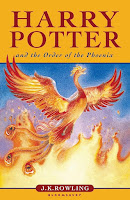
Harry Potter and the Order of the Phoenix (by JK Rowling)

Harry Potter and the Order of the Phoenix by JK Rowling
(Amazon UK link)
I was a huge fan of the Harry Potter books by JK Rowling when they were first published in the late 1990s and early part of the 21st century. I read most of them aloud to my teenage sons as soon as we acquired them, as we could not decide who would read them first. They were excellent books to read aloud - often for hours in a day - but I also enjoyed re-reading them myself just a few years later. And again, when the seventh book was published.

But I hadn’t read them for over ten years; so it was more than time for a re-read. I wondered how I would react, re-reading them from the perspective of an empty-nester, over a decade after the last one was written. I’ve watched the films in the intervening years, and thought them well done; but, other than the first, they didn’t really do justice to the books.

So I’ve just finished reading ‘Harry Potter and the Order of the Phoenix’, fifth in the series, and, I believe, the longest of the books. I last read it in 2007. At 766 pages in hardback, it’s quite a hefty tome; a challenging read for young children. It’s not really suitable for younger children anyway, as the plot is quite dark and very intense in this book.

While each of these books could stand alone, they are much better read in series. I re-read ‘Harry Potter and the Goblet of Fire’ a couple of months ago, and am glad I re-read it so recently. There’s much in this volume that refers back to incidents in the fourth book.

The reader is supposed to be aware that the evil Lord Voldemort returned to his body and summoned his followers at the end of the previous book, in a grim and very dark conclusion. That’s important, because a lot of the story in this book revolves around the fact that the Ministry of Magic is taking the official line that Harry is at best deluded, at worst an attention-seeking liar. Professor Dumbledore, Headmaster of Hogwarts School, believes Harry; and in doing so comes up against some dangerous enemies.

The book begins with Harry, totally fed up, at home with his aunt, uncle and cousin. He’s listening for news of disasters, but day after day nothing happens. His cousin Dudley is terrorising the neighbourhood, and Harry tries to keep away from him… then Dudley is attacked, and Harry, despite disliking his cousin intensely, defends him with his wand.

That leads to a court case at the Ministry of Magic, and the start of a most unpleasant term at Hogwarts. Harry is angry that his friends seem to be ignoring him, and that the Headmaster, Professor Dumbledore, doesn’t tell him what’s going on, or even look at him. Harry’s scar is hurting him far more than it used to. And he’s regularly in detention with the new Defence Against the Dark Arts teacher, Dolores Umbridge.

Umbridge is one of JK Rowling’s most unpleasant characters, who has a sadistic delight in causing pain, and has taken an immediate dislike to Harry. However the point is well made that even the nastiest of people are not necessarily followers of Voldemort. The first time I read this I was expecting a teacher or other character to be unmasked as something or someone unexpected, as happened in most of the earlier books. Instead this book is much darker, seeing the wizarding world preparing for a potential terrible reign of the evil ‘dark lord’.

At the same time, Harry’s year are stressed anyway because this is their ‘OWL’ year - Ordinary Wizarding Level exams are taken in each subject, and are clearly the Hogwarts equivalent to the UK GCSE exams, formerly known as O (ordinary) levels.

There are throwaway comments and one-liners that lighten the tension from time to time; the kind of thing that we all appreciated when I read the book aloud, although it’s easy to miss them when reading for the story. And there’s also the beginning of romantic threads; one more thing to add to Harry’s stress as his hormones are rampant and he has no idea how to interpret the highly emotional girl who goes on a date with him.

There’s a lot of fast action in this book, with perhaps too much detail about what spells are cast in the climactic battles that happen towards the end, but it makes for a very exciting story. Even though I had read this book three times before, I could hardly put it down at times. Other times, the tension was so great that I had to take a break from reading.

That’s just a tiny hint of what can be found in this long and intense book. If you find the length of this book daunting, the film version of ‘Harry Potter and the Order of the Phoenix’ is well done. It progresses the storyline and covers the most important parts of the overall story.

But the book has so much more. It's not a young children's book - the issues covered are deep and could be quite disturbing for a young child. But I would recommend it highly to anyone over the age of about twelve who has read and enjoyed the earlier books.

Review copyright 2019 Sue's Book Reviews

26 Jul 2019

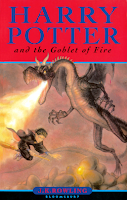
Harry Potter and the Goblet of Fire (by JK Rowling)

Harry Potter and the Goblet of Fire by JK Rowling
(Amazon UK link)
In gradually re-reading the Harry Potter series by JK Rowling again, I reached the fourth book of the septology, ‘Harry Potter and the Goblet of Fire’. It’s a long book, well over 600 pages, and when I first read it, it was my least favourite of the series. I recall telling someone that the first part is about an international quidditch match, the main part of the book about some tasks undertaken by four contestants for a major prize, and the end dark and depressing.

However I liked it better the second time I read it, in 2005.  This time, I found it almost impossible to put down. I finished reading in just a few days despite being rather busy. And when I had finished, I needed time to process it before even thinking about reading anything else. I then wanted to pick up the fifth book immediately - but I know from experience that I enjoy books more when I spread them out somewhat. So I’ve resisted the temptation and will probably re-read the next book in September.

‘Harry Potter and the Goblet of Fire’ begins, unlike the earlier books, with an unpleasant scene in a neglected house in an unknown village. We see lights and hear noises, from the perspective of the unfortunate elderly caretaker. And we then see and overhear some terrible things, which could be quite disturbing to a sensitive child.

The action then moves to Harry, who is staying with his awful relatives, the Dursleys. They loathe anything related to the wizarding world, so when the Weasley family arrive in their blocked up chimney, they are extremely unimpressed. It’s a light-hearted chapter, contrasting nicely with the opening one.

The Quidditch World Cup follows, but the action only takes a chapter or so; more interesting is what’s going on in the stadium, and what happens afterwards. Signs are afoot that the evil Lord Voldemort’s supporters are starting to gather. Harry knows he may be in danger, but he is well protected, and arrives safely at Hogwarts.

There’s yet another new teacher for ‘Defence Against the Dark Arts’. He’s known as Mad-Eye Moody, due to having an artificial eye that travels around his head in a disturbing way. He can see through doors and invisibility cloaks, too. But he is an excellent teacher. And he’s there, in part, to keep an eye on Harry and the international ‘Tri-Wizard Tournament’ which is to take place during the school year.

For the tournament, champions are selected from each of three schools, and must undertake some difficult and dangerous tasks. It would be a spoiler to say what these are, or who partakes. But I found them exciting reading; I knew, reading this time, that this book is far less like a school story than the earlier ones. There are forays into some of the classrooms, but they’re much briefer.

This is the first book where there are hints of romances; Harry and his friends are now fourteen, and just starting to be hormonal. There’s a Christmas ball, too, where everyone is expected to bring a partner. Harry is quite attracted to a girl in another house, but finds it extremely difficult to approach her, to ask if she would be willing to go with him.

Since I have read all the later books, I can appreciate this one more, setting the scene as it does for the battles and final confrontation of the last book in the series. Unlike the first two, this is not a book for younger children. Not that there’s anything overtly inappropriate in it; the bad language that peppers some of the films is only hinted at in the book, when it’s stated that someone swore, or told another person to do something that he would not say in front of a teacher. There are mentions of romantically attached couples embracing in the bushes, but only with the very mildest hints.

However the conflict and tension is up several notches from the earlier books. The champions in the tournament know they may be seriously injured, or die in their quests. We really don’t know who to trust. I had remembered the unexpected revelation that comes near the end of the book, which startled us all when we first read it. Knowing this was coming - like knowing the perpetrator in a mystery book - made me more aware of the reality (so to speak) behind various people’s actions and conversations.

There are some moments of joy, and some light-hearted satirical articles written by an irritating and intrusive journalist. There’s a tense period when Harry’s friend Ron won’t speak to him; and a moving section near the end, when Harry himself breaks down. And then there’s Hermione’s determination to free the apparently enslaved house elves, most of whom are horrified at the idea of being free or earning wages.

The writing is good, the personalities of the important characters are fairly well developed, and the plot of this is, in my opinion, excellent. Each of the first four books has surprises and revelations, but I think the important one in this book is the most unexpected, when read for the first time. Of course, these are intended for older children and teenagers, and as such the language is fairly straightforward. Yet somehow they have a strong appeal to adults too.

I still don’t like what happens in the climax to the book. But seen in the context of the whole, I now realise it was an indication of things to come, and a symbol of the utterly self-centred, indifferent evil of Voldemort. For this whole series involves a battle of good and evil; not that Harry is perfect, by any means. He has no problem breaking school rules, and he regularly neglects his homework, or is untruthful (though never to get anyone else into trouble). But he’s loyal, and courageous, and cares deeply about not just his friends, but almost everyone he comes in contact with.

‘Harry Potter and the Goblet of Fire’ could stand alone. It has brief discussions of what happened in previous books when it’s necessary to know. But the ending isn’t really conclusive; instead it leads the way into the next book. It’s much better read as part of the series. In particular, it's important to have read 'Harry Potter and the Prisoner of Azkaban', third in the series.

If you find the length of this book daunting, you could try watching the film version of 'Harry Potter and the Goblet of Fire'. It's well done, and quite dark (appropriately rated 12 in the UK) but it inevitably misses out quite big chunks of the book. 


Review copyright 2019 Sue's Book Reviews

5 Jul 2019

Harry Potter and the Prisoner of Azkaban (by JK Rowling)

Harry Potter and the Prisoner of Azkaban by JK Rowling
(Amazon UK link)
There are some books which I read once and never again. Some which I reread after a period of perhaps nine or ten years. And some which I reread over and over, because they are such excellent stories. One such series is ‘Harry Potter’ by JK Rowling. 

The books were considered controversial in the 1990s, and the author herself attracts negative publicity from time to time. But I now consider the books to be classics, of a kind almost comparable to CS Lewis’s ‘Narnia’ series in their scope and allegorical meanings, and in the quality of the writing.

So, having reread ‘Harry Potter and the Chamber of Secrets’ last month, it was time for the third book in the series, ‘Harry Potter and the Prisoner of Azkaban’. This has always ranked as my favourite book in the entire series; I was a tad surprised to find that it’s only four years since I last read it; less surprised to find that although it was only published in 1999 (how can that be twenty years ago?!), I have now read ‘Azkaban’ five times.

Unsurprisingly, I did recall the main storyline. The first time I read this book, it was an extremely tense one; having been fooled by the identities of the ‘bad guys’ in the first two books, it seemed pretty clear who was not to be trusted in this one. And it’s darker than the first two books. We quickly learn that there’s an escaped prisoner loose; even the non-magical Muggle world hear about him on the news. Harry’s life is fairly miserable at home anyway, with the caricatured awful Dursleys, and the utterly awful Aunt Marge. He does something which may lead to his being expelled from Hogwarts, and in despair decides to run away…

Naturally events conspire for Harry to be picked up by an unusual bus, and looked after by friends and acquaintances who care for him. But he overhears things that worry him… and it looks as though it’s going to be a difficult term at school, with increased lessons, and no permission slip to visit the local Hogsmeade area at weekends. Still, there’s always Quidditch to look forward to, and being with his friends is always preferable to being with his aunt and uncle.

The Harry Potter series works because they’re basically school stories, set in a magical world that is very close to the real world. They’re ‘world-within-a-world’ high fantasy, which is the kind I like best. There are magical creatures and techniques, but Hogwarts and the wizarding world co-exists with the real ‘Muggle’ world.

There’s some humour, and some very tense moments in this book, even though I knew what was coming. There’s good characterisation, too; some of the minor characters might be stereotypes or caricatures, and Hermione is, at times, a bit too exaggeratedly hard-working and moralistic. But Harry and his friend Ron Weasley, though very different from each other, are both believable and essentially very likeable.

We learn more about Harry’s parents in this book, in particular about some of his father’s friends and also his abilities. We discover that James wasn’t always well-behaved, and that Harry has inherited a lot of his traits. This book sees the beginning of the return of the ‘dark lord’ to power, although the way it happens was something I did not begin to guess when I read the book for the first time. Rereading, I realise there are many clues; it’s cleverly written, and once again I enjoyed it very much.

I would definitely recommend ‘Harry Potter and the Prisoner of Azkaban’ to anyone from the age of about eleven or twelve upwards. Best read after the first two books, however.  Note that some parts of this book could be disturbing to a younger or very sensitive child, as could the later books in the series. The film version of ‘Azkaban’ is well done, but I’m glad I had read the book before I saw it, as it’s quite fast-paced and a lot of the subtleties are lost.

Review copyright 2019 Sue's Book Reviews

4 Jun 2019

Harry Potter and the Chamber of Secrets (by JK Rowling)

Harry Potter and the Chamber of Secrets
(Amazon UK link)
This year, as well as many other books, I’m gradually reading my way through JK Rowling’s ‘Harry Potter’ series of books. I’ve just finished the second one, ‘Harry Potter and the Chamber of Secrets’. It’s the fourth time I have read this book in less than twenty years, but I appreciate it every time.

The book opens, as the first one did, with Harry at home with his Dursley relatives. They are caricatures of unpleasant people: greedy, selfish, and vehemently against anything unusual or ‘abnormal’. They class Harry in this category, as he is part of the wizarding world.

But this year, Harry knows who he is. So rather than resignedly accepting his fate as an unwanted orphan, he is miserable because he has not heard from any of his friends from Hogwarts School. His horrible cousin Dudley is afraid of him and Harry has no friends other than those at school. Then a house elf arrives in Harry’s bedroom, and things get considerably worse…

There’s an exciting rescue, a dramatic and illegal car-ride, threats of expulsion if Harry and his friend Ron break any more rules, and the glorious start of term. Except that something is going on, something which Harry is more aware of than anyone else. And he has a talent which he takes for granted, but which is a shock to his friends when they learn about it, and a cause of fear to those who don’t know him so well.

The new teacher at Hogwarts is Professor Gilderoy Lockhart, a flamboyant, rather arrogant teacher who has written many books (all of which are required reading for his classes). Unfortunately, although it seems that he has rid the world of many of its worst enemies, and solved all kinds of problems, he doesn’t actually know very much about his subject. Another new character in the book is Ron’s sister Ginny. She had a very brief cameo appearance in the first book but comes into her own as a first year Hogwarts student in this one, and has an important role to play in the story.

It’s only four years since I last read ‘Harry Potter and the Chamber of Secrets’, and I thought I remembered the story fairly well. I did, of course, recall the opening to the book as well as the main conflict, the dramatic climax and the ending. But there were many details I had forgotten. Despite knowing what was coming, it made gripping reading.

As with the first book, ‘Harry Potter and the Philosopher’s Stone’, the writing is excellent, with plenty of action and realistic conversation. Her characters are believable too. Perhaps Hermione is a tad too brainy and hard-working for realism; but she makes an excellent third in the trio with Harry and Ron. But she’s not perfect. I had remembered her plan to infiltrate the Slytherin ranks during the Christmas holidays, but had entirely forgotten why Hermione herself does not, in fact, join her friends.

Knowing the overall theme of the series, with its broadly Christian good vs evil parable that culminates in the seventh book, I was able to see some of the background and clues to the eventual outcome laid down in this book. Harry learns why he is in the Gryffindor house rather than Slytherin. He learns the importance of trust and loyalty, too, and more about the power of unconditional love.

There are some scary scenes in this book, including some violence and gore. So it would not be appropriate for sensitive children, and I wouldn’t advise reading it aloud to a child younger than about eight. But for anyone over that age, including teenagers and adults, I would recommend it very highly. Best if you have already read the first in the series, but it could stand alone too.

Note: The film version of 'Harry Potter and the Chamber of Secrets' is very well done, but even if you have seen it, I would recommend reading the book as there is so much more in it to appreciate. 

Review copyright 2019 Sue's Book Reviews

21 Apr 2019

Harry Potter and the Philosopher's Stone (by JK Rowling)

Harry Potter and the Philosopher's Stone
(Amazon UK link)
There are a handful of children’s authors whose works I re-read regularly. Most of them are writers I first discovered as a child, or in my early teens. But there are a couple whom I did not discover until my sons were in their early teens; one of them is JK Rowling. We bought her first two ‘Harry Potter’ books shortly after moving to Cyprus, and when I finally decided to read them - before there was any controversy surrounding them - I was very impressed.

We collected all the other books in the series soon after they were published, and enjoyed them all. But the first, ‘Harry Potter and the Philosopher’s Stone’ remains one of my absolute favourite books. It contains a blend of everything I love in children’s books: it’s a school story, primarily, very much relationship-orientated. It’s a triumph of good over evil. It contains challenges, and puzzles, and a great deal of low-key humour.

There is also a Cinderella thread to this book. Harry has been brought up by the unpleasant Dursley family, with no idea that he is a wizard until his eleventh birthday. Hagrid the gamekeeper giant makes an unlikely fairy godmother character, but it’s very well done. He bombards Harry with letters, following him to a remote island so that he can take him to Hogwarts School for the first time.

Harry is rather surprised to learn that he’s well-known in the wizarding world. His parents died when he was very young, killed by the evil Lord Voldemort. Harry, though very young, survived the attack and is known as ‘the boy who lived’, marked by a strange scar on his forehead. Harry has not been told anything about his background or his past, which is useful as the reader learns about him at the same time as Harry does.

Like all the best school story heroes and heroines, Harry is far from perfect. He’s quite nervous when he starts the school, and loses his temper easily. But despite his ghastly aunt and uncle’s upbringing, he’s a likeable boy, intensely loyal to his friends and also to those who are weaker than he is. Integrity and the power of love are themes not just in this book, but in the entire series.

I last read ‘Harry Potter and the Philosopher’s Stone’ four years ago, and have just finished reading it for the fifth time. I enjoyed it very much, once again, and look forward to re-reading the rest of the series over the next few months.

Very highly recommended.


Review copyright 2019 Sue's Book Reviews

18 Jul 2015

Harry Potter and the Prisoner of Azkaban (by JK Rowling)

Harry Potter and the Prisoner of Azkaban by JK Rowling
(Amazon UK link)
This book is the third in JK Rowling’s best-selling series about the teenage wizard Harry Potter. I first read it soon after it was published in the late 1990s. I re-read it in 2003 and then again in 2005, before publication of the seventh and final book. At the time, it ranked as my favourite of the series.

Ten years later, after re-reading ‘Harry Potter and the Philosopher’s Stone’ a few weeks ago, and then ‘Harry Potter and the Chamber of Secrets’, it didn’t take me long to pull this one out of my shelves, wondering if I would enjoy it as much as I did the first few times.

‘Harry Potter and the Prisoner of Azkaban’ takes a rather darker turn than the first two books, paving the way for the gradual return to power of the evil Lord Voldemort. The book starts with Harry, once again, spending the summer with his unpleasant relatives who won’t allow him to do his homework, and don’t even acknowledge his birthday. He’s determined not to get in trouble, because he wants his uncle to sign an important permission form.

However, Harry loses his temper, and disaster starts to ensure around him, meaning he is forced to leave home, where he’s picked up by the oddly surreal ‘Knight Bus’.

Meanwhile, the TV news has been reporting an escaped convict, Sirius Black. Once Harry is back in the wizarding world, we discover that Black has been in Azkaban, the wizarding prison; moreover, it seems that he’s after Harry. Security is high when he returns to Hogwarts, and he meets, for the first time, the appalling ‘dementors’, the guards who suck every bit of happiness from a person’s soul.

Life isn’t easy back at school, either. Hermione has a new cat, Crookshanks, who seems determined to catch and eat Ron’s rat Scabbers. Work is getting harder now they’re third years, and Hermione’s schedule, in particular, seems to be impossible. Harry’s the only person in his year who can’t go out to the local village of Hogsmeade at weekends, and he overhears more and more terrible things about his parents, and also about the escaped Sirius Black…

There are many threads in this book, some of which I had forgotten. JK Rowling weaves them together expertly, building character and tension while telling a very exciting story which, I can now see with the benefit of hindsight, foreshadows the eventual climax in the final book.

As with the first two, the context is that of a school story. So there’s plenty of insight into the third years’ school days, including some thrilling Quidditch matches, some unpleasant Potions lessons with the unpleasant Professor Snape, and the introduction of Professor Lupin, who teaches some excellent ‘Defence of the Dark Arts’ lessons, and gives Harry a bit of private coaching too.

Of course, I knew the outline of the plot: who would be revealed as the ‘bad guy’ and what the result of the complicated climactic scenes would be. That didn’t stop my heart from beating a little faster as I reached the denouement; I had to put the book down, a couple of times, to reduce the tension for a few minutes, before I read on.

The concluding scenes are thrilling, and also ingenious, leaving the way wide open for the next book, which I’m sure I will be re-reading soon.

Very highly recommended; this is a powerful book about the force of good over evil, about believing in oneself and the power of love; about nobility and courage… and about the need, sometimes, to break ‘rules’ for a much greater good.

We saw the related film of 'Harry Potter and the Prisoner of Azkaban' in 2012 and thought it well done but with rather too much action; the book has a lot more in it, and I like it considerably better.

Review copyright 2015 Sue's Book Reviews

2 Jul 2015

Harry Potter and the Chamber of Secrets (by JK Rowling)

Harry Potter and the Chamber of Secrets
(Amazon UK link)
Having decided to re-read JK Rowling’s brilliant debut novel a few days ago, after a lengthy gap, it was inevitable I was going to pick up her second book, its immediate sequel before long.

Although I last read ‘Harry Potter and the Chamber of Secrets’ nearly ten years ago, I did see the film at the cinema, and the DVD in the meantime. They’ve inevitably coloured my imagination, but the characters in the movies were so well done that I’d say this has enhanced the experience rather than the reverse. Dumbledore, in particular, used to resemble Gandalf in my mind, but now I see the long-bearded Head of the film series, and this image is a lot closer to the book’s description.

The story opens with Harry back at his unpleasant relatives’ house for the summer preceding his second year at Hogwarts. He’s not treated well, and things get worse when a house elf called Dobby appears in his room, and proceeds to cause a great deal of trouble.

When Harry eventually reaches school by a highly unconventional (not to say illegal) method, he finds himself more unpopular than ever with certain of the students and one of the teachers, while the subject of admiration by others. Creepy things start happening, when Harry hears voices that nobody else seems able to hear, and suddenly, after a bit of wizard duelling, he’s an object of suspicion and fear even to many who had previously liked him.

It’s a darker book than the first, full of classical allusions and - as I now realise - pointers towards the seven book, and particularly the inevitable climax that occurs near the end of it. I’d remembered the basic storyline, but forgotten many of the details; I found it gripping, once again, particularly in the last few chapters.

Harry learns more about himself and his heritage in this book as, once again, he wages war against the enemy. It’s good vs evil once more, with Professor Dumbledore patiently advising, and Harry’s friends supporting him.

This book is recommended for age 9-11, and I think that’s probably correct as a minimum; fluently reading children younger than this might enjoy it, but could well find the ending scenes too frightening. However, these books have a wide appeal, and it’s by no means an easy read, so teens and adults who like the style will probably enjoy it too.

I’d suggest reading this book after ‘Harry Potter and the Philosopher’s Stone’, and ideally as part of the entire septology, because the overall plan and plotting is so clever: each book builds on the one before and points to the one ahead. Nevertheless, it can be read as a stand-alone.

I have to admit that I don’t like this quite as much as the first (or the third, which I shall no doubt re-read soon) but it’s still an excellent read and one I would recommend highly.


Review copyright 2015 Sue's Book Reviews

28 Jun 2015

Harry Potter and the Philosopher's Stone (by JK Rowling)

Harry Potter and the Philosopher's Stone
(Amazon UK link)
I suppose it was fifteen years ago when I first picked up JK Rowling’s debut novel, before it was well known, with no idea that it would take the world by storm. I think one of my sons had been given it as a gift, or perhaps we bought it on offer before moving to Cyprus, thinking it looked interesting. I knew my sons had both liked it, and in an idle moment decided to try it for myself… and was quickly hooked!

‘Harry Potter and the Philosopher’s Stone’ (unfortunately re-titled ‘Harry Potter and the Sorcerer’s Stone’ in the US) starts by introducing us to the small, bespectacled, boy with untameable hair, who has been neglected and ill-treated by his aunt, uncle and cousin. The first chapter is full of mystery, as strange people are evidently celebrating something; it’s a great start to a book, whether or not the reader knows what it’s about.

Harry, as a baby, is left with his relatives after the demise of his parents, and has a fairly miserable existence although he seems, mostly, quite stoical about it. Then, as he approaches his 11th birthday, mysterious letters start arriving, addressed to him. His Uncle Vernon, a large and caricatured pomposity of a man, goes to increasingly ridiculous lengths to stop Harry reading any of the letters, finally taking his family to a shack on a tiny island in the middle of nowhere.

But, as Harry turns eleven years old, his life changes in the most remarkable and unexpected ways. He meets the enormous Hagrid, whose hair is even more untameable, and who was expelled from Hogwarts school, but now works there as gamekeeper. Hagrid takes Harry to London where he discovers the bank, guarded by goblins, and shops with wizarding supplies, hidden from the eyes of the ordinary people, who are known as Muggles…

Eighteen years after publication, this book is considered a classic of modern children’s literature. The entire series of seven books, as is now well-established, is full of both classical and Christian metaphors and themes. Several authors have produced books about finding God in the Harry Potter books, and it was while reading a new devotional series based around the books that I felt inspired to re-read them.

It’s the first time I’ve read this book from the perspective of having completed the entire series, so it’s particularly interesting to see how the author lays the groundwork, right from the start, for the powerful climax to the seventh book. I love, too, that Harry is such an ordinary boy when we first meet him. He’s not particularly academic, he’s not sporty, he’s not good-looking or particularly confident, and he’s far from popular. 

What Harry does have, in abundance, is courage and loyalty, and the ability to stand by right decisions. That’s not to say he’s a goody-goody; far from it, in fact. He breaks school rules regularly, but in the typical British ‘school story’ style, he does so (usually, anyway) for the sake of the higher good.

It’s nearly ten years since the last time I read ‘Harry Potter and the Philosopher’s Stone’, although I did see the film in the meantime. I wondered what I’d think of it from the perspective of increased years, and it’s now being one of the world’s best-known books. I’m glad to say that I thoroughly enjoyed it, and found myself wondering why it had taken so long to pick it up again.

The writing is crisp, the characterisation effective, the conversations realistic. The good vs evil theme is clear, and the message of the power of love is still as moving now as it was when I first read this book.

Suitable for children of about seven or eight and older; there are some scenes which could disturb a younger or sensitive child, so I wouldn’t recommend reading it aloud to anyone younger. But as well as children, this is a great read for teens or adults who have a couple of hours to spare; it’s the kind of book that has so much in it that there’s plenty for everyone, whatever their age and no matter how many times they’ve read it before.

Very highly recommended.


Review copyright 2015 Sue's Book Reviews

29 Jul 2007

Harry Potter and the Deathly Hallows (by JK Rowling)

Harry Potter and the Deathly Hallows by JK Rowling
(Amazon UK link)
Yes, finally the book arrived - nearly a week after publication - and after my son had whizzed through it in about seven hours, I spent rather longer, with a few breaks for eating and sleeping. JK Rowling has done it again. In a nutshell: a very well-crafted tale, exciting and also moving in places, with a superb ending.

My first rather obvious thought is that 'Harry Potter and the Deathly Hallows' is a very different story from the others. The scene was set at the end of the sixth book - Harry Potter and the Half-blood Prince - for a darker tale, not set in Hogwarts School. Instead, Harry comes of age, and embarks on a quest.

It's a quest that may result in his death, but he has no choice: Dumbledore, his wise headmaster, set him the task of finding and destroying several magical items, and then facing the evil Lord Voldemort in a final confrontation where at least one of them must die.

The first few chapters are as dramatic as the climaxes of previous books. Voldemort is gradually seizing power in the entire world, and nobody is safe. Harry's childhood protection with his non-magical relatives will end very soon, so he needs to move from their home, without being spotted by the enemy.

I found myself reminded, more than once, of JRR Tolkien's The Lord of the Rings as I read. After the first battle - Harry's dramatic escape to a safe house - there's a more relaxed, pleasant interlude including a family wedding... which is immediately followed by more high drama and the start of Harry's quest. Some critics have said that the middle part of the book is dull, but I didn't find it so for a moment. Harry and his friends keep moving from place to place, away from populated areas, as they try to find what they are looking for. Rather like Frodo and friends on their way to the Mountain of Doom.

At any moment we know that Harry may be discovered, or find himself in some other danger. Or he may come across one of the items he's looking for. The writing in the exciting parts of the novels is fast-paced, crisp and clear; in the slower parts of the book, it's more thoughtful. Harry learns a great deal about himself and those he cares for, including discovering that some of his heroes are not as perfect as he thought.

Harry isn't alone. His loyal friends Ron and Hermione are going on the quest with him, and he has many well-wishers and supporters, although most of them have little idea of what he hopes to do. And it's a tense book. People die - lots of them, some quite unexpectedly. I'd have preferred fewer deaths, but I suppose they were a necessary part of showing just how dangerous the world had become. They are, on the whole, treated sensitively and there are some moving moments as Harry mourns those he has lost. The book is sprinkled with Christian metaphors and principles too, particularly the ending.

JK Rowling really knows how to weave a story. Her imaginary world may not be as complex as JRR Tolkien's, but it's consistent, and it works for me. It's fantasy, in that we have to accept a world populated with wizards and giants and centaurs and so on, but it's also a clear battle of good and evil. It's primarily a story of friendship, loyalty and courage - particularly Harry's - and of growing up. And this book, the grand finale that was planned from the beginning, according to Rowling, answers several questions from previous books: Why hasn't Voldemort been able to kill Harry up to now? What is the link between them? What motivates Snape?

It also concludes the series, as the author said it would, ensuring that she really won't be writing any more about these characters. She does this effectively, giving us an epilogue at the end which takes us nineteen years into the future, showing how life moves on for a few of the characters, as the world has settled down to peace again. I thought I would be disappointed to come to the end, but instead found it satisfying, encouraging, and hopeful.

Highly recommended for anyone from about twelve and upwards - including adults - but do read the other books first, particularly the sixth, or it won't make much sense. Many younger readers will no doubt enjoy it too, but may miss some of the subtleties of the subplots; more sensitive ones might find the repeated battles and deaths disturbing.

For a much longer article about my thoughts on this from a Christian perspective, see 'Harry Potter as a Christian allegory' on my Abstractions blog.

24 Jul 2007

Harry Potter and the Half-Blood Prince (by JK Rowling)

Harry Potter and the Half-Blood Prince by JK Rowling
(Amazon UK link)
Having finished reading Harry Potter and the Order of the Phoenix, and still awaiting delivery of the final instalment of this seven-book series by JK Rowling, I turned to the sixth book - Harry Potter and the Half-Blood Prince. I have only read this once before, a month or two after it was published, back in 2005. I thought it excellent then, and didn't revise my opinion this time.

Knowing what was coming made me read a little slower, perhaps; I was hoping I might pick up some clues about what to expect in the seventh book, when it eventually arrives. I don't think I was any the wiser.

 Rowling has said, as far as I recall, that nothing should be unexpected - that readers should be able to work out from the previous books how it will all end. Well, if so, she should probably turn to crime fiction next since I really don't have the faintest idea what will happen. I can generally work out 'whodunit' in Agatha Christie and similar, but can find very few clues in the Harry Potter series. There are, of course, thousands of predictions, all different - so presumably it's not obvious.

As for this book - it's very exciting, it's a bit dark, but still tinged with humour here and there. There are the usual school exploits alongside a bit of teenage beating hearts and kissing; nothing unsuitable for small children, but probably of very little interest to them. The early chapters of the book tell us things that apparently give us more insight into reality than the characters - but, on re-reading, I suspect they're some kind of bluff.

Harry and his friends are in great danger in this book, as is the whole wizarding world, after the rise of Lord Voldemort and the gathering of his people. There's a big battle at the end, as with all the other books, and while the finale was unexpected, it was also perhaps inevitable. Not that I had worked it out beforehand, of course. But it certainly paves the way for the final book... which I very much hope will arrive in our PO Box before the end of the week!

Highly recommended, but preferably after the first five books.

23 Jul 2007

Harry Potter and the Order of the Phoenix (by JK Rowling)

Harry Potter and the Order of the Phoenix by JK Rowling
(Amazon UK link)
While the rest of the world is reading - or has just read - the seventh and last of JK Rowling's fast-selling series about Hogwarts School, we're still awaiting our copy from the UK. So I decided to re-read the fifth and sixth books in the series. I didn't really want to re-read all the earlier ones - I did so just a couple of years ago - but it seemed like a good idea to pick up the most recent two again. So on Friday I began 'Harry Potter and the Order of the Phoenix', which I last read a couple of years ago.

It's an exciting read, even when I knew exactly what was coming. I think I enjoyed it more than last time, too. I wasn't so annoyed by Harry's teenage angst and irritation at being kept in the dark; I could sympathise with him more, this time.

It's a fairly dark book, much more for teenagers than children, though as a successful 'crossover' book it seems to reach all audiences from six to sixty, and beyond. Yet there's humour too, and light touches, and a fast pace that makes it very readable. Over six hundred pages, and I finished it by Saturday evening.

It's an important book in the series, or so it seems to me. The fourth book - Harry Potter and the Goblet of Fire - charts the rise of the evil Lord Voldemort to power, witnessed by a reluctant Harry in a very unpleasant graveyard scene. 'Harry Potter and the Order of the Phoenix' shows how the wizarding world has had to change as a result. There are some who have found a 'safe house' to protect those in most danger, and to work out what they can do to reduce Voldemort's power.

Others, including the official government spokesman, refuse to believe it at all. They consider Harry to be an attention-seeking liar, and his headmaster Professor Dumbledore (who believes him) to be almost senile.

So there are power struggles within the school, including the introduction of the sadistic Dolores Umbridge, put there by the Minister of Magic to attempt a take-over. There's humour from the Weasley twins, beginning their career as joke shop owners, and pressure on all the students as they approach their 'OWL' exams (roughly equivalent to GCSE or O-level in the UK system). There's also Harry's private struggle with nightmares and worries about his godfather, and his resentment that nobody seems to want to tell him what's going on.

We learn more towards the end, after a highly-charged battle between the forces of good and the forces of evil, and the way is open for a dramatic finale to the series in the last two books.

Recommended - although it's much better to have read all the preceding books first - to anyone over the age of about ten. No doubt it has been read by many much younger children, but some may find it frightening, others may find it over their heads. Harry and his friends are fifteen in this book, and beginning to think like young men and women.

4 Sept 2005

Harry Potter and the Half-Blood Prince (by JK Rowling)

Harry Potter and the Half-Blood Prince by JK Rowling
(Amazon UK link)
Yes, I finally completed the Harry Potter series, as it stands currently. I'm all Pottered out, so to speak... but it has been an enjoyable couple of weeks, or however long it's taken me to read all six of the books.

JK Rowling excels herself in 'Harry Potter and the Half-Blood Prince', which is to be the penultimate book of her series. It's not as long as the fourth or fifth books, and I felt that was much better edited. For one thing, Harry seems believable again. He is angry when anger is appropriate, but otherwise back to his generally likeable character.

Once again there are amazing plot twists and turns. As usual, Harry begins the year at the Dursleys' home at the end of the Summer holidays. More surprisingly, we don't actually see him until chapter three. This time he is visited by Professor Dumbledore himself, the old and wise headmaster of Hogwarts. What an enjoyable scene that is, as Dumbledore gently but firmly tries to teach the Dursleys some manners, and takes Harry away with him.

But the book opens with quite a different scene: the UK Prime Minister having a conference with the Minister of Magic. Apparently JK Rowling had wanted to use a variation of this for a couple of the previous books but it had never seemed quite right. However it works extremely well in this book, giving a sense of urgency and also cleverly explaining a little of the major plots of previous books from a point of view that does not seem tedious.

Almost immediately we switch to a very dramatic chapter featuring some rather dubious characters, and a plot twist which Harry and Dumbledore know nothing about. Could it be a bluff? I did wonder vaguely. But no, I figured that this was where we, the readers, learn something we had suspected for a while. This knowledge heightens the suspense in the rest of the book - and yes, it's very dramatic, with plenty of action and suspense.

I had heard that there was 'lots of teenage hormonal stuff' in this particular book, and wasn't entirely sure what to expect. It turned out to have a great deal of kissing and a fair amount of talking about who was going out with whom. But there is really nothing unsuitable for young children. Indeed, those under about the age of twelve would probably find those sections rather boring and would want to move on rapidly.

Much of the book involves Harry learning - at last - about his destiny, and also more about Voldemort's childhood. This is done very cleverly, showing not telling as Harry and Dumbledore enter the Pensieve which takes them back into somebody's memory. These episodes do fill in a lot of gaps.

The ending is thrilling - unputdownable! - as we have come to expect with this series. And it leaves the way wide open for book seven... which I hope won't take as long to complete as this one did!

Is it a Christian apocalyptic series? I'm still in two minds. There is a lot of Christian symbolism in the Harry Potter books, and the values honoured are certainly Christian ones. The plot developments in this book fit right in with what might be expected in a series giving the same kind of loose analogies as the Narnia books, or Lord of the Rings. It remains to be seen how the last book will finish, but I'm more confident that Harry will emerge the winner, even if he loses much along the way. I wasn't so sure after the rather dark book four.

I don't think this book stands alone very well. It would be extremely confusing for someone who had not read any of the previous books (or perhaps seen the movies). I think I'd have found it pretty confusing, for that matter, if I hadn't re-read all the others immediately beforehand. There's a large cast of people. If I didn't already know most of them from the earlier books, I would have become immensely muddled. I also would not have appreciated the various subplots properly.

I also think it's really a book for older children and teenagers. Some of the concepts could be a bit frightening or puzzling for a child of six or seven. But no doubt it will be read by (or read to) children of all ages - it's already one of the fastest-selling novels of all time.

Highly recommended.

Here are my reviews of the earlier books in the series after re-reading them all recently:

1 Sept 2005

Harry Potter and the Order of the Phoenix (by JK Rowling)

Harry Potter and the Order of the Phoenix by JK Rowling
(Amazon UK link)
This is the longest of JK Rowling's books to date. The first time I read Harry Potter and the Order of the Phoenix - aloud, two years ago - I liked it considerably better than the fourth one, 'Harry Potter and the Goblet of Fire'. This time, reading the whole series within a few weeks, I wasn't so sure.

From the point of view of the overall plot, it works very well. The evil Lord Voldemort returns to power at the end of the fourth book, and is beginning to rally his forces. The government refuses to acknowledge the possibility of his having returned which means that Harry is considered to be deluded. His headmaster Professor Dumbledore, who believes Harry, is treated as being almost senile.

Then there are a lot of subplots interwoven through the book. The horrible Dolores Umbridge, evidently a caricature of an OFSTED inspector, takes up a fair amount of the story, as she takes on more and more authority in Hogwarts school. The whole Weasley family play larger roles than previously too, and there's yet another thread involving the half-giant Hagrid and his current endeavours.

At the same time, Harry and his friends are taking their OWLs (wizarding equivalent of GCSEs) and are being overladen with work. Oh, and Harry has to take some private lessons from his least favourite teacher, Professor Snape. He also organises a group for practising anti-dark-arts spells, and he tentatively gets involved with his first girlfriend.

JK Rowling manages all these (and more) plots cleverly, building them together to the thrilling climax of the book. But reading it this time, it felt like rather too many subplots for my taste, and I should think it would be overwhelming to a young child. Perhaps this is as well since much of the subject matter is far more suited to teenagers than to children.

Those who were the recommended age of nine when the first books were written would now be about 16 - the age of Harry's year. Those of twelve and above would probably enjoy this book and appreciate its complexity, but I'm surprised to hear of children of six or seven who like it.

My main problem with the book is that Harry does not seem consistent as a character. He's angry when the book opens, and also rather hurt: nobody has contacted him since the end of term, and he's worried about what Lord Voldemort's return might mean. He knows his friends Ron and Hermione are together - somewhere - and can't understand why he still has to put up with his awful relatives.

When he does eventually get to the place where his friends are staying, he discovers a lot of secrecy, People refuse to let him know what's going on: this is certainly enough to make him feel hurt again, and rather annoyed. But he starts yelling and screaming and generally behaving quite contrary to his previous self. The anger is necessary for some of the plot lines, but I felt it was overdone with too much explanation of his thoughts and not enough to make me sympathise.

Still, it was only in the early chapters that I felt this. Overall it's an excellent read, with the only proviso being that it's definitely best to have read some (perhaps all) of the other books beforehand. Whereas the second and third books do have some brief flashbacks or explanations about Harry's background, the fourth and fifth go straight into the story with very little background. I prefer it that way, but it would make it difficult for someone to pick this book up and read it without knowing anything about the previous ones.

Definitely recommended.

29 Aug 2005

Harry Potter and the Goblet of Fire (by JK Rowling)

Harry Potter and the Goblet of Fire by JK Rowling
(Amazon UK link)
I wasn't sure if I wanted to re-read 'Harry Potter and the Goblet of Fire'. A few years ago when it was published, I read it aloud to my teenage sons, and didn't really like it. I particularly thought the ending was too dark, but found the rest of it a bit dull too. The first section of the book is about Harry seeing the Quidditch World Cup, and the rest about the Tri-Wizard Tournament that takes place at Hogwarts, with a series of difficult tests for four contestants from different schools.

But JK Rowling is worth a re-read, it seems. Even after finishing the first three books in the past week, I wasn't at all bored by reading the fourth. Indeed, despite its length (over 600 page) I completed it in two days. Reading it with hindsight was helpful too: there were no clever surprises, as there were on the first reading. Instead I could see where clues were dropped, and how cleverly the plot hangs together.

The ending is still dark. Very dark. It involves a relatively minor character being killed and some extremely unpleasant graveyard scenes. This book is not recommended for sensitive younger children, and I'm not sure if I'll want to see the movie when it comes out since it could be quite disturbing visually.

But this time through, reading straight after the earlier books, I could see the series as a whole and this episode as vital in the development of the overall plot. Indeed I began to wonder if there's a Christian 'end times' thread to the Harry Potter books. They begin with the distinction between those who have a gift, and those who don't: those who can see clearly, and those who are effectively blind to anything beyond the material world. And in a time of relative peace, won by unconditional love and sacrifice, people are still worried under the surface that the Dark Lord might surface and cause chaos and distress.

Gradually, as the books progress, this worry becomes reality and Harry is caught up in the middle of it. The books aren't directly allegorical as such.  Dumbledore isn't exactly a God-figure although he's a totally trustworthy sage. The dementors are pretty close to demons. The patronuses are a bit like guardian angels. But looking at the series as a whole, the overall theme is of good vs evil. Forget the 'magical' trappings; look instead at the traits that the good side possesses: courage, loyalty, honesty, integrity, forgiveness, humour, the ability to distinguish laws from rules, an eagerness for personal growth.

And this book? On re-reading, it's risen from my least favourite to one of the best, in my estimation. Harry and friends are beginning to grow up. There are a few hints about hormones and girl-boy relationships, though far less than would be expected from typical books about 14-year-olds. But it makes it possibly more suitable to an older audience than the earlier books, which were recommended for age 9-11. I would put this more in the 12-15 category myself, but of course it's read and enjoyed by people of all ages, from seven to well over seventy.

Highly recommended.  But read the earlier books first.  They are:

(You can also see my review of the film Harry Potter and the Goblet of Fire, which I eventually saw on DVD in 2012)

27 Aug 2005

Harry Potter and the Prisoner of Azkaban (by JK Rowling)

Harry Potter and the Prisoner of Azkaban by JK Rowling
(Amazon UK link)
It's not many authors who can hold my attention for more than a couple of books at a time, but JK Rowling seems to have the secret. Yesterday and today I read the third Harry Potter book, 'Harry Potter and the Prisoner of Azkaban'  - for the third time - and found it as gripping as ever. Even though I knew what was coming, and understood the things that mystified the children earlier in the book, I could still barely put it down.

The basic outline plot is much like the first two: Harry has a bad time with his horrible relatives, gets to Hogwarts School, and has an exciting adventure. But this time the book is overshadowed by Sirius Black, an escaped convict who appears to be after Harry. Reading three books in a row I can see the progression of darkness beginning to close in on Harry and his friends, as the evil Lord Voldemort begins to make his comeback.

I think this is probably my favourite of all the books so far. It's fast-paced and exciting, with some good character development with Harry and his friends now 13. Professor Dumbledore, the headmaster, remains as the most important force for good, Professor Snape seems even more unpleasant than before, and Professor Lupin, the new teacher, is a bit of a mystery. Once again there are surprises for first-time readers as they discover exactly who in the school is 'bad'. I certainly didn't figure it out the first time I read the book, although I was watching carefully and thought I'd picked up on the clues.

Harry once again shows extreme loyalty, courage and nobility in the face of danger, but is not too-good-to-be-true since as ever he indulges in a bit of ordinary rule-breaking. In that sense the books very much reflect 1950s school stories such as those by Angela Brazil or Enid Blyton: it's quite acceptable for pupils to have occasional midnight feasts, or play tricks on teachers, or indeed to break almost any school rule if the motivation is something positive. But the main characters must be honest at their core, and must also be brave, loyal, and stand up for those who are weaker.

Highly recommended, even as a standalone, but definitely better for having read the first two previously. These are:
(You can also read my previous review of Harry Potter and the Prisoner of Azkaban from just two years ago)