Showing posts with label Stephanie Butland. Show all posts

27 Oct 2025

Nobody's perfect (by Stephanie Butland)

Nobody's perfect by Stephanie Butland
(Amazon UK link)
I have liked all the books I’ve read so far by Stephanie Butland, and had added a couple to my wishlist. I was given ‘Nobody’s perfect’ for my birthday eighteen months ago, and finally picked it up to read a few days ago.

As with the author’s other books, there are some believable, three-dimensional characters, and an interesting storyline. The main character, Kate, is in her early twenties, and has a daughter, Daisy, who is nearly five. Daisy is about to start school, and it’s important that Kate explains a few things to her teacher and his teaching assistant. This is because Daisy has cystic fibrosis. 

Kate knows that Daisy is not as severely affected as some other children with this condition, but she still needs extra help. She is likely to cough up a lot of mucus, and has to take medication through the day. She has to eat a high-calorie diet, and it’s important that she takes a lot of exercise. Kate is quite nervous about Daisy starting school and being away from her for so long. But Daisy is excited, and Kate knows she has to let go…

Kate is a single mother, who became pregnant at nineteen via a married man who died before Daisy was born. So she’s used to people gossipping about her, and then about Daisy’s condition. She tries to be strong: she has a very supportive mother and stepfather, and she has been working for an Open University foundation degree whenever she has a moment to herself. 

Daisy’s teacher is the only male on the teaching staff at her school. He’s called Spencer Swanson, and Kate feels an immediate rapport with him. He’s friendly, and clearly cares deeply about the class he’s going to be teaching. His assistant, Wendy Orr, is rather older, and is an old friend of Kate’s mother’s. 

So part of the story is about Daisy adjusting to school life, and Kate trying to decide what to do with her life, once she has finished and submitted her dissertation. It’s also, unsurprisingly, a romantic story. Spencer and Kate have a very believable, somewhat awkward start to their friendship, which quickly becomes something more. And, inevitably, there’s more gossip… not just about the Reception class teacher dating one of his student’s parents, but whether he’s giving undue attention to Daisy. And Daisy sometimes needs extra help, when she gets breathless.

I found myself quickly caught up in the story, even though much of it was rather predictable. Kate finally goes away for a weekend… and Daisy becomes dangerously ill. Kate’s best friend, who is single and loves to party, thinks she’s going too fast with Spencer. Everything seems perfect, but it’s obvious to the reader that Spencer isn’t telling Kate everything about his past, even though they have been very open with each other about previous relationships.

When his secret is finally revealed, it’s not as shocking as I had feared, and I thought Kate’s reaction was rather over dramatic. But in this kind of book there’s inevitably going to be a huge problem in a romance, which (I was pretty sure) would be resolved in the final chapter.

There’s another theme alongside all this, involving two gay women who have been partners for many years, and are now going to get married. Daisy is asked to be their bridesmaid; this couple, too, have experienced a lot of gossip behind their backs, and some extreme bigotry. 

I learned quite a bit about cystic fibrosis while reading this book, but it doesn't feel over-educational. The information and symptoms are described as related to Daisy, or when Kate is explaining to others, and it all feels realistic rather than forced.  

So there’s a lot to think about in this story, which I thought very well-written with a good pace, and some believable situations and conversations. I really liked the growing friendship between Kate and Spencer, which was an important foundation to their romance, and I loved the interactions with Daisy. She’s a bright, inquisitive child who asks some quite pointed questions at times. 

Recommended, if you like women’s fiction with no unexpected twists and turns, but a few issues alongside the standard romantic thread. 

Review copyright 2025 Sue's Book Reviews

28 Sept 2025

The curious heart of Ailsa Rae (by Stephanie Butland)

The curious heart of Ailsa Rae by Stephanie Butland
(Amazon UK link)
I’ve liked the books I’ve read by Stephanie Butland, so I put a few more on my wishlist a couple of years ago. I was given ‘The curious heart of Ailsa Rae’ for Christmas 2023, but my to-be-read shelf has so many books that it’s taken this long to pick this one up. 

I wasn’t quite sure what to make of it, at first. The main character is 28-year-old Ailsa Rae. The first few pages of the book contain a blog post she has written while in hospital, waiting for a new heart. She has had several surgeries during her life, due to a serious heart problem which she was born with. And now her heart is finally failing, with her only hope being a transplant. She’s been waiting a long time, and is pretty sure she can’t live much longer.

Given that the book is about this young woman, it’s not surprising that the second section, dated a few days later, recounts the availability of a heart, almost at the last moment. And for the same reason, I wasn’t surprised that the risky surgery is a success, and that Ailsa starts to recover well, though she’ll be taking anti-rejection drugs for the rest of her life.

Ailsa is the only child of a single mother, Hayley, who has protected and rooted for her all her life. They live in Edinburgh, and Hayley has quite a pronounced Scottish accent. Hayley smokes, which seems like a very bad idea when her daughter has a damaged heart, but she’s a deeply caring mother, one who - as we learn - has given up a lot so that her daughter can have the extra care that’s needed.

Most of the book takes place over the course of the next year, as Ailsa gradually discovers what it’s like to be ‘normal’. She no longer gets blue-tinged skin; she no longer has to think about how much breath she has left. She can possibly get a job for the first time, and maybe even a passport. She has to take one step at a time, and she also has to alter some of her perceptions. She’s a likeable person, but she’s never learned to live a normal life. 

The writing is a mixture of blog posts expressing Ailsa’s current situation and feelings, and ordinary narrative saying what is going on. There are also quite a few flashbacks to a year previously, and a very moving side story about her good friend Lennox. He also needed a transplant, but, sadly, none was available. His family are gradually coming to terms with their loss, and trying to bring something positive out of it. 

There’s a romantic interest, too, mostly kept quite low key. Ailsa meets an attractive man on a radio show where she is dressed as a unicorn, due to a poll on her blog. It turns out that he’s quite a well-known actor although she has never heard of him. She doesn’t expect him to be at all interested in her, partly because she’s put on quite a bit of weight, with months of inactivity and also related to some of the drugs she has to take…

It took me a while to get into this book; it’s cleverly done, but with so many short sections I found it hard to get into the flow of reading. I liked the way the author includes some information about Ailsa’s condition without it ever feeling overtly educational. I also liked the way Ailsa is quite honest about her progress on her blog. On almost every post she provides a poll and asks for votes; she finds it hard to make decisions herself, partly because she’s never really been able to do anything much, and has had to take advice.

There are a lot of different threads to the book. Ailsa goes dancing, and gets involved with a Shakespeare play. The story touches on issues such as how to separate from a protective parent when that protection has saved one’s life to date. It also looks at whether it’s a good idea to search for a long-lost biological father, and the importance of real loving family ties as opposed to someone who didn’t bother to stay in touch. And there are quite a few scenes or conversations about body size, which I thought were handled well. 

There aren’t really any surprises; the ‘hero’ is a thoroughly nice person, but so are most of the characters. It’s a thought-provoking book in some ways: I hadn’t really considered the emotional journey that has to be taken, in addition to the physical recovery, for someone who has grown up with a life-threatening condition. The writing is good, and the outcome of the story quite positive. 

Recommended, if you like this kind of book and don’t mind the rather mixed style of writing. 

Review copyright 2025 Sue's Book Reviews

27 Aug 2025

The second chance book club (by Stephanie Butland)

The second chance book club by Stephanie Butland
(Amazon UK link)
I’ve very much liked the books I’ve read by Stephanie Butland. So when I saw her novel ‘Second chance book club’ on special offer for the Kindle, it was an easy decision to download it. I decided to read it while travelling recently, and finished it at the airport, while waiting for my flight.

The main character in the book is a young woman in her early thirties called September. At the start of the story, she’s living in a flat with her boyfriend Shaun. He’s a laid-back kind of person who doesn’t seem to care when there’s no money for things they want. Worse, he tends to spend money they don't have, in the hope of eventually making it back, and has made some purchases that have irritated September.

Shaun is a creative thinker and while he has some jobs now and then, there’s nothing full-time. So September works every hour she can at the supermarket where she’s employed. She doesn’t particularly like her job, but she sees no way out of the debt spiral which sees their credit cards charging more and more interest every month. She can’t quite understand where all the money goes, but utilities and groceries are expensive, as is the rent.

Then, out of the blue, she receives a letter from a solicitor, which changes her life. And it’s cleverly written, so that this isn’t - for the reader - a ‘deus ex machina’ device, but something we’re aware is going to happen from the start. There is a brief prologue telling us the contents of one of the letters, and there are also some intriguing flashbacks. 

In particular, we see someone known as Aunt Lucia visiting her niece April who is besotted with newborn September. Lucia recalls that April’s mother had a hard time after giving birth, and think it’s perhaps a good thing that April’s parents are not visiting at this stage. It doesn’t become clear why this is the case until later in the book. 

It’s also puzzling to learn that September was adopted at around fifteen months old after being abandoned. Her adoptive parents were wonderful, giving her a good life and plenty of positive experiences. They both died a few years before the main story begins, and she misses them. She also feels very alone in the world; nobody seems to know anything about her birth, and she assumes she has no living relatives.

Then the letter arrives, and September learns something so astonishing that she can hardly believe it. It’s a classic ‘Cinderella’ moment, except that September is an adult, and her childhood was basically very happy. So when she learns that a great aunt died, she doesn’t grieve, at least at first, although she is very surprised to find that she had some blood relatives, and sad that she never met her. 

The novel follows September’s movements and decisions as she comes to terms with what has happened, and gradually makes some decisions. Not that she’s a very decisive person; she tends to let things happen around her, and give everyone the benefit of the doubt. Despite increasing concerns about her life with Shaun, she loves him and wants him to be involved in her changing circumstances. At least, she does until she discovers the extent of their debts, and that he has been lying to her…

I found a lot of the story very moving and could empathise with September as she uncovers documents and letters relating to her past. The author uses flashbacks to show snippets of what went before. So we learn, alongside September, what happened to her parents, and how she ended up abandoned at a hospital. It made me realise again how small decisions and mistakes can make huge differences to how lives turn out. 

As with others by this author, there’s a strong literary theme to this book. September finds gifts of books which her great aunt had wrapped for her for over thirty years. Each is described briefly as she reads them, many of which I knew of (though not all). She also joins the book group which Lucia used to host, and becomes friendly with the diverse members. There’s also a new and quite low-key romance that slowly creeps up on her. It’s a satisfying book, and I particularly appreciated a brief epilogue that tells us an outline of what happens to September and the new friends she has made.

‘Second chance book club’ is a fairly easy read, with nothing particularly tense. It’s quite moving in places, and could perhaps trigger negative emotions for anyone struggling with divisive families. But with that proviso, I would recommend it to anyone wanting a well-written character-based novel. 

Review copyright 2025 Sue's Book Reviews
6 Jul 2023

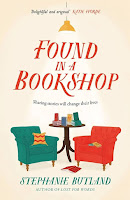
Found in a Bookshop (by Stephanie Butland)

Found in a Bookshop by Stephanie Butland
(Amazon UK link)
It’s over five years since I read Stephanie Butland’s novel ‘Lost for Words’. I had no idea what to expect, but liked it very much. So when a Facebook friend mentioned that she had just read a sequel, ‘Found in a Bookshop’, I went straight to Amazon, intending to add it to my wishlist. But the Kindle edition was available for just 99p, and we were just a few days away from flying to the UK. So I made the purchase, and then read over half the book on the flight, finishing it a few days later. 

Although this book features some of the same characters as ‘Lost for Words’, including Loveday as a viewpoint character, it stands alone. Just as well, since I’d forgotten the majority of the plot in the past five years. Loveday owns the bookshop where she has worked for years, and employs a young woman called Kelly.

This is probably the first book I’ve read that’s set during the Covid19 pandemic years. There are many references made to lockdowns, and the problems small shops experienced when customers could no longer visit or browse their shelves. As such, it’s the kind of book that will be considered ‘social history’ in the future; having lived through it myself, albeit in a different country (and not a shop owner), I felt it was accurate, reflecting how ordinary people coped - or didn’t cope. There are some losses of significant people due to Covid, which is also realistic.

But the main plot is about how the bookshop is going to survive, and whether Kelly will lose her job. Loveday is quite concerned at the start of the book. She also misses the camaraderie of her staff and regular customers. They already have some mail order customers, and Kelly proposes updating the website, and using social media, although Loveday is a bit reluctant. Kelly also comes up with the idea of a ‘book pharmacy’, prescribing books to help people as they deal with problems, whether or not related to the pandemic.

There are a lot of minor characters in this, some of them appearing in just one short section as they get in touch to ask for advice; we see the emails or letters, and also the responses. It could have felt a bit contrived, as so many books are listed and recommended, but somehow it works. I gave up trying to keep track of all the people, and it didn’t much matter; the important ones appear again and it isn’t hard to recall who they are. As the book progresses, so does the gradual release of lockdown rules. 

There are quite a few issues covered, and it’s quite clever the way that they’re introduced via the ‘book pharmacy’. For instance there’s an elderly couple, retired from teaching, one of them terminally ill. There’s also a family where the father is a paramedic who decides to isolate from his wife and children. There’s a woman who’s just escaped from an abusive husband…and there’s a moody teenager who takes what seems to be an irrational dislike to Kelly. 

While a tad informal, I thought the writing very good, as is the characterisation even with so many people. I was a bit surprised at what appear to be authorial asides about books and reading, but it works - as do the short chapters and the book recommendations. Most of the threads are tied up nicely by the end, albeit with some difficult, sometimes tragic events along the way. 

I suppose it’s ironic that I read this on my Kindle, since the emphasis is very much on reading real books - mostly second-hand, previously loved, with the different smells and feelings associated with different styles of book. But it worked very well as a flight book - it’s an engaging story with people who got under my skin. Yet with the short chapters I could easily put it down if I needed a break, or something to eat. 

I would recommend this if you like issue-laden contemporary women’s fiction and don’t mind a large number of book recommendations. Probably best if you’ve already read ‘Lost for Words’, but it’s not necessary.  

(The Kindle version is no longer on special offer, so the Amazon link above is to the paperback edition of this book).

Review copyright 2023 Sue's Book Reviews

19 Mar 2018

Lost for words (by Stephanie Butland)

Lost for words by Stephanie Butland
(Amazon UK link)
I had never heard of Stephanie Butland when Amazon recommended this book to me. The blurb for ‘Lost for words’ sounded exactly like my kind of book, however. A young woman works in a bookshop… a pleasant change from the many books about cake or sweet shops. The cover was appealing, too. So I put it on my wishlist, and received it recently as a rather late Christmas present.

It’s a first person account by Loveday, a quiet (and somewhat prickly) character in her twenties. She doesn’t much like people, other than her jovial boss Archie. She very much likes books, however. So when she sees a book of poetry lying on the ground one day, on her way to work, she picks it up. She’s sure someone would miss it, so she puts a note in the window of the bookshop where she works…

The narrative mostly takes place in 2016, but there are flashback chapters set in 1999 when Loveday was ten, and also a few set in 2013 when she first started going out with a young man called Rob. The story unfolds gradually, with the past filling in the details; in particular we learn why she now avoids Rob, and also why she’s so very reticent about herself and her past.

Loveday’s first nine years were very happy. She was an only child, and although her father worked on oil rigs for three weeks at a time, she loved the times when he was home, and also the quieter, more predictable periods when she was alone with her mother. Early in the book it’s clear that something tragic happened, so that Loveday spends her teenage years with a foster carer. By the time it’s revealed exactly what went wrong, it’s not a surprise.

I found the style of writing a tad off-putting at first. It’s quite informal, written in somewhat jerky sentences. There are even odd asides to the reader. But I quickly got used to Loveday’s voice, which goes well with her confused, difficult personality. She’s very likeable despite being so prickly and (mostly) antisocial.

I felt the author understood well how something that happens in childhood can have a drastic effect on a person’s life and understanding. Loveday’s fears are mostly unfounded, but still very real to her.

Some of the story is quite dark, yet it doesn’t become sordid. There are some delightful characters as well as less pleasant ones. Perhaps the ending is a bit too happy-ever-after for realism, yet it has a shocking and bittersweet tinge before the final pages. I loved the final resolution, particularly the way that one important thread is neatly resolved in a notice on the last page.

This book took a while to get going, but by the time I was around halfway through I could hardly put it down. There’s more ‘strong’ language than I’m comfortable with, and a staggering tendency for people to leap into bed with each other even on first dates (without details, thankfully). Nevertheless, I would still recommend this highly for adults and older teenagers who enjoy character-based contemporary fiction for women.


Review copyright 2018 Sue's Book Reviews