Showing posts with label Gary Chapman. Show all posts

28 Feb 2026

God speaks your love language (by Gary Chapman)

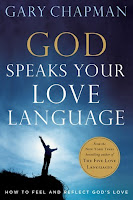
God speaks your love language by Gary Chapman
(Amazon UK link)
I reread Gary Chapman’s classic book ‘The five love languages’ a couple of years ago. For some time I had been thinking I should reread another of his books, ‘God speaks your love language’. I had entirely forgotten that I last read it as recently as 2022. It didn’t really matter, as I hadn’t remembered much of what was in it anyway.

The theory of love languages is very helpful to a lot of people, although the older I get, the harder it is for me to figure out what my main ‘love language’ is. Perhaps I’ve become better at two or three others, or perhaps I appreciate different ones in different stage of my life. In a sense, it doesn’t matter: I’m aware of the five broad ways in which love can be expressed, and try, where possible and appropriate, to use them all. 

The idea behind it is that a lot of couples don’t feel love because they speak different love languages. If one partner has ‘acts of service’ as their main love language, and the other has ‘words of affirmation’, they might entirely miss that the other person is trying to express love. Trying to speak the other person’s language can revolutionise a stressful romantic relationship. It’s also important to speak our children’s love languages - or, ideally all of them - so that they know they’re loved.

1 Feb 2024

The Five Love Languages (by Gary Chapman)

Five Love Languages: Gary Chapman
(Amazon UK link)
I last read Gary Chapman’s excellent book ‘The Five Love Languages’ about fifteen years ago. I’m quite familiar with the concepts of love languages having read several of his books, and perused his website at length. But I thought it could be interesting to re-read his original book on the topic, and see if there was anything I had forgotten.

The principles are well-known: that people have different ways of understanding what love means. Not so much the idea of ‘falling in love’, but of long-term expressions of love in a committed relationship. Examples are given of problems arising in marriages due to misunderstandings about what love means. One person, for instance, might work hard to cook, clean, and do things for their spouse, while the spouse wants to spend more time together, perhaps sitting and talking, or going for walks. If neither feels loved, their emotional ‘tanks’ will become empty and stresses will be much more difficult to handle. 

Re-reading the book was very interesting, and reminded me of several aspects of the theory which I had forgotten. The author gives plenty of anecdotes from his counselling years, with names changed of course, and explains how he gradually developed the concept of ‘love languages’. He uses that phrase because he says that, in some marriages, it’s as if one partner is expressing love in Chinese and the other in English, neither making any effort to learn the other language. 

The five love languages listed are: Acts of Service, Physical Touch, Quality Time, Receiving Gifts and Words of Affirmation. Each one, the author explains, has different ‘dialects’, so two people might have the same primary love language, but use it in such different ways that they’re not meeting their partner’s needs. 

I had forgotten that, in general, children learn their first love language from a parent. It’s obvious when considering the language metaphor, and also clear that a child who feels equally loved by two parents with different ‘love languages’ may become ‘bilingual’, with two equally important ways in which they feel loved. Understanding this may help some people confirm what their main love language is, if they’re uncertain. Others, who didn’t feel loved, may have a harder time. 

However that’s not always the case, and I did remember the advice to shower children with ALL the love languages, as far as possible. And that applies to a spouse, too, although if - for instance - neither spouse is particularly bothered by gift-giving, gifts could be limited to special occasions when tradition, rather than love language calls for exchanging gifts. 

The book is very well-written, with clear examples and suggestions. Not everyone will relate to all the advice, of course, but if the author’s experience is typical, reading this book and applying some of the principles could save a lot of potential breakups, and enrich many relationships that are becoming stale. 

At the end are questionnaires, one for men and one for women, although they’re not all that different. They ask for what makes (or would make) a person feel particularly cared for. In some cases I think it’s quite hard to choose, so when I’ve gone through the questionnaire I’ve tended to check all that apply rather than choosing just one out of each pair. That’s not possible if taking the questionnaire online

There’s an underlying Christian focus to the book, and the assumption that the book will be read by people in a traditional marriage; but the principles could apply to any loving relationship, including non-romantic relationships such as adult children with parents or even siblings. 

Highly recommended.

Review copyright 2024 Sue's Book Reviews

31 Mar 2022

God Speaks your Love Language (by Gary Chapman)

God speaks your love language by Gary Chapman
(Amazon UK link)
Years ago when I learned about Gary Chapman’s theory of ‘love languages’, I thought the concept was excellent in helping couples (and families, to some extent) learn to express love in ways that don’t necessarily come naturally to them. 

Someone whose love language is Words of Affirmation may express love verbally, but if their loved one only really ‘speaks Acts of Service they may feel that the words are meaningless. And vice versa, of course. Learning to use one’s non-preferred love languages can enrich any relationship, particularly if one is aware of the one that is most used by their partner or relative.

I was intrigued when I came across the book ‘God Speaks your Love Language’, which I read towards the end of 2009. At the time I was pretty sure I knew my two preferred love languages, and when I read the book it seemed to fit. But I know how easy it is to make theories and articles ‘fit’ - and recently I’ve been wondering whether I was right, or indeed whether one’s preferred love language might change over the years.

So I decided to re-read the book with an open mind - and with my own rather vague theory that we don’t necessarily use the same love language with everybody. Someone who is a ‘good hugger’, for instance, may appear to be speaking the ‘Physical Touch language - but if it’s offered to everyone, is it really an expression of love, or more an expression of culture, upbringing and personal preference? I wondered if we have ‘like languages’ and also began to wonder if the way we speak to (and hear from) God might be different from the love language we speak to our partners and relatives.

The book is well laid out, starting with a general overview of the love language theory - and it’s not necessary to know one’s own, or to know much about the theory. Then the author takes one love language at a time and devotes a whole chapter to each one, explaining how God uses different ways of communicating, and how different people express their love for God. 

Some are obvious: words of songs or liturgy or spoken prayers fit with words of affirmation, physical sensations and movement fit with physical touch, serving in various roles fit with acts of service, a focus more on personal devotions and ‘quiet times’ fits with quality time, and of course the giving of money, practical gifts and time fit with the love language of gifts.

To some extent, they all resonated with me. I believe they are all important as different ways to relate to God, and to others within the Body of Christ. And yet, at the same time, I didn’t feel that any of them fit me fully, or even reasonably well. It was good to be reminded of the different - and equally valid - ways of expressing love to God and those around us, and the importance of ‘listening’ to love expressed by God and by other people in ways that we might not naturally hear.

But I don’t feel any closer to knowing what my preferred love language might be. I’m pretty sure it’s not gifts or acts of service, even though I think both are important.

In the last two chapters the author writes about love in general, and preaches quite a strong sermon about God’s love and the need to accept it, and acknowledge it, and turn our lives to Jesus. So this is a book for those in - or on the fringe of - the church; since the focus is on hearing from and speaking to God in a variety of ways, it’s rather obviously not intended for atheists or agnostics.

The writing is good, peppered with plenty of interesting anecdotes as well as Scripture quotations and references to other authors. On the whole, though I'm not sure I learned anything new, I’m glad I re-read it. Recommended to anyone wondering how spirituality and love languages work together, or who would like to explore different ways of communicating with God.

Review copyright 2022 Sue's Book Reviews

3 Apr 2015

Five Signs of a Loving Family (by Gary Chapman)

Five signs of a loving family by Gary Chapman
(Amazon UK link)
The author and counsellor Gary Chapman is best known for his books about the ‘five love languages’. They have revolutionised many people’s abilities to communicate love to their spouses and children. I’ve read three or four of his books, and while there’s inevitably some repetition as the author explains how different people ‘speak’ and ‘hear’ love, there are many different angles. I’ve found all the books thought-provoking and helpful. So when I spotted another of his books available second-hand, I bought it at once.

‘Five signs of a loving family’ is rather different from the ‘love language’ books. It was written after an anthropologist spent a year with Chapman’s family - including teenage children, at the time - and discusses some aspects of a healthy family life which are usually lacking in today’s society. The author has picked out a handful of traits that were observed in his family, and which he believes are of major significance to the many families in danger of disintegrating.

The first aspect is an attitude of service. I thought this section quite interesting: it looks not just at the way parents do things for their children, but at the attitude involved, and the importance of pulling together to do chores, and generally to help each other. I felt that some of the author’s suggestions were a tad coercive, but he had some good ideas too, in particular harnessing the natural enthusiasm to ‘help’ that is present in so many toddlers, yet pushed aside by parents who know they can do things better on their own.

The second section is about intimacy between husband and wife. Again, I know that this is vital in any family situation - and the author acknowledges that, these days, there are not many traditional nuclear families; instead there are second marriages, blended families, and of course single parents for whom this is not relevant. The importance of parents putting each other first is emphasised, and I would agree that this is of primary importance to children, and to family life in general. The ‘love language’ concept is mentioned as being important in marital communication, but not explained in detail.

However, I began to find myself increasingly uncomfortable with the final three sections of the book. The third one is about ‘teaching and training’ children. The difference between the two words is explained well, I thought, and I liked the emphasis on answering children’s questions, and introducing them to new ideas - recognising that when children ask questions then respectful parents help them find out answers. However the ideas about ‘training’ seemed overly authoritarian; possibly occasionally necessary in families where utter chaos reigns and where children are out of control, but far too inflexible, in my opinion. Some of the examples given seemed unfair, and likely to cause resentment.

The fourth section is about children honouring and obeying their parents; again, I found this rather negative. Certainly mutual respect is important, and in a healthy family it’s likely that children do honour their parents to some extent, but ‘obedience’ is a somewhat overrated concept, in my opinion. I prefer to think of mutually acceptable solutions to problems, with children thinking for themselves, and making their own decisions as far as they are able to. To be fair, Chapman doesn’t recommend a highly controlling parental model, and certainly encourages discussion, but some of his ideas felt too strict and structured for everyday family life.

The final section is about husbands giving loving leadership - with many provisos, and warnings, and the acknowledgement that many husbands have no wish to do anything of the sort. But it somehow felt forced, and very dated. The book was first published in 1997, so it’s not THAT old - yet it felt, in many ways, like something out of the 1980s.

There are assessment sheets throughout the book which, I suppose, could be helpful to people trying to figure out what they can do to help their families. It’s good that readers are not expected to buy another ‘workbook’, as happens so often with this kind of material; on the other hand, these assessments were a bit distracting placed in the middle of the text. I would have preferred them as an appendix.

On the plus side, the writing is good, some of the anecdotes are interesting, and there is plenty to discuss if a couple decided to read this book together. Gary Chapman is a Christian, and this is spelled out in a couple of places; however the book is deliberately written from a mainly secular point of view, and should thus be relevant to people of any faith, or none.

I don’t think I’d recommend this, particularly, but it could be of use to families struggling to find any kind of relationship between parents and children; even if readers don’t agree with most of the suggestions, they could well trigger some new ways of relating.

Not currently in print, but sometimes available second-hand at reasonable price.


Review copyright 2015 Sue's Book Reviews

2 Oct 2013

Happily ever after (by Gary Chapman)

Happily ever after by Gary Chapman
(Amazon UK link)
I have read and enjoyed various books by Gary Chapman over the last few years. He is probably best known for his book ‘Five love languages’ and others on the same topic, but he has also written or co-written some good books about raising children. When I noticed that one of his books was available free for the Kindle for a few days back in June, I decided to download it.

‘Happily ever after’ turns out to be a book about marriage, a topic with which my shelves are already someone over-stocked. The subtitle is, rather cheesily, ‘Six secrets to a successful marriage’. After over thirty years I think my marriage probably counts as reasonably successful, but there’s no harm in a few reminders from time to time. So I read it over a couple of weeks recently.

The book is divided into six broad sections, with the first one being the most useful in general terms. It talks about the unpleasant inevitability of most marital arguments, how nobody ever ‘wins’ even if one partner emerges as the apparent victor. When someone beats down a loved one with words, there’s a nasty taste left in both mouths, and a new scar in the relationship.

Chapman acknowledges that we all have negative traits, and that probably every married person in the world wishes at least one thing was different with his or her spouse… and, unusually, rather than talking about love being beyond such things, he suggests that in a good relationship it should be possible to address potential changes over time.

The first sections cover listening skills and empathy, the importance of feeling understood, and some techniques to encourage mutual respect and expression of love. Naturally enough there’s a brief summary of the famous ‘Love Languages’, the ways in which people express and receive love, and a reminder to figure out and use one’s spouse’s primary ‘language’ regularly (with a sprinkling of the others). All good stuff, and something I find myself thinking about and discussing more often in the context of parent/child relationships, where understanding and empathy are every bit as important.

I felt less enthused when I read about trying to negotiate for change in one’s spouse, in a way that seemed to be rather manipulative, albeit cloaked in plenty of love and respect. In many cases, I simply don’t think it would be helpful; moreover the author didn’t even mention those cases where a relationship becomes abusive in some way, where change simply isn’t going to happen. There are long lists of things that typical spouses wish they could change about their partners; it was quite interesting and, in places, eye-opening - but I do wonder how many people would actually take the time to follow the author’s suggestions, and whether their loved ones would simply see through their apparent loving to the underlying manipulation.

The other sections cover various topics on which couples typically have big disagreements: finances, in-laws, raising children, and so on. I felt that there was some good advice in this, mixed with some rather obvious statements, and some which I disagreed with. This isn’t necessarily a problem, and for a newly married idealistic couple this could be a good book to work through together. But most of it didn’t feel particularly relevant to me. I particularly felt that the section about finances seemed unrealistic, assuming that people wanted to acquire ‘things’ beyond their means, and helping them figure out how to avoid them. For those of us who live (and prefer) a somewhat minimalistic lifestyle, it was a section to skim.

I like Gary Chapman’s clear writing style, which has sufficient anecdotes to be interesting, and is well organised content-wise. But given the number of marriage books already available, I didn’t think that this said anything new or different - so would not particularly recommend it above any of the others. In particular, I didn’t feel that it was as inspiring or constructive as the author’s ‘Four seasons of marriage’, which I recommend very highly.

However, if this book becomes available free again, or if you come across it inexpensively in a charity shop, it’s not a bad book at all. For those trying to figure out how marriage works, there are a few gems which may be helpful.

Note that the Amazon links are to the paperback edition; the Kindle version is not much cheaper at present.

Review copyright Sue's Book Reviews, 2nd October 2013

2 Dec 2011

Love as a way of life (by Gary Chapman)

Love as a way of life by Gary Chapman
(Amazon UK link)
I've been generally quite impressed by books written by Gary Chapman. He's an American Christian author, known as an expert on relationships and family life, probably best known for 'The Five Love Languages'. I've enjoyed several of his books, so when I saw an inexpensive version of this one for the Kindle, I decided - for once - to pay a few pounds to download it.

'Love as a way of life' gives a solid foundation for the principles of expressing love to other people, both those we care for, and people we meet randomly. It's written from a Christian perspective, as our Chapman's other books, but in a fairly low-key way so that the theory and suggestions could be applicable to anyone.

The author proposes that the main methods of behaving in a loving way those around us include kindness, forgiveness, courtesy, and honesty. All rather obvious, yet it seems that most people display only one or two of these and need a refresher course in ways to show more love and acceptance to those around them. He gives plenty of anecdotes showing examples of love expressed - or, sometimes, not expressed - in various ways, and the consequences to those involved.

The first part of the book gives reasons why Gary Chapman believes that love in the most general sense is vitally important, and why we need more of it. He then takes one of his suggested methods at a time, and expands on what he believes they encompass. He gives scales of 'kindness' and 'honesty' and so on, asking the reader to evaluate themselves and their lives in the past week or two; I didn't find those particularly useful as they were very general. More helpful was various practical ways of going about showing each of these aspects of love.

I don't think there was anything new or life-changing in this book. It took me six weeks to read it, not because it was dull or difficult, but because a few pages at a time were sufficient to provoke a bit of thought - and also because it wasn't a page-turning kind of book. I suppose I was a bit disappointed, in comparison to other books of his that I have read where the theories were indeed relevant and inspiring. I'm not sure that I recall any specifics from it, although my overall feeling was that it was a fairly good read.

I think 'Love as a way of life' is probably worth reading if you can borrow it, or pick it up inexpensively, even if it doesn't offer anything particularly new.


Review copyright Sue's Book Reviews, 2nd December 2011

13 Aug 2011

The Four Seasons of Marriage (by Gary Chapman)

The Four Seasons of Marriage by Gary Chapman
(Amazon UK link)
I've come across - and liked - two or three books by (or co-authored by) Gary Chapman over the past few years. He has some interesting perspectives on life and relationships, and I was interested to learn that he had written a book about the 'seasons' of marriage. There's a website devoted to this topic too, with a questionnaire that enables people to have an idea of which 'season' their marriage is in according to Chapman's theory. I found the brief notes intriguing enough to prompt me to buy the book.

As I had gathered, 'The Four Seasons of Marriage' looks at analogies with the four seasons of the year. Every marriage, the author contends, goes through different seasons. This is not necessarily in the chronological order of seasons, and certainly not necessarily repeated annually. Any couple can remain for any length of time in any of the seasons, it seems.

The early chapters cover in some depth each of the four seasons as they relate to married life. The author begins with Winter, the most negative season according to his theory, when love and life seem to be all but dead, and many couples decide to separate. He gives anecdotes about people he has known or counselled (changing names and situations) showing that even in the worst times, there is always hope. He explains how a couple can arrive at this phase of life, and what can be done to help them emerge from it.

The next chapter looks at joy of Spring, which often takes place during the honeymoon period, and at other new beginnings during the course of a marriage. It is unlikely that any couple would remain in springtime for a long time, but entirely possible that they would return to this stage regularly. The third section is about the contentment of Summer; a peaceful, relaxed stage where a couple are comfortable with each other, relating well and enjoying life. Many older retired couples who have weathered storms can find this a long-term season in their marriage, if they make the effort to keep communicating and expressing their love for each other.

The fourth season covered is that of Autumn (or Fall - this is an American book) which features concerns and changes, nagging irritations, and a tendency to drift apart. During each chapter, Gary Chapman looks at reasons why the more difficult times come, showing in some detail the kind of situations or reactions that can cause a relationship to turn sour. He looks at ways that it can be possible to move out of winter to spring or summer, and - where possible - going from Autumn to a happier season, avoiding the neglect that can lead to winter.

After fairly lengthy chapters about each 'season', there are seven chapters about different strategies for helping an unhappy or stressful marriage to improve. None of these strategies were new to me - focusing, as they did, on love languages, empathic listening, and more - but they were all useful reminders of how easy it is for neglect and distance to creep into even the best of relationships.

There's a strong Christian emphasis throughout the book, which underlies the author's beliefs and reasons for his strategies, but the principles of helping marriages change for the better could apply to anyone. Indeed, much of the content could probably be used to think about seasons within parent/child relationships, or even close friendships.

There's a brief questionnaire for couples to determine what 'season' they are currently in, which seemed more helpful than the online one as it focuses on words most often used in each seasons. At the back of the book are some thought-provoking discussion questions for couples or groups who want to think about the topic in more depth, relating to their own situations.

Definitely recommended.

Review copyright Sue's Book Reviews, 13th August 2011

26 Jul 2011

It Happens Every Spring (by Catherine Palmer and Gary Chapman)

It Happens Every Spring by Catherine Palmer and Gary Chapman
(Amazon UK link)
Browsing free books for the Kindle, as I do fairly regularly, I was interested to see a novel by Catherine Palmer, an American Christian author whom I've come across before. I found her books quite light, a bit low on characterisation, and sometimes a little over-preachy, but mostly well-written with good stories.

It wasn't until I started reading it a couple of days ago that I realised that it was written in conjunction with Dr Gary Chapman. He is the author of the books about love languages, and (more recently) a book about recurring 'seasons' in marriage, which sounds very interesting.

'It Happens Every Spring" is the story of four different marriages set in small-town America, in a place called Tranquillity. There's a newly-married couple, an older, retired couple, a blended family with twins, and the main couple of the story, Brenda and Steve who are recent empty-nesters. I gather that this is the first book in a series of four, and that each of the others focuses specifically on one couple.

There's a very interesting character called Cody who appears fairly early in the book, and demonstrates how prejudice is still rife; Cody is a homeless young man who behaves in a childlike way, and seeing how Brenda related to him positively was a good way of seeing her more as a whole person.

Then there's Patsy who owns a beauty salon, and where much of the conversation happens. I found this aspect of the book rather bizarre, reminding me of one or two ultra-light American films I have seen where something similar happened. It felt like a device for getting women together, but I could not believe the number of times the characters seemed to call by for yet another change to their hairstyles (including colours) or having their nails 'done'.

 I found it a bit shocking that everyone had sufficient disposable income to indulge in this kind of thing regularly, but perhaps it does happen in the USA. What I found particularly bizarre was that the beauty salon was called 'Just as I am', a quote from an old hymn, which seemed like the ultimate irony since Patsy encouraged people NOT to like themselves just as they were but to keep experimenting with new looks.

However, as a device for women getting together to chat it worked well, aided by an attached café where Patsy's clients were encouraged to hang out and drink tea. The book is light, after all, and the characters not particularly well developed, so the various conversations were useful in helping to build up some idea of the different women. The writing is good and I found the story interesting, reading in just two or three sittings as I wondered how Brenda and Steve's problems would be resolved.

I found some of their argument scenes almost painful in their realism, although the points about different love languages and lack of communication were made rather too obviously at times. Brenda evidently needed quality time whereas Steve needed physical touch, but nobody had ever explained this to them - even though they were both involved in acts of service to each other, which neither appeared to recognise.

There is perhaps a bit too much overt Christian input - it works just fine from Cody (who believes that only Christians will give him chocolate cake) but there are rather a lot of quoted Scripture verses which would probably put off people who are not believers, and yet seem irrelevant to those of us who are. The resolution seemed a little too simplistic, as well.

But overall I did enjoy the book, and since it was free I am glad I downloaded it. I'm interested to know how the situations develop, but can't quite decide whether to buy the other books in the series or not.

No longer available free, but recommended anyway in a low-key kind of way. The link to the paperback book version, which has second-hand editions available although they are sometimes very highly priced. 


Review copyright Sue's Book Reviews, 26th July 2011

20 Dec 2009

God speaks your love language (by Gary Chapman)

God speaks your love language by Gary Chapman
(Amazon UK link)
I read 'The Five Love Languages' by Gary Chapman about nine months ago, and enjoyed it very much. I had dipped into it before and discussed the theories, but on doing the questionnaire and reading the book in depth, I was slightly surprised to find that my two preferred 'languages' seem to be touch and quality time, although the one I seem to 'speak' most fluently is acts of service.

Pondering this, and discussing further with other people, I was intrigued by the idea that we relate not just to our spouses and children using our favourite 'love languages', but to other people, and also to God. How, I wondered, could anyone possibly relate to God using touch, when He is intangible by definition?

So I bought this book, 'God Speaks your Love Language', and have been reading it over the past couple of weeks. I found it thought-provoking and helpful. The book was well written, with a chapter about each of the different preferred 'love languages' (words of affirmation, quality time, gifts, acts of service and physical touch) after an initial introduction. Then there are further chapters looking at love language as it relates to discipline, and speaking other 'dialects'.

It was reassuring to see that my reluctance to use certain styles of worship or prayer - such as words of affirmation - may simply stem from the ways I express love. It was also useful to understand better how other people can relate very differently. As I read the chapter on physical touch, I was relieved, and pleased to find that while I don't relate to all the suggested uses of this 'language', I do certainly find some of them very relevant. The same is true, in a lesser way, for quality time; less so for the others.

The author encourages everyone to listen for all expressions of love, whatever the language, from God and other people, and also to learn to speak in ways that other people better understand.

I can't say it was overwhelmingly inspiring but I enjoyed reading it, and would certainly recommend it to anyone trying to understand God - and other people - better. It's probably best to have read one of the other books about love languages first, but not essential.

Still in print on both sides of the Atlantic.


Review copyright Sue's Book Reviews, 20th December 2009

18 May 2009

Parenting your adult child (by Ross Campbell and Gary Chapman)

Parenting your adult child by Campbell and Chapman
(Amazon UK link)
The author Ross Campbell wrote my favourite books about parenting, including coining the idea of an 'emotional tank'; Gary Chapman wrote the books about love languages. They've teamed up for this one, about relating to adult children, so I was expecting a powerful book.

I bought 'Parenting your adult child' when I was about to become an 'empty-nester' last Summer. I wondered if it would help me come to terms with the new phase of life. Skimming it, I realised it wasn't like that at all. Instead it seemed, at first glance, to focus primarily on the problems that can arise when adult children don't leave the nest. So it sat on my shelves for a while

Recently I decided to read it anyway. And, indeed, it does cover many aspects of relating to adult children. It describes problems with children in their twenties who drift, never leaving home; or who don't want independence; or who treat their parents as doormats.

I don't have any of those problems, I'm thankful to say. But still I found it very interesting in understanding better how younger people think, and why the traditional model of the empty nest is no longer so appropriate. There is advice in dealing with behaviour problems, with boyfriends/girlfriends, with in-laws, with money... and one about what we leave our children as legacies, not just financial but moral and spiritual too.

The book is very well written, with anecdotes from the authors' experience (with names changed) and plenty of solid, clear advice. My only quibble was that on almost every page was a suggestion about going to counselling to resolve problems - but for some that may, of course, be appropriate.

I did also note that the book is ten years old, so their categories of 'baby-boomers' (as parents) and 'Generation X' (as the young adult children) is no longer so accurate. But much of what was said is still very relevant.

All in all, I'd highly recommend this book to anyone with adult (or nearly adult) children, particularly if you are having any problems with them. It's written from a clearly Judaeo-Christian perspective, but relevant to anyone.

Review copyright Sue's Book Reviews, 18th May 2009

16 Mar 2009

The Five Love Languages (by Gary Chapman)

Five Love Languages: Gary Chapman
(Amazon UK link)
Gary Chapman is a Christian pastor in the USA who holds marriage seminars, and has now written more than twenty books.

'The five love languages' (subtitled 'How to express heartfelt commitment to your mate) has become a classic. In it, he explains clearly the theories he has been teaching about, which are claimed to revolutionise many tired or unhappy marriages.

The theory is that there are, broadly, five 'love languages'. But each person is only fluent in one or two of them. So if a husband and wife are speaking different ones, each can feel that he or she is sincerely expressing love, without receiving any in return.

The five 'languages' are: Words of appreciation, physical touch, acts of service, giving gifts, and quality time. All, of course, can - and should - be used in any relationship from time to time. During dating or courtship, and even the honeymoon period, most couples do probably use them all.

But if a husband is most fluent in - for instance - gift-giving, and the wife is most fluent in quality time, each can start to feel that the other no longer cares. Perhaps the husband works hard to earn money to buy his wife expensive gifts, often spending time and ingenuity finding what he believes will be most appropriate. But she would much rather they spend some time together, and finds the gifts at best a distraction, at worst a manipulation, which she might see as an excuse for not spending time with her.

There are many such anecdotes in this book: stories of couples whom Dr Chapman visited, or who spoke to him after one of his seminars. Many people found his theories revolutionary; as they learned to speak each other's love languages, they found their marriage rejuvenated.

Perhaps it sounds simplistic and obvious. And indeed, the theory as such wasn't new to me - I had previously read Judson Swihart's 'How do you say I love you?' which covers similar ground. Nor am I naive enough to believe that this book could solve every problem which people experience in their marriages.

Nevertheless, I found the writing excellent, the stories inspiring, and the examples given to be very helpful and sometimes thought-provoking. I'd recommend this to any married couple, or anyone considering marriage.

It's never too early - or too late - to start learning another 'love language', and there's always the possibility that bored or unhappy marriages might be revived with just a few simple changes in communication.

There are several other books in the series covering the same theory, but with emphasis on love languages for children, teenagers, singles, and so on.

Very highly recommended.


Review copyright Sue's Book Reviews, 16th March 2009