Showing posts with label health. Show all posts

23 Oct 2024

Gut reaction (by Gudrun Jonsson)

Gut reaction by Gudrun Jonsson
(Amazon UK link)
I happened to notice, when I was editing this blog, that I had found Gudrun Jonsson’s book ‘Gut reaction’ quite helpful when I read it in 2007. So I thought it worth a re-read. There has been a lot of research into gut health in recent years, and I was interested to know whether this book, published in 1988, was still relevant. 

Apparently the author is a biopath who trained in Copenhagen but, at the time the book was published, was practising in London. I’m not entirely sure what a biopath is, and I’m a lot more sceptical about homoeopathy than I used to be; but although the author does recommend this, it’s not a big part of the book.

The main thesis is that a lot of chronic illness is caused - or triggered by - faulty digestion and toxins in our guts. Jonsson never really spells out what these toxins are. Nor does she explain why our guts are not able to deal with them, at least in moderation. She’s not too directive: she acknowledges that there is a lot which she doesn’t know, and some illnesses that don’t seem to respond to anything. But she recommends doing what we can to improve our gut health. And a lot of the suggestions do seem to be in line with up-to-date research on this topic, at least as far as I understand it.

The first chapter, which is very brief, explains that a healthy person is not just someone who is not suffering any serious illness. Health, she suggests, refers to the state of being lively, energetic, and without any minor ailments afflicting us. We should not expect to spend our lives tired, stressed and suffering bloating or headaches or similar.

The next chapter looks at the gut: how it works biologically, with some information about the digestive system in general. I was a little sceptical about the author’s insistence that the gut has its own brain, but I understand that this refers to the nervous system that controls our gut, and which functions in some respects similarly to our brain. 

This is followed by a brief chapter about awareness: of noticing when we’re feeling under the weather, of regulating our eating, of taking more care when we start feeling aches and pains. And it makes a lot of sense, even if some of what Jonsson says is a bit vague. She bases many of her observations on personal experience as a nutritional therapist, and reminds us that we’re all unique: what works for one person may not do anything for another. 

And then there are some general suggestions. There’s a lot about the acidity necessary for digestion, and lists of foods that are said to be acid-forming or alkali-forming. Confusingly the author tells us that some obviously acidic foods such as lemons or oranges will help our guts to become more alkaline (which she says is a good thing). She is also an advocate of ‘food combining’, which was a popular fad for a while; that system tells us not to eat protein and starches at the same meal. Modern nutrition seems to have debunked that one. 

More helpfully, she strongly suggests chewing every mouthful of food well to stimulate digestive juices. She suggests fifty times, which I feel is somewhat excessive; but chewing food until it becomes a mush rather than swallowing chunks is generally considered to be a good idea. And she tells us to eat plenty of fruit and vegetables, avoiding over-processed food. That, too, seems to be a sound and solid recommendation. 

The rest of the book involves the author’s recommendations for specific programs of eating and supplements depending on what ailments we might be suffering. She covers a lot of general symptoms of malaise, and suggests taking it slowly. She tells people to continue with whatever medication a doctor may have recommended, and to work with personal doctors to follow her nutritional advice. So while I don’t know if any of these recommendations help, they’re unlikely to do any harm. 

At the end of the specific recommendations - and there are a lot, with a fair amount of detail - the author acknowledges that many people might feel that these programmes are too stringent and that their circumstances don’t enable them to follow them. So she gives an overall strategy. In particular she recommends eating less than previously, and taking it more slowly. She tells people to stop smoking, to reduce caffeine intake, and to cut down on (or cut out) refined sugar. These are all generally considered to be positive, and likely to improve overall health. 

She also suggests starting each day with a little apple cider vinegar with honey in warm water, and, during the day, drinking olive oil with lemon juice. There are other suggestions, including specific supplements that I’ve never heard of. It’s entirely possible that people with certain ailments are lacking specific vitamins or trace minerals, but it would probably be a good idea to have a blood test before taking too many extras. 

When I first read this book I found it quite inspiring although I never managed to follow the ‘food combining’ principles. I suspect that, for a while, I did remember to chew more thoroughly and to eat a bit less. I remember trying to start the day with apple cider vinegar, but it didn’t seem to help me at all - and on the whole, I am in reasonable health. 

The writing is good, in a very readable style, and the author comes across as a friendly person who wants to help everyone reach a better state of health. If you suffer from chronic  health issues - whether migraine, catarrh, panic attacks or many others listed - and have found no help elsewhere, then some of the recommendations in this book might be worth trying. 

However, I’m not sure I’d recommend this book in general now, as there are so many other books and websites about health (including gut health) that are more up-to-date, following recent nutritional discoveries. But if you happen to find it in a second-hand shop, as I did, or are looking for ways to improve your general health, it’s an interesting read. 

Review copyright 2024 Sue's Book Reviews

19 Dec 2018

Life and how to survive it (by Robin Skynner and John Cleese)

Life and how to survive it by John Cleese and Robin Skynner
(Amazon UK link)
It’s nearly twenty years since I last read ‘Life and How to Survive it’ by Robin Skynner and John Cleese. However I re-read their first book, ‘Families and how to survive them’ in 2010. Despite the slightly daunting length and format, I decided that ‘Life..’ would be a good book to read in January this year. I had determined to read at least one book I categorise as ‘miscellaneous’ or ‘lifestyle’ per month...

It’s taken me eleven months to finish it. That’s partly because I kept forgetting to pick it up, and partly because the middle section is a bit heavy; involved with businesses and marketing, and I didn’t find it particularly relevant or interesting. It’s also quite a difficult style to read much of at a time, as it’s in dialogue form. This works very well from the point of view of the expert (the late Robin Skynner) explaining his theories and expounding on research to his former client (John Cleese), peppered with some Pythonesque humour here and there. But it’s hard to read more than a few pages at a time. It doesn’t lend itself to skimming.

The book takes the ideas discussed in ‘Families…’ - that of the mental health of an individual or family, and what makes for healthy communication - and applies it to the wider world. There are sections on religion, on life and death and aging, and quite a bit about helping companies become more productive, at least as far as employee relations go. Examples are given, and both the authors digress regularly, but summaries are given and there’s much to think about.

Skynner talks, as he did in the first book, about individuals becoming more healthy in the mental and emotional sense. This happens by (among other things) observing, listening, and being willing to admit their faults or failings. Most people, he claims, will automatically widen their perspectives and become more healthy simply by interacting with a wider group of people as they grow up, and in meeting new situations.

Those who are less healthy, however, will tend to cling to rigid viewpoints, often learned in childhood, or developed as a result of suppressing some emotions that aren’t considered appropriate in their childhood. When someone becomes defensive about new ideas, or is unwilling to consider alternative viewpoints, the authors count them as less healthy. However they point out that everyone’s mental health varies, due to many factors, and everyone can have both blind spots and also subjects or situations when they display better than average health.

There’s a lot about politics later in the book. Some of it is rather dated now, twenty-five years after it was written, and some of the people mentioned would mean little to younger people embarking on this book. But the principles still hold: that politicians, even more than the general populace, tend to hold fast to their party line and official opinions without any room for negotiation. Skynner does mention that some public schools in the UK had started emotional health training in the 1980s, and he hoped that would lead to some of the future country’s leaders being more open to discussion, and consideration of other points of view. His hope, alas, does not appear to have been realised.

My interest is far more along the lines of family and individual communications, so although I did like this book, and thought it had plenty of sage advice, I didn’t find it as helpful as ‘Families…’. Still, it was good to revisit the theories, recalling again the general principles of freedom, co-operation, discussion, and agreement amongst all parties concerned - but with the management (of a company) or parents (in a family) being able to pull the reins and take action in a positive way if chaos ensues, or if there’s a crisis requiring decisive action that might not have time for full consultation.

I thought the section on religion was fair and open-minded, giving an excellent example of how to discuss a potentially controversial issue in a constructive way. While neither of the authors subscribe to Christianity or any other system of belief, Skynner acknowledges that he has become quite a spiritual person and both point to Jesus as an example of someone with supreme mental health.

The cartoon images, as with the first book, are somewhat bizarre, probably incomprehensible to anyone outside the UK. I didn't find them amusing, for the most part; but it was easy enough to ignore them.

Overall, I would recommend this book to anyone interested in understanding mental health issues better from a layman point of view. Psychological jargon is minimal - the informal conversational style enables this easily - so although the ideas are quite deep, they’re not difficult to understand.


Review copyright 2018 Sue's Book Reviews

1 Aug 2014

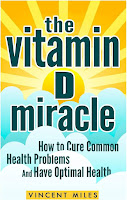
The vitamin D miracle (by Vincent Miles)

The vitamin D miracle by Vincent Miles
(Amazon UK link)
I had high hopes for this book, which I downloaded (free) for my Kindle. I knew, of course, that lack of Vitamin D is a significant problem in most of the Western world in the 21st century, in part due to excessive use of sunscreen. I knew that Vitamin D is hard to find in natural foods and that many people rely on supplements. I also knew that lack of Vitamin D can contribute to various diseases.

So I assumed that this book would let me know more. It’s not a short book, and at first glance seems quite academic. I knew nothing of the author, Vincent Miles. I can't find a website for him, but it appears that he's interested in natural health, and self-taught.

Unfortunately, I did not learn anything new from this book. There are many ‘facts’ and figures quoted, although there does not seem to be any real structure to the book. I use the word ‘facts’ advisedly, as there are no references cited anywhere, although the author claims to be using material from various studies. 

While I am sure that much of the information is true, none of it is explained in layman’s language, despite a somewhat condescending introduction which says that the book would simplify a complex subject. From my perspective - and I am not entirely ignorant on this subject - it did the reverse.

Indeed, the more I read, the more bewildered I became. There is repetition, there are contradictions, and there are places where it appears that the author does not actually understand what he is writing. In one place, for instance, it seems that he does not even know what a placebo is.

Moreover, the style is not consistent. It reads as if the author has taken entire swathes of text from elsewhere, altered a few words and added his own comments in places. This is the only way I can account for the lack of structure and conflicting information in the book.

While the motivation for writing the book was probably sound - the general public may well need to be educated about the importance of this vitamin - the information contained in it could have been reduced to perhaps a page. In a nutshell: Vitamin D deficiency is widespread and may contribute to many diseases and health conditions. Get out in the sunshine if you can, and take a supplement if necessary.

Without any citations there is no way of knowing which of the studies mentioned were serious ones, or who sponsored them - and thus I cannot recommend this book.

Only available in Kindle form, as far as I know, and no longer free. 


Review copyright 2014 Sue's Book Reviews

22 Jul 2008

Wonderfoods (by Natalie Savona)

Wonderfoods by Natalie Savona
(Amazon UK link)
Eighteen months ago, after reading some online reviews, I bought - and thoroughly enjoyed - Natalie Savona's 'The Big Book of Juices and Smoothies'. The author is a nutritionist who writes in a concise and interesting style. Although I shall probably never use 90% of the juice/smoothie recipes, I've been inspired to make fresh fruit juices and smoothies almost daily ever since.

So I thought it about time I bought another of her books, and decided to order 'Wonderfoods' from Amazon UK. My first surprise was that it looks very small. It's not even as tall as a standard paperback, although it's about the same width and depth. I was also a little disappointed to see that there were only two recipes per type of food.

However, I dipped into it over the next few weeks, and found I appreciated it more and more. The book is divided into nine main sections - for instance, energy, heart, age, mind - each focusing on foods that are known to help in some way. The majority of the foods described, unsurprisingly, are fruit and vegetables, seeds and nuts - foods known to be healthy in general. There are explanations of why each food is good, with full-page colour photographs, and then the two recipes use, as far as possible, not just the food being focused on but at least two or three others mentioned elsewhere in the book.

Some of the recipes sound excellent, although others require rather unusual ingredients that may not be available in Cyprus.

In a sense, there wasn't anything new: all the information can be found online, or in other books about health and nutrition. But it's a useful reference guide to inspire and encourage, and written with more of a human touch than many recipe books.

I did find myself wondering: is there such a thing as a 'wonderfood'? Or is it just a modern buzzword for healthy food? Maybe that's all they are. After all, no one food can work miracles or solve all health problems, particularly if someone's lifestyle is otherwise unhealthy!

Yet all the foods in this book are natural, and provide health benefits of some sort if eaten in conjunction with other good food. Most people would do well to eat more of them, while cutting down on convenience foods and high-fat desserts. Healthy food can taste very good, as shown in these recipes.

I was pleased that the author makes the point that we shouldn't get fanatical, or worry so much about our diet that we get ulcers. Moreover, she says, there's nothing wrong with the occasional pizza or even chocolate eclairs. But we will feel far better, and be more energetic and productive if the majority of what we eat is based on these so-called 'wonderfoods'.

All in all, highly recommended.


Review copyright Sue's Book Reviews, 22nd July 2008

25 Apr 2008

Loving What Is (by Byron Katie)

Loving What Is by Byron Katie
(Amazon UK link)
This is not the kind of book I would normally come across; it's not a Christian book, it's not fiction, and it's nothing to do with personality theory or nutrition. However, it was recommended to me by someone on a personality related mailing list, and endorsed by someone else; I was interested enough to look at the website for the intriguingly named Byron Katie (who is known as Katie, but apparently doesn't use a surname).

Her theory is that all our mental and emotional pain and suffering is a result of our own thinking, and that by turning it around, after asking ourselves four main questions (and a few supplementary ones), we can get rid of all unhappiness and learn to live contentedly in the present moment.

A bit simplistic? Yes, that's how it sounded to me, when I browsed her site. I don't carry around a load of guilt or hurt anyway. I know there are some folk who seem to bear grudges for years, so I thought perhaps it might help them, but I am pretty good at letting go of the past.

However, the book was discussed again, and I was ordering a couple of other items from Amazon in the USA, so I decided I would order 'Loving what is' as well, since I was becoming intrigued by the concept. (And the dollar was very weak thus it was good value when converted to sterling!)

The book starts with a brief autobiographical overview of how Byron Katie turned away, almost overnight, from being severely depressed. She woke up one day, realising that she had the power in her own mind to turn around the anger and guilt she carried inside, and to learn to 'love what is' - to live in the moment, to accept each circumstance as it came along without pain. She calls this 'The Work'. Then there's a brief dialogue that shows 'The Work' in action.

Then there are a few chapters explaining of how 'The Work' is done. Details of tihs can be found on The Work website. Basically, people fill in a short worksheet, writing down why they are angry or hurt by someone, and what they wish would change about them. They are encouraged to be as judgemental as possible (the worksheets are titled 'judge your neighbour') and to explain exactly what they person is feeling about the people who upset or angered them.

Then there are four basic questions which are asked about the various statements made - do you know it's true? Are you absolutely sure it's true? How do you react when you think the thought? Who would you be without the thought? There are a few supplementary questions too, depending on the circumstances. Then a 'turnaround' is encouraged, where the person who did the worksheet tries to find ways of turning his or her statements around, and pondering whether or not they are more true than the originals.

There follow several more dialogues which Katie had with various people as they unravelled their problems - irritation with their loved ones, annoyance at children or colleagues, flashbacks to painful circumstances in the past, and more. They're divided roughly by subject matter, and follow similar patterns.

In one sense it all seems a bit clinical - after all, in a book like this, dialogues are going to be found which show 'The Work' as successful. There's no mention of people who did not find it helpful, or who were so stuck in their own stories about reality that they refused to answer the questions. Everyone seems to 'get it' pretty quickly. Maybe that's how it happens; yet I find myself a little skeptical.

However, the book does encourage the reader to do their own worksheet - to write down some judgements, rather than just think about them. A few day after I started reading this, something happened that made me rather angry with someone, so I decided I might as well try the system. To my surprise, the discipline of writing down all my most negative thoughts about the person in question, and the structure of the questions, meant that I could quite easily come up with turnarounds and see how I was contributing to my own annoyance. Someone did something, and it was in the past - I was hanging onto it, which had no positive benefit to anyone. Letting go turned out to be remarkably easy.

It was only a minor incident which I've now almost forgotten, but it did help me see how very powerful this 'work' can be, if someone is willing to go into it thoroughly. There are many people who carry around a lot of 'shoulds' and 'oughts' - and those are, very often, the first things that need to be unravelled in Byron Katie's questioning or 'enquiry' process.

At the end, there are some further questions which Katie answers, and I found that useful. They looked, for instance, at whether it's possible to be so in love with the present that we just watch painful circumstances and do nothing - she insists that the reverse is true.

My one reservation about 'Loving what is' is that there seems to be a rather Zen/Buddhist/New Age feel to some of it, with God relegated to 'the universe', or even a way of thinking about reality, rather than a living, loving Person. And, like all self-help books, it's very self-focussed. But that's perhaps not a bad thing, since many of the burdens which people carry around are totally self-centred, without their realising it.

Still, reading it from a Christian perspective it was still very interesting and quite eye-opening to find how well the system can work, albeit on something minor that I would probably have forgotten in a few days anyway.

It's not a book to read in one sitting - I dipped into it, off and on, for about a month. But it's one to come back to, and perhaps to share with others. Definitely recommended.


Review copyright Sue's Book Reviews, April 2008

25 Feb 2008

Super lifespan, super health (by the editors of Frank Cawood and Associates)

Super lifespan, super health by FCA
(Amazon UK link)
I had no clue who Frank W Cawood and Associates might be - but they're apparently the longer name for FC & A, whose editors produced this book. It's not a volume that would normally appeal to me. The cover design is old-fashioned and remarkably ugly: it looks like the worst of 1990s bad design, made even less appealing due to the hints on the front and back covers ('Halt premature ageing with this potent, nutrient-rich herbal wonder' etc) which I suppose were intended to attract readers. Unfortunately the result is to make it sound rather artificial.

In a regular shop, at whatever the usual price is, I probably wouldn't have given 'Super lifespan super health' a second glance. But I came across it in 2003 when the ship MV Doulos came to Cyprus. There was a huge bin full of these hardback books, selling for 50c each. I have always been keen on health/nutrition books, so after much internal debate (that cover really is bad!) I decided to buy it.

I dipped into it for a week or two, and decided it didn't really say much that was new. But it was still interesting, and every so often I dipped some more. The focus is particularly on good health for older people, and increased longevity based on nutrition and lifestyle.

Finally, a couple of weeks ago, I decided I'd read it from start to finish, a chapter or two each day.

I found it very interesting. It was actually much better written than the cover would suggest, based on considerable research but clearly presented. The first section of the book, after some general introductory chapters, is about nutrition - both foods and minerals - and how they can aid in better health when aging.

Each chapter on topics such as ginger, garlic, magnesium, yogurt or Vitamin C gives anecdotal and research-based suggestions, explains how best to get sufficient of the food in question, and any contra-indications. Much of it was familiar to me, other parts were reminders, or new. As I get older myself, it's good to be reminded of positive ways to enhance healthy living.

The middle section is on what the book calls 'super health secrets' - chapters on echinacea, coenzyme Q10, melatonin, and so on. Pros and cons are given for various supplements for middle-aged and older people. The only thing I was less than impressed with was a mostly positive recommendation for HRT (hormone replacement therapy). But perhaps, since the book is over ten years old, ideas have changed.

The final section of the book is about general lifestyle - exercise, sleep, and so on.

Having finished it, there wasn't anything dramatically new that I will be altering in my own diet or life. But I certainly felt inspired anew to continue eating mostly healthy food, and taking the supplements I had already worked out were best for me.

Definitely recommended - particularly for anyone in middle age or older who is having any problems with their health, or who has a family history of heart disease or similar.

It doesn't seem to be in print any more in the UK; however both Amazon UK and Amazon US have second-hand copies, although the word 'lifespan' in the title seems to have been replaced by the word 'life'. This makes more sense, as there's never any guarantee of a longer lifespan.

1 Dec 2007

The China Study (by T Colin Campbell and Thomas M Campbell

The China study by T Colin Campbell and Thomas M Campbell
(Amazon UK link)
This is a book I borrowed from a friend, who shares an interest in healthful diet and nutrition. It's a lengthy tome, written by T Colin Campbell, an academic researcher and advisor on nutrition, and his son Thomas M Campbell. Both are American.

'The China Study' claims to be a comprehensive study of diet and health, based around a huge study that apparently took place in China. However this study isn't really mentioned in the first few chapters, which focus instead on experimentation on rats. The author effectively shows that if the rats are given large amounts of casein (a protein mainly found in milk and other dairy products) then they are much more prone to cancer than rats with very small amounts of casein in their diets.

Campbell explains that some people might assume the problem is with protein in general, but that good research can't make such leaps of intuition. Therefore further tests were done with plant protein, and that showed no such correlation with cancer.

He then makes an intuitive generalisation of his own (or so it seems), insisting that the problem is, therefore, with animal proteins.

This rather sets the tone for the book. Pieces of research are quoted, often with interesting statistics and correlations. If they fit in with the author's theories - that veganism is the only way to live healthfully - then they're approved. If not, they're skated over or explained. There are many generalisations, and assumptions based on pre-conceived ideas.

Another problem is that the book is written for an American audience, thus there's an 'all or nothing' mentality about it. As a Brit, I am much more interested in grey areas and moderation than absolute rules and legalism. Nor do I assume that all meat-eaters have regular meals of fat-laden double cheesburgers; if they did, it's not surprising that they would rapidly develop heart disease, cancer, and many other serious illnesses.

Still, there's certainly more than a grain of truth in the book. Most people do need to eat more plant products - or, at least, fruit and vegetables. Campbell barely mentions that wheat can cause as many allergic reactions and intolerances as dairy products.

It's also evidently true that people of some cultures - such as those in Asia - are trim and healthy when they eat even large amounts of traditional foods (which contain almost no dairy produce, and not much meat). Yet they quickly start developing the 'Western' illnesses of cancer, heart problems, diabetes (etc) when they start eating fast-foods, often high in meat, fat, and dairy products.

So in real terms, the book didn't tell me anything I didn't know already. It was lengthy, detailed, and dramatic in places. But since, within a few chapters, I had realised that the author was primarily pushing his own (vegan) agenda, I kept an open mind and discarded all the extreme recommendations.

Worth perusing, perhaps, if you see it in the library or on a friend's bookshelf. For more about the controversy raised by this book, it's well worth reading through some of the reviews of the book that can be found via the Amazon link above.

6 Sept 2007

Gut reaction (by Gudrun Jonsson)

Gut Reaction by Gudrun Jonsson
(Amazon UK link)
For many years I've been interested in nutritional remedies for any kind of illness, and have picked up quite a few relevant books from time to time. 'Gut Reactions' has been sitting on my shelves for a couple of years now, but I decided to read it recently after feeling a bit bloated a couple of mornings. Gudrun Jonsson, who was born in Sweden, is a biopath.

The premise of this book is that digestive disturbances, and many other illnesses are related not just to what we eat, but to how we eat it. There's a fair amount of biological explanation in the book, which was a little beyond me although I assume it's accurate. But what interested me most was the recommendations.

I was surprised to find that the most important thing of all, according to this book, is to chew food well so that it begins the digestive process in the mouth. The author recommends chewing everything fifty times. I don't think I can manage that, but thirty is more than I would normally do, and it's easy enough to implement.

She also recommends smaller meals than most people eat, and - in general - a form of 'food combining' - or rather, not combining proteins with starches at the same meal. This rather goes against some nutritional advice, but apparently it's much easier to digest if they're not eaten together. Most vegetables and salads can be eaten with either. Fruit is in the list with proteins, although it's a little more complicated.

In a nutshell, the author recommends breakfast as mainly fruit, with added nuts, yogurt, and perhaps oats. Then one meal based on starch - potatoes, or rice, or pasta, or possibly bread (although apparently gluten is not recommended for anyone with digestive disorders) plus salads. The other meal, the author says, should be protein-based with lightly cooked veggies, and perhaps some fruit, but no potatoes, pasta, bread or rice.

Then there are individual recommendations for various conditions which, it is claimed, are related to faulty digestion: from migraine to ME. Other alternative remedies are suggested in addition to dietary requirements. And there are several anecdotes showing remarkable improvements in patients who have followed these ideas.

I liked the book - it was written in a very readable style, without the hype that can sometimes be found in nutritional guides. It also had a sort of general overview for people who didn't want to follow every recommendation: basically, people need to give up cigarettes, most caffeine and sugar, and junk or over-processed foods. Then they need to concentrate more on vegetables, and ensure everything is thoroughly chewed. All of which seems eminently sensible, and relatively easy to implement.

I have no idea how much success these methods would have, but would suggest that anyone suffering from any kind of digestive problems should read this book, and perhaps try out the suggested dietary recommendations. They certainly won't do any harm.

25 Mar 2007

Putting away childish things (by David Seamands)

Putting away childish things by David Seamands
(Amazon UK link)
This is an excellent book by David Seamands, slightly soured as I write this entry by the discovery, on trying to find a web-site about him, that he admitted (in his eighties) to an adulterous relationship over many years. A reminder, I suppose, that we're all prone to failure, and I have no wish to judge him.

The problem is that this book, 'Putting away childish things', is about getting rid of old behaviour. It explains the importance of developing more mature attitudes, taking the mind of Christ and resisting temptation. Yet its date of writing (1982) was apparently when he was still involved with this other woman.

I've also found sites claiming that what Seamands suggests in this book is dubious, even occultic. So while I would have wholeheartedly recommended it until a few minutes ago, I now have serious reservations.

Nonetheless, I thought it an excellent book. The author takes the theme of putting aside our childish emotions that make us prone to extreme anger, sulking, resentment and the like. He suggests that when we over-react to something in adult life, it may well be as a result of some false message we heard as a child - and which needs to be healed by the Holy Spirit.

This seems entirely reasonable to me, and fits with what I've sometimes observed. It also fits with popular psychology (but then some fundamentalist Christians believe that to be occultic too. I disagree).

The book looks at what it means to have a hidden child within, at some of the 'mottoes' people carry around from their childhood, that cause them damage, at childish ideas of God and prayer, and childish concepts of the self. Then it suggests ways of surrendering these to the cleansing power of God, and moving forward to healing and wholeness.

I cannot see how these ideas could be harmful. On the other hand, given that David Seamonds apparently didn't follow his own principles, I'm not as enthusiastic about it as I was when I finished the book this morning.

Out of print but occasionally available second-hand. There's a workbook too with similar cover, so make sure you don't buy that by mistake if you don't already have the original. 

12 Mar 2007

Solved! The Riddle of Illness (by Stephen E Langer & James F Scheer)

solved! The Riddle of Illness by Langer and Scheer
(Amazon UK link)
This book with a dramatic title is by Stephen E Langer, MD, and James F Scheer. It takes as its premise that many illnesses (or, at least, their symptoms) are related to, or even caused by an under-active thyroid gland. This happens when the deficiency is not bad enough to show in blood tests but still sufficient to cause problems such as insomnia, weight gain, headaches, etc.

I thought it would be full of anecdotes about how people with different problems solved them, mainly by lifestyle and dietary changes. So I was a bit disappointed to find that although there are indeed anecdotes and success stories, in nearly every case the 'cure' was the same: take some desiccated natural thyroid. Something which is only prescribable by a doctor, not available over the counter.

So someone who thinks they have symptoms of hypothyroidism (and the authors give a simple thermometer test to determine if it's likely) have to persuade a doctor to give them a prescription for something which they may believe is not a problem. An ethical dilemma for a doctor, who will probably not have the time to read such a book.

I also found the style a little irritating in places, but perhaps that's just me. It seemed to rush through the anecdotes and focus on the success, giving brand names over and over again. That wouldn't have worried me over-much if there had been practical advice for people who didn't want to bother their doctors, but since the 'answers' were almost exactly the same in every chapter, I found myself skimming a fair bit towards the end.

I don't doubt that the authors' conclusions and suggestions may be valid, at least in some cases. But I could probably have found out just as much by reading online.

9 Mar 2007

Balancing hormones naturally (by Patrick Holford and Kate Neil)

Balancing hormones naturally by Patrick Holford and Kate Neil
(Amazon UK link)
'Balancing hormones naturally' is a book I picked up inexpensively a few years ago, but had never read until recently. It's by Patrick Holford and Kate Neil, two fairly well-known British nutritionists.

I'm no chemist or biologist, but I found the explanations of how hormones work to be interesting (even if I skimmed a few of the more technical places). There was a useful self-help questionnaire to indicate possible 'female' problems such as allergies, candida, or hormone imbalance.

There is plenty of common sense advice in this book. It includes explanations of how nutrition can help in balancing hormones at each stage of life. It also has some recommendations for lifestyle changes that might help to improve health.

Moreover, the writing isn't too technical or heavy, I finished the book in a couple of days, just reading in odd moments. On the whole I found it interesting and generally helpful.

All in all, recommended.

18 Feb 2007

The Healthy Alternative (by John Houghton)

The healthy alternative by John Houghton
(Amazon UK link)
'The Healthy Alternative', written in the mid-80s by John Houghton, is a fictional look at two different world views and their methods of finding greater health and wholeness. One of the main characters is a Christian, another a New Ager. They are taken to various places by someone known as The Courier, and frequently accompanied by an angel.

They attend some lectures and observe some of the worst side of life towards the end of the 20th century. The two agree that many people are less than healthy, and that materialism is not the answer to anything.

Both the Christian and the New Ager tend to eat balanced diets. They look at some alternative medicine as well as conventional medicine. Both acknowledge that the world is not merely what we see and touch.

But of course they diverge when it comes to finding a solution to mankind's problems. Each chapter looks (basically) at one facet of health, and compares the different approaches.

It was probably a good idea at the time although reading it 20 years later, I didn't find anything new. Possibly this book could be useful to someone (like another of the characters) who is dissatisfied with conventional medicine, and finds the church unhelpful, as there are warnings against some of the more occult forms of alternative healing.

On the whole I thought the Christian world view was presented fairly and in a reasonably balanced way, although no doubt people from a Pagan or New Age background would disagree. 

10 Jan 2007

The Big Book of Juices and Smoothies (by Natalie Savona)

'
The big book of juices and smoothies by Natalie Savona
(Amazon UK link)
The Big Book of Juices and Smoothies' is one of the most inspiring recipe books I have seen! Natalie Savona is an expert in healthful eating, with an emphasis on enjoyment of good food rather than avoiding what's bad.

This particular book contains 365 recipes for fresh fruit juices and smoothies, well-sorted and with quick-reference guides to various nutritional benefits to each. Within a few days of receiving this book, we had bought an inexpensive centrifugal juice extractor and were enjoying variations on seasonal fruit as juices each morning.

Perhaps the one-a-day recipe idea is gimmicky. To be fair, many of the recipes are similar, and I quickly realised that exact quantities weren't particularly important. But that's my only (very minor) quibble. It's a book to browse for inspiration, and everything we've tried so far has been delicious.

In the back is a useful guide to vitamins and minerals found in various fruits and vegetables, and recommendations for particular recipes to follow when suffering particular illnesses or ailments.

I particularly like the fact that my edition of the book is spiral-bound, meaning it can easily lie flat while I follow a recipe. 

Highly recommended.

1 Oct 2006

Panic attacks (by Christine Ingham)

Panic attacks by Christine Ingham
(Amazon UK link)
I had never before heard of Christine Ingham, who is apparently a writer of self-help books. Nor am I entirely sure where this book, 'Panic attacks', came from. Perhaps it was from an inexpensive bookshop in the UK, since I do tend to pick up interesting-looking books about various health problems.

I thought it was clearly written, and provided an excellent overview of what panic attacks are, with clear explanations and examples. The book tells us what the symptoms are, what might cause them, and how to deal with them.

It is a very reassuring book, full of useful advice. If you ever think you - or anyone you know - might have suffered a panic attack, I would highly recommend this book. Even if you haven't had one, it's useful to know what they are as panic attacks can sometimes be mistaken for heart attacks.

Highly recommended.

19 May 2006

Vitamin vitality (by Patrick Holford)

Vitamin vitality by Patrick Holford
(Amazon UK link)
I like health-food books, and picked up 'Vitamin vitality' for a pound. It's well-written, and makes the case for the majority of illness and aging problems being due to poor diet and (to a lesser degree) lack of exercise. The author, Patrick Holford, has plenty of experience in nutritional advice and I tend to trust what he wrote.

On the other hand, it's now 20 years out of date. Moreoever, although he presents his case clearly, he hasn't really said anything that was new to me. Perhaps nutrition is, basically, an obvious science with differences needed for people's environment, state of health, genetics and individual metabolism. That's what I've believed for 25 years or more, so reading it in this book was hardly revolutionary.

Still, as a quick reference guide, it's quite handy. It has a questionnaire checklist to alert people to possible health problems, and reasons why they might need extra vitamin supplementation. It also has a useful brief guide to common ailments, and suggested nutritional defences.

I would have been a bit irritated if I had paid full-price for this - it's not a long book, and I didn't really learn anything new from reading it. But at a pound, it's a reasonable addition to the bookshelves.

28 Dec 2001

Eat Right 4 Your Type (by Peter D'Adamo)

Eat Right 4 Your Type by Peter D'Adamo
(Amazon UK link)
I had been introduced to Peter D'Adamo's blood group theory of eating by a friend. It sounded surprisingly realistic, especially when she guessed my blood group successfully. Moreover, she explained that this was why I wasn't particularly keen on eating a lot of meat.

I had been feeling quite tired and 'brain fogged' at that point. The friend - who was trained as a chemist and biologist - assured me that the blood group diet was based on sound science as well as general nutritional principles. It was not, apparently, anything to do with weight loss, but intended for optimum health.

So, somewhat cynically, I put the book on my wishlist and received it for Christmas.

'Eat Right 4 Your Type' was the first book to be written about this theory. It gives some historical background into the author's research, and some fairly amazing testimonies of increased health amongst dozens of clients. The theory, in essence, is that the four different blood groups have four different optimal diets. In addition, there are some foods that are beneficial to all, and some that should be avoided by all.

Much of the advice is just general good nutrition: cut out junk food, aspartame, highly-processed foods, and so on. Eat top quality meats, grains, fruit and veg, and cook them in interesting ways using the best and freshest ingredients. I imagine that many people who buy this book could improve their health merely by following these recommendations. The majority of Westerners seem to eat far too much junk food that does them no good at all.

However, I was intrigued by the individual recommendations for eating plans, as well. I tried cutting out one or two of the foods I was supposed to avoid for my blood group, and cutting down on others. I was surprised to find that I did feel fitter and more alert. Coincidence? Possibly.

The book is interesting and well written. I would recommend it in a low-key to anyone who is struggling to find a good way of eating. But I'm not entirely convinced about the validity of the author's claims. Still, it's unlikely to do any harm, and the book is well worth reading, even if you end up rejecting the ideas.

10 Jun 1999

Life and how to survive it (by John Cleese and Robin Skynner)

Life and how to survive it by John Cleese and Robin Skynner
(Amazon UK link)
'Life and How to Survive it' is written in conversational form, by John Cleese (best known, perhaps, as Basil Fawlty in the old sit-com) and Robin Skynner, a family therapist.

The style is light, but the book takes some thought - it's not something to read at one sitting. The conversations delve into research about what makes the 'healthiest' people, in emotional terms, and also the 'healthiest' families, organisations and countries.

There are a few moments of humour and some slightly bizarre cartoons interspersed. But the subject-matter is deep, and I found some of the concepts very powerful when I finally got to grips with them.

I thought the section on 'religion' was particularly revealing and very interesting, even though some facets don't tie in at all with Christian belief. But there is a surprising emphasis given to some of Jesus' words as an indication of what it means to be truly healthy.

Definitely recommended - it's extremely thought-provoking.