31 Jan 2016

The things we do for love (by Alice Peterson)

The things we do for love by Alice Peterson
(Amazon UK link)
I’ve enjoyed everything I’ve read by Alice Peterson, so each time she publishes a new novel it goes straight on my wishlist. I was very pleased to be given this last Christmas, and have just finished reading it.

‘The things we do for love’ is about a young woman called January. She works as PA to an estate agent, and is single mother to an eleven-year-old daughter, Isla. It’s clear almost from the start that Isla has some form of disability, but it’s not immediately obvious what form it takes. And that’s fine; most of this author’s books feature a child or teenager with some form of physical or mental problem, and the person concerned is introduced as an important character, with relationships established, before we discover what their specific difficulties are.

The chronology of the book seems a bit confusing at first; each chapter is dated, but whereas the majority is in the present (2014) there are forays into January’s past, including her discovery of being pregnant, and the growing concern she has about her daughter’s development. We see her, too, as a child; she and her brother were orphaned at a young age and grew up with loving grandparents, and both are deeply affected by their upbringing.

Alice Peterson is excellent at weaving together the different strands that make up the story, beginning as the obviously pregnant January tries to find a place to rent in her price range, and then gradually introducing the other key players in her life. Her former boss Jeremy is a delight, but evidently getting rather lax as he heads towards retirement. Her new boss Ward is much more of a challenge to Alice and her colleagues, and she’s not sure what to think of him at first.

It’s a story of love, of decisions, of friendship and loyalty. It’s primarily character-driven, so the romance that inevitably develops is a side-line, something that goes alongside January’s fierce love for her daughter, and commitment to her grandparents.

By the time I was about half way through it was difficult to put this down, and I finished the last third in almost one sitting. I didn’t laugh aloud or find myself in tears, but several of the characters got under my skin. The writing is excellent, the situations believable, and the whole is encouraging.

Definitely recommended.


Review copyright 2016 Sue's Book Reviews

26 Jan 2016

The Painted Garden (by Noel Streatfeild)

The Painted Garden by Noel Streatfeild
(Amazon UK link)
I do like Noel Streatfeild’s books; she wrote primarily for girls of about 10-14, and I discovered her when I was about nine or ten; but she wrote what we now call ‘cross-over’ books that appeal to adults as well as children. I’ve collected most of her books, many of them second-hand, over the years, and re-read them regularly.

It’s over twelve years years since I last read ‘The Painted Garden’, which I believe is known as ‘Movie Shoes’ in an abridged version published in the United States. The story involves a typical Streatfeild family with three children: Rachel, who is twelve, is a promising ballet dancer who’s just been offered a place in a professional show; Jane, the grumpy middle child; Tim, aged eight, and a gifted pianist.

Their mother looks after the house and family, assisted by her highly organised friend known for some reason as Peaseblossom, and their father is a writer. However he has been ill and rather depressed and the doctor recommends six months away from the UK, somewhere sunny. He happens to have a sister in California, and an unexpected gift enables the entire family to travel there…

We meet the family around the crisis time, follow them on the boat, and get to know them quickly. Streatfeild had quite a gift of characterisation, and her children in particular always seem real to me. Jane in particular is an interesting child, who feels it unfair that she’s the plainest and least talented of the children, but she adores their dog… and is very unhappy when she realises that he won’t be able to join them.

Most of the story takes place in California, with some mildly amusing scenes as they try to adjust to American culture and language, and discover that children are expected to earn pocket money rather than being given it by parents. Rachel needs money to attend ballet classes, and Tim is rather disgusted that his aunt doesn’t have a piano. Jane meets a dog-owner, and is then offered a remarkable opportunity…

One of the things I particularly like about this book is a side story about Pauline and Posy Fossil, two of the sisters from Streatfeild’s classic ‘Ballet Shoes’, who are now grown up and living in California. But I also enjoyed the children’s gradual changes in outlook and motivation, and the way they come to love their new environment and the people around them. There are, of course, plenty of caricatures amongst the minor characters, but I don’t see that as a problem; it enabled me to remember easily who was whom.

I very much enjoyed re-reading this, and would recommend it to anyone who likes children’s fiction of this kind. It helps to be familiar with the classic children’s book ‘The Secret Garden’ before reading this; I imagine that anyone who has not previously read it would want to do so immediately after finishing this one.

Recommended to fluent readers over the age of about nine or ten, or as a read-aloud for children who like this kind of story. Also recommended to adults who enjoyed Streatfeild books in their childhood. This isn't very often in print, but can sometimes be found inexpensively second-hand.

Review copyright 2016 Sue's Book Reviews
24 Jan 2016

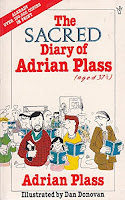
The Sacred Diary of Adrian Plass (age 37 3/4) (by Adrian Plass)

The Sacred Diary of Adrian Plass
(Amazon UK link)
It must have been 1987 when I first heard of Adrian Plass. My first son was around a year old, and I had little time for reading… but this book was highly recommended, and I was assured it was something I could read at odd moments. I felt at the time that it was one of the funniest books I had ever read, and also one of the truest.

I read ‘The Sacred Diary of Adrian Plass’ again at least two or three times before I lent it to a friend who managed to lose it. Since my copies of its two immediate sequels were falling to pieces, I bought the trilogy version, and read that a couple of times. Then my son borrowed it… and, unwilling to be without the books in our house (and remembering that the trilogy format made rather an awkward book to read) I looked for second-hand individual editions, and was delighted to find them easily online.

It’s a little confusing that the fictional writer has the same name as the real author of the book, but a different family; however, it works well, and although Anne (the fictional wife) and Bridget (the real Adrian Plass’s wife) have rather merged into one in my mind, their college-age son Gerald is unique. He makes bad puns, and spends far too much time making anagrams out of the names of famous people.

I’ve just finished re-reading this book yet again, wondering if I would still find it as funny as I did previously. I remembered many of the one-liners, of course, and the general course of the story, which takes us on a five-month journey into the author’s fictional home. I don’t think I laughed out loud as many times as I did the first time I read this (or the second time…) but there were still a few places where I chuckled, one (the ode to his neighbour…) which had me in stitches.

The humour - mostly satirical - won’t appeal to everyone. It’s very British, as are the caricatured friends and colleagues. The church is a typical non-denominational one with an Elder in charge, and a very mixed bunch of people and speakers. Adrian is determined to do what God wants of him, even if he regularly misunderstands issues and people, and makes some mistakes that are amusing partly because he doesn’t always realise what’s going on.

I love this book and have recommended it to many people; most of them have also enjoyed it, but occasionally someone has handed it back to me, a little puzzled, wondering what the point was. As we used to tell our American friends, it’s not possible to explain Monty Python. I think the same is true of Adrian Plass. His writing has a serious vein running through the humour, and I find his books - including this one - extremely thought-provoking. But not everyone gets him, and that’s okay.

Still in print in both the UK and - a little to my surprise - the US, along with its several sequels.


Review copyright 2016 Sue's Book Reviews
23 Jan 2016

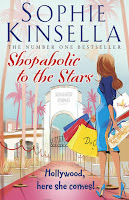
Shopaholic to the Stars (by Sophie Kinsella)

Shopaholic to the Stars by Sophie Kinsella
(Amazon UK link)
It took me a long time to start reading Sophie Kinsella’s books, but once I’d started, I wanted to collect them all. Her genre is unashamedly ‘chick-lit’, her characters often materialistic and caricatured… and yet she writes so well, with delicious irony and the people inevitably get under my skin.

I wasn’t going to read any more of the ‘Shopaholic’ series, but then couldn’t resist picking up ‘Shopaholic to the Stars’ when I found it inexpensively second-hand. I thought it would make a good, light read for winter evenings, so started it just a few days ago. I found that as well as reading a few chapters at bedtime, I wanted to pick it up during the daytime to find out what was going to happen, and so finished it much more quickly than I had expected.

In this, the seventh in the series, Becky and her husband Luke are in Hollywood. They go on a brief visit at first, and we meet Becky in a fashionable sports shop trying on something that’s far too small for her, which she ends up buying. We quickly learn that she’s about to run in a charity race with a famous star, even though she’s done no training and has little idea what to expect. Then she spots a shop-lifter…

It’s all action, and Becky seems naively star-struck at first, determined to make friends with famous people, walk on red carpets and make a name for herself. However, when the opportunity comes up, she realises that the price of fame may be rather too steep, and she has to decide how much her friends and family matter to her.

As with the other books, there are places where I smiled, particularly when she takes classes to help her become centred. There are also places where I felt frustrated at Becky’s over-the-top addiction to shopping and inability to do things in moderation. But her character is what makes the books so readable; they’re all told in the first person, so we are only given her viewpoint, and it’s a testament to the writing that we see so much further than Becky’s specific focus.

What I like is that Becky is a kind and caring person at heart. She’s naive, and materialistic, and spends far too much time and money on her appearance - but she cares about people, and expects the best of them.

The book gives a good picture of life in Hollywood - I assume the author has some experience, as the first book in the series was made into a film - and there’s a surprisingly serious message about the shallowness of the movie industry, the selfishness and likes that are necessary to become famous.

What I didn’t like so much is that the novel finishes without a conclusion, leaving Becky on a quest, and several threads entirely unresolved. That meant I had to go to my current favourite online bookshop and find a second-hand edition of the sequel…

Recommended if you’ve enjoyed others in the Shopaholic series, but not if you prefer your heroines to be rather less shallow in outlook.

Review copyright 2016 Sue's Book Reviews

20 Jan 2016

The Cactus Stabbers (by Jeff Lucas)

The Cactus Stabbers by Jeff Lucas
(Amazon UK link)
It’s some years now since a friend suggested - correctly! - that I might enjoy books by Jeff Lucas. He’s a British Christian writer who now lives and works in the United States; his books are down to earth, with self-deprecating anecdotes, some dry humour, and much to think about. So I’m gradually building up a collection.

I was given ‘The Cactus Stabbers’ for Christmas, and picked it up to read, intrigued as much as anything by the title. This fairly slim volume (a little over 130 pages in all) contains around twenty short chapters, most of them describing an encounter that the author had with a variety of different people around the world. In a few he recounts anecdotes that have taught him useful lessons, such as the time he went camping, or the build-up to the Christmas season.

I could relate to a lot of the book, realising that some of the people included were caricatured, and yet realistic. The ‘cactus stabbers’ turn out to be people utterly dedicated to a cause in a way that caused Lucas to consider how passionate he is about his own faith.

He writes, too, of an elderly lady who taught him about confidence in the future, of a control freak he came across, of someone who has decided to smile… and a host of other fascinating people and situations.

I read two or three chapters each day for about a week, first thing in the morning, and found much to think about. I don’t remember everything I read, but it was refreshing and thought-provoking and I look forward to reading it again in a few years.

Not everyone would appreciate the informality of the writing, or indeed the clear Christian focus - in all Jeff Lucas’s writing, he gently points us to Jesus - but I enjoyed it very much. Recommended.


Review copyright 2016 Sue's Book Reviews

17 Jan 2016

Wyrd Sisters (by Terry Pratchett)

Wyrd Sisters by Terry Pratchett
(Amazon UK link)
I have enjoyed the late Terry Pratchett’s novels for over twenty years now, in particular his satirical fantasy series set on the ‘Discworld’. I have the entire collection, and am - slowly - re-reading them, interspersed with other books. It’s taking me a while, as I have to be in the right mood for this kind of book; but I’ve just completed the sixth in the series.

I last read ‘Wyrd Sisters’ towards the end of 2004 and remembered enjoying it very much. It opens with a Shakespearean touch as three witches meet.. but quickly degenerates into humour. The Discworld witches can be grumpy, argumentative and bossy; but deep down they care about other people and see themselves as healers. Granny Weatherwax is their unacknowledged leader, Nanny Ogg being more relaxed and with a large family. Magrat is the trainee, the one keenest to do things correctly.

Meanwhile the reigning King has been stabbed, and his place is taken by a slightly crazed Duke who is under the thumb of his wife. A horse canters through the forest and a baby is handed over to the witches…

There are nods to more than one of Shakespeare’s plays in this, the first of the main ‘Witches’ books, but it’s not essential to be familiar with them. There are forays into the world of travelling players, too, and some thought-provoking writing about the way we tend to remember what we’re told, or what we see on stage, even if it’s at odds with what we know to be true.

The Discworld is a fantasy world so its ghosts and witches and dwarfs are as real as the people and animals; reality has to be somewhat suspended, naturally enough, yet there’s much on the Disc that feels familiar. Pratchett was brilliant at observation, at pointing out human foibles in satire that’s lightly humorous, though not the kind to make me laugh aloud - not much, anyway.

As with many of Pratchett’s books, the plot is complex, with viewpoints switching scene by scene, and the story only gradually emerges as characters and situations become familiar. I like the style, with no chapter breaks, but those who prefer a more chronological or structured style may find it hard-going. For those who haven’t come across the Discworld yet, this could make a good starting point.

I enjoyed re-reading this very much. Definitely recommended.


Review by copyright 2016 Sue's Book Reviews

7 Jan 2016

The Christmas Café (by Amanda Prowse)

The Christmas (or second-chance) cafe by Amanda Prowse
(Amazon UK link)
I hadn’t previously heard of Amanda Prowse, although it appears that she is quite a prolific writer of the kind of fiction that appeals to me. I think it was Amazon that recommended this book, perhaps based on the titles of other books I had enjoyed, and after skimming the reviews I added it to my wishlist. I was given it a few weeks ago, and thought it would make a good read as we came to the end of the busy Christmas/New Year season.

It turns out that ‘The Christmas Café’ isn’t really about Christmas at all. Possibly this is why it was republished as 'The Second-Chance cafe'. Nor does it begin in a particularly uplifting way: we meet Bea, a lively women in her early 50s, as she says a final goodbye to Peter, the husband who has looked after her and loved her for over twenty years. We quickly realise that although she loved him too, he was not the father of her son Wyatt, and that there was a lasting passion from her youth, for someone unavailable.

After this prologue, we move forward a year and meet Bea in her everyday life in Australia. She’s the owner of a small restaurant, and very much enjoys her work. However she feels a bit isolated from her son and his family. She adores her teenage granddaughter Flora but feels as if she hardly ever sees her, and she finds it difficult to love her daughter-in-law Sarah. Then, out of the blue, Flora comes to stay after some trouble at school…

Most of the book is a story of exploration, of learning to accept one’s past, and take steps towards resolving problems or finding truth, even if they seem difficult or risky. Bea is something of a technophobe, but is determined to get online; Flora helps her in this, and she comes across a forum for small restaurant owners around the world, and starts an email conversation with the owner of a cafe in Scotland, which leads to a growing friendship and eventual meeting.

The writing is good, with - in my view - the right amount of description and plenty of believable dialogue. Viewpoints switch perhaps a bit too often, often within a scene, but somehow I didn’t find it intrusive. While I had easily guessed one of the slight twists in the story, others were unexpected and cleverly done. The ending is perhaps a bit too neat and tidy, yet it wasn’t impossible, and I always like books with encouraging, positive endings.

I very much liked Flora as a character; yet it’s not really a book for teenagers, or even young adults, though some might enjoy it. Bea is the main character, and as a woman of similar age, I found myself understanding and empathising with her throughout, even though she has quite a different personality from mine. I’m glad that there’s a growing trend for lively fiction about middle-aged women, and this was an ideal book to read at bedtime during a busy period.


Review copyright 2016 Sue's Book Reviews

6 Jan 2016

If you want to walk on water, you've got to get out of the boat (by John Ortberg)

If you want to walk on water... by John Ortberg
(Amazon UK link)
It’s about ten years since I started reading the American pastor John Ortberg’s books. I don’t remember if a friend recommended them, or whether I picked one up at random; whatever the original reason, I’m very pleased that I discovered his writing, and over the intervening years have collected most of his books.

So now it’s time to re-read some of them, and my choice fell on the one with the rather lengthy title: ‘If you want to walk on water, you’ve got to get out of the boat’, which I last read in the summer of 2006. Ortberg is not known for snappy book titles. Yet it’s quite thought-provoking in itself. 

Like many, I grew up knowing most of the anecdotes in the Gospels, including the one about Peter walking on water for a few seconds. I’ve heard sermons on the topic now and again, but literally walking on water isn’t something that I’ve heard of anyone doing, other than Jesus himself and, briefly, Peter.

But John Ortberg doesn’t expect us to attempt this feat literally; instead, he takes it as a metaphor for living life more productively, more in tune with what God wants of us. Each chapter focuses on a small part of the passage about Peter’s brief attempt at water-walking, giving insights into how Peter might have felt, and why, perhaps, he did what he did, along with applications for today.

That might sound worthy but a little dull; however, in Ortberg’s hands the story takes on a life of its own. He peppers his writing with personal anecdotes, some pointing out his own foibles, some about others, some quoting from books that have inspired and helped him along his path. He has a light-hearted style with a few unexpected asides which made me smile, and he keeps the whole very readable and accessible to anyone.

This isn’t a book for those without faith of any kind; it’s written from an assumed Christian perspective, with the idea that readers are on a path, similar to that of the author, wanting to be better at listening to the voice of God, more willing to take risks if it appears that he wants us to. I don’t know that reading it will have changed me, but I hope it’s helped me become more open to God’s leading, and - as a committed risk-phobic - more willing to say ‘yes’ rather than ‘no’ to suggestions of something unusual or different, if they seem to be right for me.

I read about half a chapter per day over a very busy period, and found it both encouraging and thought-provoking.

Still in print on both sides of the Atlantic, and now available in Kindle form too. There are participants' guides which can be bought too, as well as the book itself.


Review copyright 2016 Sue's Book Reviews