31 Jan 2014

Rediscovering the Father Heart of God (by Jeff Lucas)

Rediscovering the Father Heart of God by Jeff Lucas
(Amazon UK link)
Jeff Lucas is from the UK but currently lives in the US, where he is a teaching pastor. He is known internationally as a speaker and also as a writer, although I did not come across his books until a few years ago. Since being introduced to one of them by a friend, I have started to read and collect as many as I can, so was delighted to discover this one on special offer recently from the AwesomeBooks site.

It transpires that 'Rediscovering the Father heart of God' is one of Lucas's earliest books, first published in 1991 with the bizarre title 'Sweet and sour pork'. While the current title is undoubtedly less snappy, it is also considerably more helpful: for the book is one of many excellent Christian books using the parable of the Prodigal Son to demonstrate just how much God loves us.

However, this is not just a treatise about love, important though that is. Each section has a brief modern retelling of part of the story, with considerable artistic license, before going on to talk about it in its Middle Eastern context from 2,000 years ago, and also its relevance to modern believers.

The author has a pleasant, easy-to-read style which is light enough to be able to get through two or three chapters at one sitting, yet thought-provoking enough to want to spend at least a few days on the book. Lucas shares a few interesting personal anecdotes and makes some good points. It didn't say anything different from what one might hear in sermons on this theme, or indeed other books following the topic of the Prodigal Son; but in my view this is a theme that needs to be covered regularly. Sadly, Christians these days are all too often NOT known by their love for each other.

However, the most amusing part of the book, in my view, is the wonderfully ironic introduction from the author's good friend Adrian Plass.

Sadly this is not currently in print, although it can sometimes be found second-hand on both sides of the Atlantic.

A few other books I have read and would recommend on a similar theme are: 'The Lost Message of Jesus' (by Steve Chalke), 'The Return of the Prodigal Son' by Henri Nouwen, and 'He Loves Me' by Wayne Jacobsen. There's also the very short but well-written 'Prodigal' by Paul O'Rear, only available in Kindle form, or the hard-hitting classic, 'The Father Heart of God' by Floyd McClung.


Review copyright 2014 Sue's Book Reviews

30 Jan 2014

A novel in a year (by Louise Doughty)

A novel in a year by Louise Doughty
(Amazon UK link)
As with many of my interests, I find myself avidly collecting books on a topic, inspired by reviews, recommendations, and sometimes just the intrigue of a title. I don't remember why this one leapt out at me; it's some years since I bought it. I had never heard of Louise Doughty, although she is apparently a journalist and broadcaster as well as a novelist.

Whatever the reason for buying 'A novel in a year', I decided that I would write a novel four years ago. I started reading this book at the beginning of 2010, and - as far as I recall - read a chapter each week for, perhaps, three weeks. I did a couple of the exercises too... at least, I think I did. I have no idea what happened to them. Then I skimmed through the book, wondering when the novel-writing would start, and couldn't find anything relevant. And then I forgot to pick it up the following week. So it sat on my currently-reading shelf...

I finally finished it today, having re-started it a month ago. The difference is that I ignored the layout and the intended time-frame.

What this book consists of is 52 short chapters, which were originally published as weekly newspaper columns. Every other week there was a short exercise (so, 26 in all) which encouraged reader participation either by letter or on a dedicated website forum. Apparently there was widespread enthusiasm and involvement, and a great deal of discussion. Essentially a huge online writing support group was formed for this period - and some examples are given of submissions based on the exercises in later chapters.

However, translated into book form, it's not going to work like that. For one thing, there's nowhere to submit responses to the exercises. Worse, there's nobody to discuss the columns and assignments with. And, as I quickly discovered four years ago, when a book is only picked up once a week, it's very easy to forget about it altogether.

So I decided to re-name it in my mind as 'A novel in a month'. I knew I could easily read a couple of chapters each day (they are only a few pages long) and planned to do six exercises per week, taking a break on Sundays. I started by doing the exercises in a notebook, and then progressed to the computer when I realised there was some method behind the apparent randomness, and that it did encourage at least some ideas for a possible novel.

It's important to remember that this was originally a newspaper column; that's the style of the book, and as such it's very well done - light-hearted, with plenty of personal anecdotes, and some gems of good advice thrown in. However, this is not a guide to writing a novel. The title is a bit misleading. What it contains is ideas to kick-start creativity, to inspire people to think or, alternatively, to get a stagnant novel going again.

So exercises included things such as biographies of our characters, writing incidents from the point of view of someone in another country, inventing a scene when someone breaks a thumb, re-writing paragraphs without adjectives... and a whole lot more. I didn't think all the exercises were necessarily relevant, but decided to do them all anyway, and unsurprisingly found that pretty much any writing exercise can lead to something more constructive.

I don't know that I learned anything new about the novel-writing process from reading this, but I found it quite inspiring nonetheless. I have to admit that I thought the last few exercises a bit disappointing - looking back, looking forward, noting what I had learned, etc.

I had fallen behind on my timeframe, so I finished the last seven or eight chapters in one sitting without doing the last three or four exercises, which felt a bit as if the author ran out of ideas. To be fair, they would have been a lot more relevant to the original year-long newspaper column project, and would have given the participants plenty to talk about as the year came to an end.

I doubt if the ideas I came up with will actually end up as a novel. But it was an enjoyable experience, and helped me to see how a non-chronological approach to writing can help to show the big picture. Then that can (maybe) inspire the hard slog which inevitably goes with any serious writing project.

I thought that the bulk of the book was very readable and much of it was inspirational. I would recommend it to anyone who has read umpteen guides to writing, and perhaps, like me, have started several novels that have not gone anywhere. This is a different kind of approach, and I found it refreshing.

Review copyright 2014 Sue's Book Reviews

29 Jan 2014

In the High Valley (by Susan Coolidge)

In the High Valley by Susan Coolidge
(Amazon UK link)
One of the things I particularly like about my Kindle is the ability to download free editions of books that are now out of copyright. While the best-known classics are usually still in print, or easily available online, there are other books by classic authors which were pretty much forgotten until ebooks became popular. 

Susan Coolidge is an author whose work I liked since I was about six; she is well-known for her 'Katy' trilogy, which I read and re-read as a child and teenager. However I had no idea until recently that there were two other books in this series, featuring other members of the family.

I read and enjoyed 'Clover', the fourth book, in December, and have just finished the final one, 'In the High Valley'. I suppose they were less popular originally as they do not feature Katy; she appears only briefly in each. This book is set some years after 'Clover', and takes place mostly in Colorado, where both Clover and Elsie are now married, their families amicably sharing a home in the High Valley.

However it begins in England, where we meet Lionel and Imogen, a brother and sister who are preparing to move out to High Valley. Lionel has already been there and has fallen in love with the place; Imogen is going to be his housekeeper and companion, but she is not really looking forward to it. 

She has a lot of negative preconceptions about Americans, and stereotypical ideas about what she is to find: having been through similar feelings myself, almost a century later, I very much appreciated this part of the book, sympathising greatly with Imogen - and also with Lionel who has to put up with her complaints!

The plot involves Imogen's gradual cultural adjustment and eventual acceptance of her new life; we hear very little about the two husbands' work on their ranches, which from my perspective is just fine. Since the book was written as contemporary fiction over 100 years ago (this one was first published in 1890) it's inevitably a bit old fashioned in style, but some of the personality clashes and opinions are quite appropriate for modern young women.

There is, perhaps inevitably, a rather too tidy double romance and a delightful happy-ever-after (or at least for the next year) conclusion, but it was nicely done and it made a fitting end to this series. When I used to read the first three books I always wished that there were more, so I'm very glad to have discovered them. Definitely recommended to anyone who has fond memories of the 'Katy' series.

I'm pleased to learn that this has now been reprinted in paperback form; the Amazon link is to a modern edition. However this can still be found free for the Kindle, either at Amazon or Project Gutenberg.

Review copyright 2014 Sue's Book Reviews

27 Jan 2014

Counselling and Helping (by Stephen Murgatroyd)

Counselling and Helping by Stephen Murgatroyd
(Amazon UK link)
I've had something of an interest in general helping and low-key advising for some years, albeit with little chance to do much of it in real life. I run sites intended to provide answers to some topics I know about, and answer questions on various forums online. But when family, friends or even acquaintances go through difficult times, I find it hard to know what to do. I can listen - and sometimes that's all that is needed - but started to feel that it would be helpful to read a book on the topic of counselling in general.

So I browsed a few online bookshops, reading blurbs and reviews, and discovered this particular one, very inexpensively, a few months ago. I had not heard of Stephen Murgatroyd, but apparently he's quite a significant person in the psychology, counselling and indeed writing world.

'Counselling and Helping' is quite a thin volume, only 160 pages in length. I found it a clear and readable introduction to general counselling, something the author equates with helping in almost any context. I very much liked the way that he brushed aside any mystique or suggestion that only a few special people could do this. Although the book is written primarily for those who undertake to counsel in a professional setting, it is also relevant for helping in any kind of relationship - friendship, parenting, even listening to acquaintances.

Anyone can go through stressful and traumatic periods of life, and it's clear different people are affected differently, due to their temperament, their upbringing, perhaps even their culture. The most important thing, when stressed, seems to be to have someone who can listen in a caring and non-judgemental way. This book advises how to go about this, either formally or informally.

There are some useful check-lists of ways to encourage others to open up and look at their problems from different viewpoints; of what to avoid saying or implying; even of how to avoid getting over-committed or burned out as a helper. There are exercises and role-playing ideas that are really only relevant in a professional situation, but a great deal that's of interest in greater understanding of others, and also of oneself.

Despite being accessible to the layperson, I found it a little heavy going at times. I deliberately only read a few pages each day, which gave me the chance to think over some of what was said. I'm not sure it's made any difference to me, but it's a book I can see myself going back to in the future.

I would recommend this for anyone who ever finds themselves listening to others going through difficulties, or indeed to anyone who is interested in learning more about counselling, or support groups of any kind.

Originally written in 1985, 'Counselling and helping' was most recently re-printed in 1996; it's long out of print, but can often be found second-hand.


Review copyright 2014 Sue's Book Reviews
26 Jan 2014

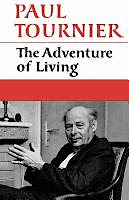
The Adventure of Living (by Paul Tournier)

The Adventure of Living by Paul Tournier
(Amazon UK link)
I would never have come across this book, or even heard of Paul Tournier, had it not been for the strong recommendation for this book by Philip Yancey - although I forget in which of his books. It was on my wishlist for some time, but long out of print; so I was delighted to discover it inexpensively from an online site a couple of months ago (with free postage to Cyprus).

Translated from its original French, 'The Adventure of Living' was written in 1965, but is still surprisingly relevant today. Tournier was a Christian doctor; he starts his book with the thesis that humans are made for 'adventure'. I wasn't too sure about that, but over the course of the book he goes on to demonstrate that this doesn't just mean high-risk thrills, but includes creativity, thoughtful changes, and - most of all - listening to and working with God. He cites many anecdotes from his own life and those of some of his patients, whom he attempted to treat holistically, becoming involved in their lives and feelings as well as their physical ailments.

Inevitably a book of this kind reflects the culture of its time and the author's own biases. While not a strong feminist myself, I still found him appearing to be rather demeaning to women in places, implying that a female adventure would include a new outfit - or, at most, marriage and children. However there was so much else that was thought-provoking and inspirational in the book that I was able to gloss over such passages, and remind myself that society has moved on significantly.

It took a while to get going, and was quite heavy-going in places. Unless you are used to this kind of thing, it's not a book to be read in just a couple of sittings. It's only about 240 pages long but still took me about three weeks to complete, reading a chapter per day.

'The Adventure for Living' gave me a lot to think about. While not the scope of this blog to write extensively on the topics included in books I have read, I wrote elsewhere a couple of posts inspired by it: Living as an Adventure? and The Problem with the 'Knowledge of Good and Evil'.

Republished in 2012, it's available at high price on both sides of the Atlantic; however it can often be found second-hand at much more reasonable prices.

Review copyright 2014 Sue's Book Reviews

23 Jan 2014

Portofino (by Frank Schaeffer)

Portofino by Frank Schaeffer
(Amazon UK link)
Although I moved in evangelical circles in the UK as a teenager and young adult, I was never part of the Calvinist or fundamentalist scene. I barely knew that people with these beliefs existed until perhaps twenty-five years ago. However, I do remember reading a couple of light Christian books by the late Francis Schaeffer, which I quite enjoyed. 

So when there was some controversy in the news about his son Frank Schaeffer, I was somewhat interested. Apparently he rejected his parents' views (and the US 'religious right') and joined the Greek Orthodox Church in 1990.

So I was intrigued to come across a fictional trilogy by the younger Schaeffer, which reviewers are almost unanimous in agreeing are at least somewhat autobiographical. The first of these is 'Portofino', a book which appears to be either loved or hated by the majority. I found an inexpensive edition on play.com, so bought it, wanting to find out more. I read it primarily out of curiosity; and I found myself right in the middle of the extremes of opinion.

The story is set in the early 1960s, narrated by a boy called Calvin, who is ten at the start of the book. The family is from the United States, but the parents are missionaries working in Switzerland - fundamentalist reformed Protestant ones who want to convert the Catholics. Calvin has two older sisters: the angry and somewhat brutal Janet, and the milder, compliant (and sometimes passive aggressive) Rachael. Each year the family travels by train to the little Italian seaside resort of Portofino for a holiday. The novel takes place over three different holidays. The second is when Calvin is 14 and going through puberty.

The descriptions of Portofino are realistic and evocative. I appreciated the caricatured but loving pictures drawn of some of the characters: the boat owners, the hotel staff, a friendly artist.. it seems pretty clear that these must have been real, affectionate memories from the author's childhood. Calvin has a lot of freedom in the novel, despite having very controlling parents. He seems surprisingly normal, given his strict and often violent upbringing.

Some of the narrator's thought-processes are humorously logical. There's a lot of clever irony as the 11-year-old protagonist - whose name is itself an irony - quotes his parents' fundamentalist beliefs, and wonders about the logic of a theory of 'election of saints'. It doesn't guarantee anyone salvation, and makes something of a mockery of the idea of evangelism. I found myself mildly amused a few times, sometimes against my better judgement. Yet I had a problem believing that anyone could have such distorted and often cruel beliefs. I hope they were caricatured.

As we gradually become aware, there is a lot of tension in the family in private. Calvin's father is subject to bad moods when he can turn violent, and his mother keeps trying to talk about inappropriate subjects to her children - when she's not praying long and embarrassing monologues in the hope of converting her listeners. Calvin's oldest sister Janet is a self-righteous bully who can be quite vicious at times, and Rachael is a holier-than-thou sneak. Calvin himself keeps resorting to lies to stay out of trouble at home, and so that his local friends don't think him too weird.

At times, the narrative was highly disturbing. The description of the killing and eating of an octopus made me feel quite ill, and the violent 'punishments' described were unbelievable in their viciousness. I hope that the horrors of a fundamentalist Calvinist upbringing are exaggerated; even without the violence and verbal abuse, the hypocrisy shown is horrendous.

I have no axe to grind: I'm not American, not fundamentalist, and do not believe in violence of any kind. Perhaps that's why, to me, this was essentially quite a mediocre book. I didn't love it, nor did I hate it. It was an interesting read, and by the last few chapters I found it quite hard to put down. And yet... it left something of an unpleasant taste in my mouth. If even half of the violence is honestly true, why fictionalise it? If it's not true, why exaggerate, and paint Calvinist missionaries in such a poor light?

I don't plan on getting hold of the sequels.


Review copyright 2014 Sue's Book Reviews

18 Jan 2014

Meet the Maitlands (by Noel Streatfeild)

Meet the Maitlands by Noel Streatfeild
(Amazon UK link)
I have enjoyed books by Noel Streatfeild for over forty years; I don't know when I first came across her books, but over the years I've built up a reasonable collection, and have even replaced a couple which were falling to pieces. She is probably best known for her classic 'Ballet Shoes', but wrote a large number of books which were very popular in the middle of the 20th century and - when I read them - the 1970s.

I knew that there were various of Streatfeild's books which were no longer in print and hard to obtain, so I was very pleased when I spotted 'Meet the Maitlands' on the AwesomeBooks site back in December, in their 'Bargain bin'. Better still, I had a discount voucher. To my astonishment, when my copy arrived it was a hardback, complete with coloured dustjacket, and looked 'as new'.

Set at the turn of the 20th century, this is a delightful story for children. Noel Streatfeild is gifted in her characterisation and particularly her understanding of children's minds.  We're introduced almost immediately to a family of five children, the oldest of whom are ten-year-old twins. While their younger siblings are a little shadowy, and I felt that the twins - Selina and John - were very believable. I could feel for Selina as she made some difficult decisions and faced some stressful situations, looking after her twin's emotional wellbeing and babysitting her younger siblings with aplomb.

There's humour in the story as well, and misunderstandings. I was amused by Violet, the precocious 14-year-old who falsifies a reference in order to become a governess, and concerned for Priscilla, mother of the five children, who is frail and regularly ill (presumably with tuberculosis). Most of all, though, I found her son John getting under my skin; at ten his father wants him to go to boarding school, but John is a gentle, sensitive boy who loves to sit and dream, and who would be devastated by the harshness of the preparatory schools of his era.

So there's a bit of social history in this short novel, a good dose of 'ordinary' family life of the era (unusually for Streatfeild, none of the main characters is supremely gifted in dance or music). There are also a few of the author's opinions about education which shine through, with the importance of treating each child as a unique individual. But most of all I enjoyed the people and the story. I started it one evening, expecting to read a chapter or two each day for a week, but could hardly put it down, and finished it the following morning.

Definitely recommended to anyone who enjoys children's fiction of this genre. Not in print, of course, but occasionally available second-hand.

Review copyright 2014 Sue's Book Reviews

17 Jan 2014

The Return of Hyman Kaplan (by Leo Rosten)

The Return of Hyman Kaplan by Leo Rosten
(Amazon UK link)
I remember reading and very much liking the books by Leo Rosten about Hyman Kaplan when I was a teenager, enjoying the linguistic intricacies of students attempting to learn the English language in America. I was thrilled to find the first one - 'The Education of H*Y*M*A*N K*A*P*L*A*N', a couple of years ago. I looked for some time for its sequel, discovering it inexpensively on the AwesomeBooks site at the end of last year.

'The Return of H*Y*M*A*N K*A*P*L*A*N' charts another year in the beginners' grade of the American Night Preparatory School for Adults  - what, I suppose, we would call TEFL today. The wonderfully patient and inspiring Mr Parkhill continues to plan interesting lessons for his multi-national group of students, regularly interrupted by the larger-than-life Mr Kaplan.

Stereotypes abound; the humour is at the expense of those for whom English is difficult, although sometimes it turns out that the joke is in fact on the absurdities of the language, while the students' logic is impeccable. Mr Kaplan stars in every chapter, full of his own importance, and yet generous, open-minded, and determined to learn, one way or another.

It's years since I read this book, so I was delighted to find it. Although I remembered a lot of the stories, they were still amusing and prompted a few chuckles. I wouldn't rate it as 'hilarious' as its contemporary reviewers did - this was first published in 1960 - but I enjoyed reading this very much, along with the introduction of my 2000 re-print, which places it in context for 21st century readers.

Recommended, if you don't mind this kind of stereotyped humour.

Not currently in print, although second-hand versions are more common than they used to be; however, I'm pleased to see that the Hyman Kaplan books have now been issued in Kindle form, both sides of the Atlantic.


Review copyright 2014 Sue's Book Reviews

15 Jan 2014

Loving Protector (by Sally Quilford)

Loving Protector by Sally Quilford
(Amazon UK link)
I have already enjoyed four novellas by Sally Quilford on my Kindle, so was delighted when she offered another one free for a couple of days in December. I wasn't entirely sure what to expect as this is not her usual genre. I'm a great fan of the Regency romance genre as epitomised by Georgette Heyer, but tend to find other authors rather lacking in authenticity.

Moreover, reviews of 'Loving Protector' were very mixed on the US Amazon site. So it was with some trepidation that I began reading - only to find myself drawn into the story almost immediately.

Calista Haywood is the heroine. We meet her en route to London with her widowed stepmother, and her step-sister Blanche. Blanche is outspoken and selfish, which contrasts strongly with Calista’s more generous, sweet nature. Blanche hopes to find a rich husband, preferably with a title, and can't understand why Calista had to come with them at all.

There’s high drama right at the start of the book, and the hero introduced in literal heroic mode. Clearly he and Calista are going to end up together. However, this story doesn’t just follow the standard Regency romance formula: there’s some mystery surrounding Blanche’s birth which is only gradually revealed, and also we overhear some violent threats, which appear to be followed up later on...

Sally Quilford has done her research well; I think some of the negative reviews were from readers who were not accustomed to the genre, or who objected to British spelling. While this book does not have quite the naturally flowing authenticity of Georgette Heyer, it reads realistically, on the whole, with few - if any - anachronisms. It was certainly much better written than several other books I have read in this genre in recent years.

More significantly, the characters of Calista and Blanche are very nicely drawn, as is that of Evelyn, Blanche’s mother. I was a little puzzled as to how such a likeable, gentle mother could have raised such an unpleasant daughter, but liked the contrast with the 'Cinderella' theme: the stepsister is considered a great beauty, and the stepmother is very fond of the heroine.

My biggest problem with this book is that it’s too short. There were, I felt, sufficient subplots and themes to have made this a full-length novel; as it was, some plot threads are resolved far too quickly, and in the later part of the book, when Calista takes centre stage, Blanche almost vanishes from the scene - we only learn in passing what she has been doing. I would love to have read more about her and her reactions to Calista's engagement.

My other slight problem is that I began to find Calista a bit irritating after a while; she gets it into her head that the hero does not love her, despite every effort on his behalf to show that he does. She is supposed to be intelligent, and she appears to be quite empathic where her stepmother and aunt are concerned; she even seems to understand Blanche quite well.

But she apparently has a total blind spot as far as the hero is concerned, and spends a lot of time introspecting about how unhappy she is. It didn’t ring true; but perhaps this is related, also to the length. Had the novel been longer, there could have been incidents that drew them apart for a while, or genuine misunderstandings that could have made her conviction more believable.

Still, overall I thought it a pleasant light read, and look forward to more in this genre.

Only currently available in Kindle form, although it should soon be available as a large print hardback.


Review copyright 2014 Sue's Book Reviews

11 Jan 2014

The Christmas Angel [Christmas in Cornwall] (by Marcia Willett)

The Christmas Angel by Marcia Willett
(Amazon UK link)
I have enjoyed novels by Marcia Willett for many years now and am always eager to read a new one. I had no idea what to expect of this one, with a Christmas cover and theme; I started reading it on January 6th and was pleased with the serendipity of finding that the first chapter was headed ‘Epiphany’.

‘The Christmas Angel’ follows the life of a small community over the course of a year, each section headed by one of the Christian feast-days, to give a sense of the passing of time. There are four nuns in the community, one of them very elderly and frail, and a priest who lives near by. 

Then there’s Clem who works as a jack-of-all-trades, but who had previously started training for ordination, only to be thrown off course by the untimely loss of his wife, after giving birth to their son Jakey. Jakey is four at the start of the book, a delightfully thoughtful child with a most endearing quirk in his speech.

And there’s Janna. She’s a free spirit, not sure what she believes, and not intending to stay long. She arrived to help out, and finds herself caught up in more and more food preparation and general care when another of the helpers becomes ill. Everyone loves Janna and hopes she will stick around, but she is fearful of commitment, although she adores the small Jakey. It would, as she and Clem both comment, be just perfect if they could fall in love with each other - but they don’t; they see each other more as sibilngs, or platonic friends.

Also in the picture is Clem’s widowed mother Dossie, and her elderly parents. They don’t live in the religious community, but they are not far away, and are very involved in everyone’s lives. Dossie has rather a poor record for relationships, and indeed starts one in the course of the novel, which we - the readers - know is doomed to failure long before Dossie herself has any inkling.

I have to admit it took me a while to get into this book. Marcia Willetts builds up her characters slowly, and while I undoubtedly found them getting under my skin - particularly Janna and Jakey - I did wonder for a while where the story was going. There’s a fair bit of description, and some quite detailed asides about the business Dossie runs - supplying frozen food for guest houses - and the B&B which her parents used to run.

There’s conflict too - not just Dossie’s unsuitable man, but a decidedly unpleasant plot involving someone trying to con the nuns out of their home, and also a great deal of stress with Dossie’s brother and his snooty girlfriend. We see different perspectives through the book - not at all in a disturbing or intrusive way, but this did mean that it was harder to identify with anyone in particular, or to know who was going to be important.

But by the time I was about half-way through, I was becoming eager to know what would happen, and had found myself becoming really quite fond of the nuns and Dossie, although I never quite managed to get inside Clem. I like character-driven novels, and that’s what this was, with a nice storyline that came full circle as the book ends just before Christmas a year later.

While some of Marcia Willett’s novels include references to events and characters from previous books, this one - as far as I know - does not, and as such can easily be read alone. Despite the somewhat slow start, I enjoyed this very much and would recommend it to anyone who likes thoughtful character-based fiction with a very low-key Christian/religious theme.

Note: 'The Christmas Angel' is published with the title 'Christmas in Cornwall' in the USA. Available both sides of the Atlantic in Kindle form as well as paperback.


Review copyright 2014 Sue's Book Reviews

5 Jan 2014

Love Wins (by Rob Bell)

Love Wins by Rob Bell
(Amazon UK link)
Although I heard of Rob Bell some years ago, as a somewhat unorthodox and thought-provoking American Christian writer and speaker, I had only previously read one of his books: Jesus wants to save Christians. I liked some of what he said, but felt that the style was too repetitive and rather annoying, and in the end found it a frustrating read.

So it's taken me three years to get around to reading anything else that he wrote. I eventually picked up 'Love Wins' because the rest of my family had read it and were talking about it - mostly in positive terms, but not entirely. I knew it had caused huge waves in Christian circles. Some people loved it, others denounced the author as a heretic. It seemed like a good idea to read what it actually says.

The style, once again, has some short sentences, but they're not as spread out as the first book I read, and I didn't find them annoying at all. There are proper paragraphs too, so they stand out more to make a point. Unquestionably informal, they feel almost as if someone is talking, pondering, asking the kind of questions I might ask myself.

For, essentially, this book asks a lot of questions. Some of them are quite awkward questions - ones which some Christians may see as over-challenging, the kind of thing that 'ought not' to be asked. But today's young people need to ask this kind of question and to be able to find responses themselves rather than being given pat answers.

So the reader - and this book is not necessarily intended just for those with Christian faith - is invited to start thinking about God, about the Bible, and about what they do and don't believe. We all have preconceived ideas - those we have been taught, those we have assumed or gathered from the way life has treated us.  Rob Bell does an excellent job of getting back to first principles, of asking who this God is whom Christians worship, and what the Bible means by love, by redemption, and by Heaven and Hell.

Critics have said that Bell picks and chooses what parts of the Bible to quote. Indeed he does - but so does any writer of Christians books. They could hardly quote the entire thing. The problem (for some) is that he chooses verses that - apparently - give credence to his viewpoints. But then, so do most Christians writers, and evangelists, and tracts. The references are mostly given in the book, and a good concordance (or online search) makes it simple enough to check the context, to look at different ways of translating the verses, and also to find those on the same topic which he does not quote.

Overall, I found 'Love Wins' to be very readable and quite thought-provoking. It doesn't give all the answers, and those it gives are left open to the reader to consider, and perhaps to respond to differently. The main focus, which I thought very positive, was of the importance of how we live, and how we grow in relationship with God and each other, and how we continually need to question our assumptions - the 'stories', as he puts it, which we tell ourselves, or perhaps which other people have told us.

While this book is undoubtedly controversial, and has many critics, I thought it a helpful overview of what many Christians believe, and would recommend it to anyone, particularly those who have been hurt or damaged by images of a slave-driving or vengeful God, or indeed by well-meaning Christians who don't really answer genuine questions.

Available in paperback form on both sides of the Atlantic, and also in e-book form for the Kindle.

Longer - but mostly fair - reviews of 'Love Wins' from a more theological stance can be found at Relevant Magazine and Christianity Today.


Review copyright 2014 Sue's Book Reviews
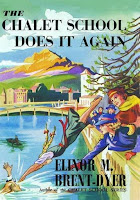
The Chalet School does it again (by Elinor M Brent-Dyer)

The chalet school does it again
(Amazon UK link)
Once again, I decided to read something lightweight in a busy period. So I turned, again, to Elinor M Brent-Dyer, prolific author of the 'Chalet School' series (amongst others) whose books I have enjoyed for more than forty years.

I have been trying to read them in order, over the past few years, beginning with the best-known 'The School at the Chalet' as long ago as 2009. I've dipped into a few each year, and reached about half way through the series by June of last year when I read 'Joey goes to the Oberland'. I have the books in order on my shelves - or so I thought - so, feeling like another in this series, I picked up 'The Chalet school does it again' which I last read in 2001.

It was not until I reached the end that I realised I had somehow missed out 'The Chalet School and Barbara', which I have not read since the year 2000. Not that it matters, particularly. The important point about the series at this stage is that the bulk of the school has recently returned to the Oberland, where there is also a 'finishing' branch known as Welsen for girls of 18 and 19.

In this book, Prunella is a new and rather strange girl who refuses to use any kind of informal English, and won't even abbreviate people's names. Clearly she has some secret which is hinted at but not revealed until some way through the book, when the issue is sorted out rather too quickly.

This is the spring term, and weather is bad. So when the opportunity comes for a day out to Lucerne, the girls all take advantage of it, and high spirits ensue from some of them, nearly resulting in tragedy. However, the bulk of this book is somewhat run-of-the-mill, including (in my view) over-detailed descriptions of yet another sale and a 'Welsen' pantomime. Having said that, there were a couple of surprisingly moving moments which almost brought a tear to my eye. The plots may be rather dull at times, but some of the characters are very believable.

Overall I thought this an enjoyable light read, recommended to fans of the series; on the other hand, it would be difficult to get into by anyone unfamiliar with the background and most of the people.

My copy is an Armada paperback, one of the series which was not cut when re-published by Armada. It's not in print but can often be found second hand. There was also a 'Girls Gone By' edition showing the original cover, not currently in print but still sometimes available from Amazon UK.

Review copyright 2014 Sue's Book Reviews